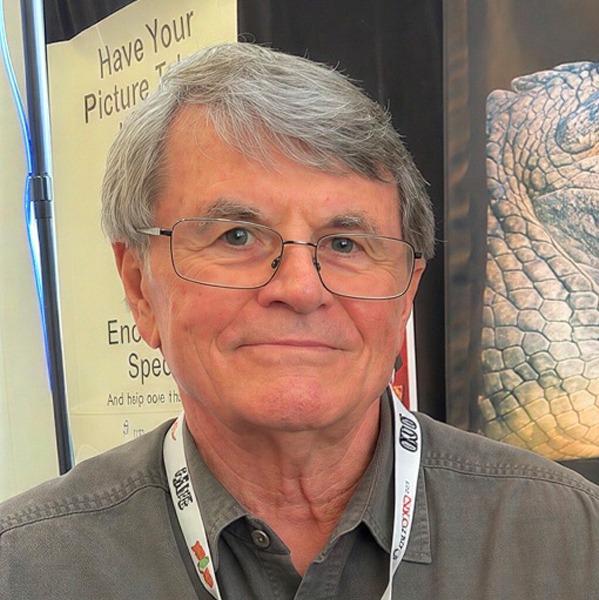
It’s Frank Williams, Ziegler, f William, or Bill, and I was born on September 16th, 1951 in Columbus, Indiana.
Who were your parents? What did they do?
My father Frank, was vice president of Hamilton Cosco, and he was vice president of production. Hamilton Cosco was a manufacturing company that did office furniture, baby furniture, things like that. It was, it was a fairly well known company at the time. My mother was a housewife, although she did a lot of volunteer work at, at our local hospital, the auxiliary club. And she did, she managed all the photographs of newborn babies. So when you had a baby and you always got a photograph within a day or two, and they would set it up and she would do all the production for it and get it out to the, to the parents, and that’s what kept her busy. Yeah. Tell us a little about your childhood growing up, or, I can’t remember a time when I wasn’t around an animal, whether it was a dog, a cat.
First animal I remember was my mother’s Pomeranian, nastiest animal I’ve ever been around. Loved her. But that dog would chase me. But no, I’ve always been around it. And we grew up, Columbus was a small town at the time. There’s about 25,000 people in the town, but it was a very progressive town. It was known as the Athens of the Prairie because companies like Cummins Diesel headquartered there, Arvin Industry, Hamilton Cosco, they all contributed to the town like Cummins paid for every architect to come in and do all the public buildings, Hamilton Cosco, they built big sports, complex ice skating rinks and things like that for the community. So it was a great place. And I grew up on a creek or creek, depend upon where you’re from in my backyard. And my father was, he wasn’t an avid hunter, but he liked to hunt.
And of course at the time, that was something everyone did. So I grew up on a creek hunting, and you know, back then parents let you out of the house and out of their sight all day long. And it’s like they’d ring the bell and you should show up for supper, otherwise they weren’t worried about you. Well, most of the time I spent down in a place called Hall Creek and fished. I grew up trapping, as I said, and learned what I call conservation trapping and stuff. So we didn’t empty out places, camped all the time. And snakes. Snakes were there. And that’s what caught my attention.
So I grew up with that desire to, to work with herpetology animals, snakes, turtles, that kind of stuff.
What zoos did you see growing up and what impressions did they have? Did you have The truth?
I went to one zoo growing up that was the Indianapolis Zoo at the time, which has dramatically changed. That’s the only zoo I ever visited. So it, it were, there were a number of other people that influenced my interest in the profession. But no, I didn’t visit a lot of Zeus.
What type of schooling did you have?
Well, Indiana High School, the Columbus High School Bulldogs was actually a very progressive school, and I have always been an outside kid. Got into biology, I loved all the science studies. And I met a young man who had graduated from Indiana State University. His name is Phil Allen. Phil’s still around, and Phil and I still talk. We became good friends, even though I was a student, he was a teacher and we both loved her pathology. And so Phil and I and a couple of other guys, we would go out on the weekends and snake hunt and do things like that. But Phil convinced the school to create a couple of courses, animal physiology and zoology, which, you know, in high school all you got was biology normally.
And he created these courses and I was able to get in to the first set of classes. But two years after I left and was at the university, Columbus made them stop teaching those classes because the school group, the Indiana School Board said it was unfair that kids at Columbus High School were getting advanced courses that would help them into college and other things. And so they, they made him stop teaching that, but in the meantime, he’d gone to Indiana State and had worked under a gentleman by the name of Bill Hopp, HOPP. And because of that, I knew who he was. So I ended up at Indiana State and I worked under bill hopp and there, I, I originally started out, originally started out in business management because my father being vice president of Hamilton Cosco, wanted me to go into the business side of things, but that’s just not where I was, that’s not where my heart was. So after about two and a half years, I said, you know, dad change the subject. And went back to the life sciences and Dr. Hopp and I got to know each other really well.
And I started working for him as an undergrad. I actually took care of the institution’s live animal collection while I was there. And during this time, I, I just was able to spend a lot of time at school with a number of the different professors because of my interest and worked with them. And I think I was telling other people that Phil had quit Columbus High School, went down to Crane Park, which was the small zoo on Ki Biscayne, and became the education director. And that’s where he learned about beginning to build the new Miami Metro Zoo, which later became Zoo Miami. And he called me up and he said, you know, listen, they’re building this new zoo down here. You might wanna come down and take a look at it, get involved. And I went down, spent some time with him, and that’s where I met Gordon Hubble.
And I went back to the university. And on my junior year, I, I talked to Dr. Hopp and I said, listen, they’re opening up positions, this thing’s going, I really want to go down there. I said, but I, I wanna finish. And so Dr. Hopp sat down with John Whitaker and a couple of other professors, and they mapped out a course for me to finish in six months and get my full degree. And what it consisted of was all I did was study on my own and take their required tests. And if I passed all their tests, then they’re gonna go resign off on it. You’ve got this course. And that’s what I did.
So I left that fall in January. At the end of the semester, I had my degree a year in advance. And I went down and started at Theran Park Zoo as a reptile keeper. I think I got paid $6,700 a year. What year was that? That was in 1975. You become a zookeeper animal keeper.
Was this what you wanted to do and you thought of it as your career path?
I knew I wanted to work in zoos at the time because I’d learned a lot from Phil and what he was doing. And Phil at that time was working with, with a gentleman called Vernon Kiley, if you know Vernon. And they were really beginning to get the zoo oriented towards conservation programs. And so I said, that’s what I wanna do, but I enjoy working hands-on with stuff. I’m still a hands-on person. And so when I got down there, went into the HERC department and started working, but my interests were everywhere. If I could learn about something, I’m gonna take that opportunity to do it. And so within a year, I transferred out and worked a number of different, I worked elephants for a while.
I worked large hoof stock for a while. And on every time I moved to a different area, I just, I learned more and more about zoos zoo operations and what we couldn’t do. And by my second year down there, they had a test, an opening for a curatorial position. And you had to go down to Dade County Park and rec department, take a test and be interviewed. And the decision was made by Dr. Hubble as well as the director of Park and Recs. And so I took the test and interviewed. And so within two years, I became a curator.
And actually at that time as curator of half the zoo. It wasn’t a curator of mammals or a curator of birds or I had to manage all of it, which was an incredible learning experience. And so did that. And then in 78, they really started taking off building the new zoo down at Homestead, Florida. And it used to be an old durg site, great history. This place was some of the largest wooden structures in the United States that housed the Dibles that they used for submarine patrol during World War ii. And Dade County in its Winston said, we’re not gonna go out and hire a design firm like Jones Jones or anything like that. We’re gonna do it all in-house.
And Terry Strouser, who was a artist at the time and worked at the zoo, became one of the architect designers for the build out. He later went to Disney and helped them build Wild Kingdom and Gordon Hubble, and then a number of people in Dade County who were contractors and builders got involved with that. And that allowed me to really get involved with them and start working with them. And in the design of Miami Metro Zoo, which at the time was one of the, you know, Brookfield was a cageless zoo. Now obviously there’s cages in the back, but they called it a Cageless zoo after Hegar. And his book, what he created, in fact, they brought him over the Chicago Zoological Society did to help sign Brookfield Zoo. And so I started working with them as a, from a cageless as standpoint. And it just went from there.
And by 79 I’d become the general curator at Cran. And then Gordon Hubble and I orchestrated the move of the entire collection down to the New Zoo site over a period of about three years. And we opened a part of Miami Metro Zoo in 1981. And we began opening up sections at a time. And as each one opened, I’d, we’d bring down more of the collection. So I was managing two facilities, the old Kiska one, and then the new one down in Homestead. And the reason they wanted to move it, well, my second year, the third year at the zoo, if you remember, hurricane David came through Miami. Not like a big hurricane, but it, it was tough, not like Andrew.
And it swamped CBI game. And that was one of the things that they really pushed about getting that collection off is it was so exposed to hurricanes.
I mean, the highest point in CBI game was like three feet, right?
So it was like, we need to move the zoo, protect the collection, get it away from hurricanes. And that was a big selling point to get it down to homestead. Can you talk about the 1992 Hurricane Andrew hit, the Miami Metro Zoo.
Can you talk about your role as the general curator?
What precautions were taken ahead of time, if any?
What happened as the hurricane get?
How were the animals protected?
Did staff stay at the zoo, the whole beyond?
Well, we began watching Andrew as it came over a Lutheran and, and some of the outer islands. And there was a guy named Hard Cross who was a weatherman, became famous because of Andrew Norcross was his name. Not Hard Cross Norcross. And at one point, about 72 hours out, Norcross came on and stuckey’s neck out. And he said, you all need to get prepared because this thing is gonna come back over open water that’s really hot and it’s gonna intensify and it’s gonna come into Miami someplace. So let’s get prepared. So I got with the staff and our maintenance people, and I said, okay, we have a hurricane plan, which we’d been working on anyway. And we began collecting and gathering animals up that we felt needed to be brought into certain areas like our, our entire flamingo flock ended up in a, in a bathroom, a public bathroom that we knew was all concrete and was protected.
And you know, so we gathered everything up that we could. Now our primates and things like the bears and the tigers, our night houses that we built were solid structures. They were all concrete and steel. They weren’t going anywhere. So those animals, all we had to do was lock ’em into their holding areas, which had, within each holding area, we had a secluded area they could get into that would protect them from anything. Our biggest concern and where we tried to do the most work was with our birds because we, we had a beautiful bird collection. We had a two acre aviary where we’d had that first year we opened that aviary. We had seven first breedings in North America and that aviary.
So we were real concerned about that. And we began collecting as many animals as we could and securing them in what we thought were secure buildings. Hoofstock, we couldn’t do anything there. They had holding pins in the back that were chain link. And we just, it was like the best thing to do is we went in and anything that we thought could be picked up by wind, whether it was hay boxes, tools, we took all that stuff, got it out of there and got, and our rock work that hid most of our back holding air in every exhibit were hollow. And you could get into them. And that’s where we put all that stuff that we thought would fly around to make sure there wasn’t anything that could impale an animal or anything like that. And then I had, and been, had been training what we called a shoot team.
And that’s because we were on 760 acres now it was all fenced in and we had a five mile fence as well as a five mile moat that went around the property. But if animals got loose for any reason, they were in a big pine and palmetto force. And if it was hoofstock, we had plans to recapture it, how we’d do it. But if it was like a tiger or a lion or something like that, where we needed to be real cautious and if we had to dispatch it, I wanted to know that I had qualified people could handle guns. And we had a 4 58 elephant gun. We had like four 30 oh sixes with scopes. And then we had 12 gauge shotguns. And every three months we took that team down to the Dade County police range.
We trained them so that they felt comfortable. And so I kept the shoot team at the zoo as Andrew was coming in and we kept our vet at the zoo. We were all staying in the hospital, which was a brand new building. Very secure, very well built. We weren’t that concerned about it being an issue. And that’s where we were gonna spend the hurricane at the last minute. And I’m glad I did. I called my wife and had her come into the zoo with our daughter who had only, it was only less than two years old.
And I’m glad I did because the wall there, hurricane covered homestead, which is where we lived, and it, it wiped our house out completely. But she was up with me at the zoo and our vet and our shoot team, and that’s where we hunkered down for the hurricane. And it was, it was a real experience. Taught you a lot of things, a what’s value and what isn’t value. And the next morning we got up and looked out at the zoo and you couldn’t recognize it. All the known landmarks were gone. Every tree above 12 foot was gone. Now our night houses were there ’cause they were all concrete and steel.
But our administration building and the society’s administration building pretty much wiped out. The one thing we did do in designing that zoo is we had, because we’re on a big block of a lytic limestone, and our moats were dug outta limestone. But if you went down 12 feet, you were into water. So we had generators set up around the zoo with three big wells, and the generators were housed in concrete buildings, and then they had thousand gallon fuel tanks that were also protected.
And so as things got destroyed, the only thing we were concerned about was, can we get water to the animals and are they gonna be safe?
And at our kitchen area was built with all concrete. So we knew we had food available and we’d stockpiled a bunch of foods and stuff knowing that it would be a while before we could get trucks back into us. And our, our electrician, a guy who’s on Facebook a lot now, he’s a great guy. He was the first person that made it into the zoo after the storm. And the only reason he made it into the zoo, ’cause all the roads were blocked by trees and debris is the shift team. And all my guys were not only experienced with guns, but we knew how to operate backhoes. We knew how to operate forklifts. And we got out and cleared the road into the zoo.
So if people made it to the entrance, they could get into the zoo because it was a mile drive once you were on our property to get to get to us. So we cleared that, and then he comes walking on his own. He had to end up walking the last mile to get to the entrance. He got there and we started all the generators. And then my team went around as soon as the sun was up and we began checking everybody because if there was bears, loose tigers, whatever, we knew we had to dispatch ’em because there was no one else coming in to help us catch ’em. And we couldn’t let ’em get off the property. So we had that whole plan set up, but none of those things got loose. We got our generators up and, and I’ll tell you Mark, the strangest thing, all of our chain link fences were laid down flat.
Now there’s not a lot of wind resistance at a chain link fence, but every one of ’em was laid down flat. And these holding airs, none of our hoofstock moved. They had all laid down on the ground, put their butts to the wind. And I guess because of that shape, Steph would go right over ’em. But when we got out to them, they were all standing there in their pins not moving, they weren’t trying to escape or run around.
They were like, oh my God, what?
I think they were as much shock as we were. And so my crew and I, we got out, got the forklifts, got our back, and we started bending fences back up. And you know, huff hoofstock, it’s flighty impalas, they’re spooky animals. Spring bucks, kudo. They stood right there as we had backhoes and bulldozers and our forklifts bringing all these fences back up. They stood there, never panicked. We got ’em all back up. And the end result was we lost seven animals, a couple of ostriches, one hoofstock, we lost a springbok. And I’m trying to remember what the other animal was that we lost.
And that was it. As far as big stuff, the aviary was gone. But within five days, Ron Johnson, who was our curator of birds, had trapped 80% of the birds back because they weren’t going anywhere. They were as much shock as we were. Half of ’em we found still under the netting, supported by bushes and stuff, you know, running around underneath the netting. And we were able to collect them up. And we were closed for four months, and finally we planted over 5,000 trees again. And we denuded the nurseries all the way up past West Palm Beach. And we were buying everything available and trucking it down because we needed shade.
I mean, it was just too hot for the animals. We, we planted all those trees and by January one we opened up the zoo again. So it’s quite an experience To say the least. In 1996, you leave the zoo to take a job as vice president of Ogden Entertainment.
Why do you leave the zoo and go into the private sector and not go to another zoo?
And what attracted you to this position with Ogden Entertainment?
Well, you know, I’ll tell you, before Hurricane Andrew, we were at about 1,000,002 as far as visitors every year. By 19 96, 4 years after Andrew, we weren’t seeing half a million people. And a lot of the funding disappeared because the community had to rebuild itself. And so convincing them to, to support and give funds to help rebuild Metro Zoo while they were trying to rebuild their lives or their communities, it was a very tough sell. And so a lot of our programs got curtailed. And, and I just, I, to be honest with you, I I kind of saw the writing on the wall and I went, as sad as it is, I don’t think the zoo will ever recover or ever never meet its potential. And that zoo had incredible potential. I mean, we were, besides Gladys Porter, we were the closest to the tropical zoo you could get, which means we could do a lot of stuff at less cost compared to Northern Zoo.
But I wasn’t seeing the community come back and support the zoo. And understandably, I mean, they, they got knocked and they had to recoup themselves, but at the end of four years, it just wasn’t happening. And the director of the zoo had left and a new director had come in and I, I just kept looking at it going, we had so many great opportunities to do stuff and it’s vanishing and I don’t see it coming back When I left four years after Andrew, we still hadn’t rebuilt the aviary, couldn’t do it. And we were fighting with insurance companies, didn’t have the, the funds to, to create that aviary. Again, that was one of the, my opinion, it was one of the best aviaries in the United States. So Dade County had grown really big. I had 25,000 employees, and they decided they need to thin the ranks out. So they offered early retirement for those employees that had over 20 years.
And it was a very nice package, insurance, health insurance for a very long period of time afterwards, you still got a pension, you got all your sick time, all your vacation time that you’d accrued. And, and I looked at it and my daughter at the time was going into first grade and I looked at the school situation down there and, you know, Florida’s not well known for its education program. And I said, you know, it’s probably time to get out of this area. I, I want my daughter to grow up like I did. I want her to have the opportunity to get out in nature and be out in the country. So I took the buyout, a a few of us did at the zoo, and at first I went, I don’t wanna get out of the business. So I started a company and started doing design programs and stuff because a few of the companies we worked with to build Metro Zoo, I’d gotten to know quite well. Pat McBride was a company in Miami that did some of, he helped me do the Komodo exhibit that I did before I left the zoo.
And which was the last exhibit I did. And I told, you know, I told the, the director or park and rec director at the time when that exhibit opens, that’s, I’m leaving, this is my last project. And I’d found a horse farm in Ocala. I, and growing up I went to Culver Military Academy up in northern Indiana over by Culver, Indiana, and was a part of the only active calvary left in the United States, believe it or not, called the Black Horse Troop. And I really had enjoyed it and my wife was ready to, to leave as well. And we said, let’s, let’s go up to Ocala. We found a place up there and bought a horse farm. And I, I still was helping zoos do things at that time.
I’d gone to Jacksonville, Florida Zoo, I went to New Orleans Zoo. One of the things I was doing was hurricane preparation. And if, and if you talk to those institutions, well, I don’t know if the same people are there because I guess he went and be the curator at the general curator at the time at New Orleans, ended up at Hoggle Zoo, trying to remember his name.
Anyway, they had me come out and said, okay, what do we need to do to prepare for hurricanes pre, during and post?
And so I did a number of presentations like that for Zeus along the coast, and that was part of the company. And then while I was doing that, pat McBride had called me up and they had started working for Ogden Entertainment. And there was a gentleman there by the name of Jonathan Sterns. And Jonathan was the J and TJ Maxx. And his uncle, his grandfather, I mean, owned TJ Maxx. And he was on the board of directors at Ogden Entertainment, which was kind of funny because Ogden’s board was primarily into jet refueling and also all the, all the restaurants and things that lease space in an airport they rent from a company that owns, actually owns the space. That’s what Ogden did. But Jonathan lived out in Wyoming and he had bought a place called Great Bear Wilderness outside of Yellowstone Park.
I think it was called Great Bear, maybe it was Grizzly experience, may may have been it. And he wanted to get into that business. So he had gone to Pat McBride, who was a friend of his down in Miami and said, here’s what I wanna do. I want to go to mega malls. Mills Mall was a mega mall builder, and these are the huge malls that just had everybody in them, right. And they’d see 3 million people a year come through their doors and he goes, I wanna create a complex exhibit of animals that would be an attraction at these malls. And so Pat and his company started designing that. And Pat called me up one day while I was up in Ocala and he, he actually, I’d bought the farm, was driving back to Miami to sell the house.
And he called me and said, Hey, we’re doing this project, would you come in and look at what we’re doing?
And I said, sure. So he had an office down in Coconut Grove and I, I went down there and met him and Jonathan Stern had shown up and they were having a meeting. And after two days of being there, I had pretty much red marked almost everything. These guys were great designers, but they didn’t design zoos right, or animal enclosures or habitats. And so I went through it and just marked out everything, you gotta change this, you gotta do this. Here’s what you need back here. It, it kind of took ’em back a little bit. But Pat knew who I was and knew what I did with the Komodo exhibit in Miami. So he took it into Jonathan while Jonathan was down there from the board up in Ogden, which actually had, their board was at Plaza One and they owned the Anaheim Stadium in California and they owned the big auditorium outside of Plaza one for the knick plate.
And he came down and Pat showed him this. He goes, you know, here’s, here’s some suggested changes. And of course they’d spent months designing this thing and I’d kind of wiped it out in two days. And so Jonathan Pat come out of their meeting and they said, I want you to come into the office and I want you to explain what’s going on here.
Why are you doing it?
Why are you saying no to this and changing this?
So I, I went through a bunch of it with them and I said, you know, here’s what you need to do. This is animal care management and welfare, and that’s what you gotta pay attention to. ’cause you’re gonna be in a mall and that’s gonna scare people. So you, you really need to do it. Right. And I left and they had their meeting and Pat and Jonathan walked out and Pat looks at me and goes, bill, you’re fired. And I kind of went, well, okay, you know, that’s it. And Jonathan goes, bill, you’re hired. And he hired me as a vice president of Ogden Entertainment.
And he goes, you’re gonna build this thing. And the first one we’re doing is Ontario, California. And we did, we, we, I’ve got photographs in my portfolio of the stuff we did. We put Disney to shame with what we, we created a redwood, we did all native species in California. We had a redwood forest that you look, you could walk up and almost you’d have to hit the tree to say it wasn’t real. That’s the kind of work we were doing. We did a redwood forest, we did a desert biome, we did a mountain biome, we did a coastal biome. I had sea lions inside a building in a mall.
And we did what was called a deciduous Northern California habitat. And of course everybody was afraid that it was a zoo in a mall. And so I went out and got with the Pomona Humane Society, which was right in Ontario, California, which is where we were doing it. And I invited him in and I said, Hey, come on in here. Look at what we’re doing. Here’s the designs. Got any questions, got suggestions because I’m happy to work with you. And, and they looked at it, we spent, oh, probably a week together. And they said, wow, we really like this.
And I said, okay, we’re gonna build it. My problem is, I don’t know what kind of resistance we’re gonna get from animal extremists, animal organizations that are anti zu, especially ’cause we’re in a mall. And the Pomona Humane Society said, don’t worry about it. If there’s a problem, if they come out and pick it, we’ll come out. We’ll stand with you and we’ll tell you that we’ve evaluated it and this is a great facility. Okay. So we started building and we built a sim ride. The first thing you did was go past a restaurant, which we had a full scale restaurant and a gift shop. And I can show you some of the clothing we created.
We bought a, a great person that knew how to really develop a, a shop. And we had our own logo on a bunch of clothes and stuff called American Wilderness Experience. And you walked in, got on a sim ride that took you through a forest following a puma, and it did all the bouncing and moving and you know, it was pretty cool. And from there it would open up and put you into a redwood forest. And in there we had all kinds of frogs and lizards and snakes and things.
We had bobcat, we had, what else?
I had Marmite who was working with Marmots. Nobody was working, but I did Horry. Marmite and I worked with the California game and Fish Department and they sent us stuff. We were breeding river boas, Rosie Boas. I had southern, Southern alligator lizards. We were breeding and working with Game and Fish on it. And I told ’em, I said, you know, you’re working on a, at that time they were trying to bring Wolverines back into Northern California.
And I said, what can I do to help?
They go, well, can you promote our programs? I said, sure. We took, as you walked out of everything, we took a room about this size and that we’re doing the interview in, and all we did was promote California Game and Fish and their programs for conservation. And they loved it. And we had brochures and all kinds of stuff that they produced. And I had, do you know Nancy Hotchkiss out of Baltimore Education Director. We, she was our education director at Miami when I left. And I got ahold of Nancy and I said, Nancy, I wanna create an education program. Why don’t you come out here? She came out and saw what we’re doing. She quit Miami and came out and started working with all the schools in the area.
We had a whole school program going. And, and the first four months we had 3000 students come through that facility because they just didn’t have anything in that area unless they went all the way to the l la which was from Ontario. They couldn’t afford it bus wise. So we had a great school program going and we started building a facility in Ontario or in Grapevine Mills, Texas, between Texas and Fort Worth. We started building a facility in just out of, outside of Phoenix, Arizona. And, and had signed contracts with the Mills company ’cause they were building mega malls in those areas. But our biggest problem was the Ogden board. They were used to owning things and renting them and getting a big turnaround.
You know, they, they wanted to see a 25, 30% turnaround profit wise. And we told them from the very beginning, a, a guy named a Billy War, what came on as, as my boss, CEO, who had worked a bunch of venues for entertainment stuff, outdoor entertainment. And, you know, we would go to their board meetings in New York and say, this is a high-end, high cost, high maintenance thing. We’re gonna see maybe a 10% profit margin, not including the restaurant or the gift shop, but the animal operations. That’s the best you’re gonna do because I’ve got this many people working for me. I’ve got food, I’ve got vets. I created a vet clinic inside this building. We had, I had the LA Zoo come down at one time to go through the building and they just, they just loved it.
It really knocked their socks off. And we told ’em that the cost associated with this, we can’t do a 25 or 30% profit margin. And it, this went on for a year and we were pulling 10% and I mean, we were making money, but it wasn’t what they wanted. And of course we’re in the middle of building the Tempe, Arizona. And, and the grapevine Mills. And finally Ogden, the board said, no, this isn’t, we’re not making enough money and we’re gonna shut it down. And what really surprised us was they, it was so popular in Ontario, but we’d already signed leases with the Mills company and Tempe and Grapevine, we were committed 37,000 square feet in each of those facilities. And of course, the Mills looked at and said, I’m not letting you out of this.
You know, we built a shell in this area to let you guys have. So they had to eat the contracts, but they still closed it down. And they let the Ontario facility operate for maybe another 10 months. But what they did was they let myself, they let Billy war and, and people that were had gotten it done, but also were getting a higher salary, you gotta go. And so we left. They gave us a good package, but then about 10 months later, they ended up shutting the whole thing down. And I don’t know what Mills Ball ever did with the space, but that was my time with Ogden Entertainment. That’s A big long story In 2010. Yeah. After Ogden, you take a position with Brookfield Zoo as the senior vice president.
No, actually they had a, a young lady who had been their general curator and she left the zoo or was going to leave and announced that she was going to leave. And Stuart had talked to me when Stuart stall, the CEO had talked to me when he was still in Miami as president of Audubon, Florida Audubon, and asked me about coming up to Brookfield. And at the time, I, I told him, I said, you know, Stuart’s gonna be a heck of a challenge because there was a culture there that I knew was something I wouldn’t fit into. And I, I love George Rap, don’t get me wrong. But also Brookfield had kind of moved away from a lot of the zoos in a ZA and, and was not, they were looked on as a great professional organization, but when it came to real animal science of managing animals, I think maybe there was some things going on there. And Stewart had talked to me about it and I said, you know, it, it’d be a challenge. I’d be interested because he had hired my wife as chief development officer, our financial officer to, you know, fundraise. And she did PR and marketing and everything else for him and was going back and forth to Brookfield.
But he called me up after that and said, I can’t do it right now. The fact that I even mentioned bringing someone in overall, the curators created a real row, I guess. But he called me and, and we moved up. We had to move up to Chicago. So I was going back and forth to the farm and I, at that time, I was very much involved with the Turtle Survival Alliance and I’d, I’d raised about a hundred thousand dollars for them and was helping do programs to get their organization up and going. And he called me up in January of 2011. I say I went there in 10, but actually it was the very first of the year. And he said, you know, Kim is leaving and she’s given us like two months notice.
I need someone to come in and temporarily fill in while we create a position or hire somebody in, can you do it?
And I said, well, yeah, I’m not traveling. Okay. So I went in and worked with Kim for about a month before she left and then was acting GC of the zoo.
And of course during that time, Stewart was going, what’s your assessment?
And I came in and to his office one day and said, well, here’s what I would do, and it, it’s gonna create a lot of changes if I do this. Oh, okay, okay. We’re still searching, but that’s good to know. And about six months later, he calls me back in the office, and by this time I’d really began making some inroads with like the union and working with them and trying to get my handle on what was going on. And he said, well, we’re done with the search. And I went, oh, okay. I’ll go back, you know, to TSA. And he said, I’ve created a new position, it’s VP of animal programs, it’s not a general curator. And they said, I’d like you to take the position.
And I, I told him, I said, well, can I think about it?
Because I knew the challenges involved at the time changing culture at the zoo, substantial changing culture things we’d talked about then. No one believed in an ambassador program. No one put hands on animals, you know, and they, and unfortunately they’d not been mentored, and a lot of ’em didn’t have the skillset to do that. And I said, I, I need, I’m gonna be old fashioned because that’s what I’m gonna go back to so that people aren’t getting hurt. And you know, you’ve got good people that can handle situations. And he said, okay, go ahead and do it. So I said, all right. And I was there through, I, I retired in 2022 and I retired for a number of reasons.
One, I was tired. I was, I was 71 years old at the time. And it’s like, you know, I think I’ve been at this long enough and we were having a lot of maintenance issues because these big old buildings been historical and trying to keep ’em up. I mean, I bet we spent in one year we spent $400,000 or more replacing boilers just to keep buildings warm because they were old and antiquated. And it, it was just very tough to move big projects forward, new exhibits. Now we did the children’s zoo, which was great. I redid the old bird building and it’s now, it’s all reptiles and amphibians now because the bird building, they had another bird building there.
It’s like, why do I have two bird buildings?
You don’t have a reptile building because Ray Polly and his reptile building had been closed and became an education center, which was great. They needed that. So I revamped that and, but I could tell that it, as far as that master plan that was there, it wasn’t gonna happen in my lifetime. It was a big project. And so I, I decided at the time, I, maybe I should start thinking about getting out and Bo or Stuart Straw, the CEO resigned, he was retired. He went out to, to Wyoming, no, Montana I think. And they’d looked for quite a while to bring in a director. And they ended up hiring Mike Atkinson who worked for me as a chief veterinarian, which was okay. You know, Mike and I had worked together, and again, like I say, I try to mentor people and make them better at what they do. And Mike wanted to be director Mike at the time was the head of the Zoo Vet Association president of their organization.
And so they brought Mike in and I kind of went in one day and I said, well, you know, congratulations, this is really great.
What are you gonna do with me now?
You know, I said, I, I don’t have a problem with the relationship, but he, he kind of hesitated a little bit, which I understand that’s kind of a tough position to be in. And he was getting a lot of pressure from the board about changes that they wanted because of things that perhaps the previous CEO just wasn’t moving on.
And I finally said, you know what, Mike?
I’ll make it easy on you. I’ve been thinking about retiring, I’ll retire. And he sat on that for a while. Nick back says, no, I don’t know that you need to do that. I said, no, Mike, I am, I’m retiring, I’m tired, you know, I wanna, I wanna do something else. I’ve got my company that I let sit, I’ll reactivate it if I wanna stay in the business.
And he said, well, would you consider doing special projects?
And he, I said, like, what?
And he said, would you design some things for us?
And I said, well, yeah, I’ll do that, but I’ll do it under a contractual basis, not as an employee. You wanna contract me, I’ll, I’ll do that. But I work directly with you and I don’t work with certain other departments that had, I thought were kind of hindering some of the progress. And he said, that’s okay, good. So I signed a year contract with him, basically what I was getting as a senior vice president. And I designed two aviaries, a reptile exhibit in an area. They did a McCall exhibit that they wanted to do. And I was in the process of working on taking the camel exhibit, which was an old hoofstock exhibit, and really turning it more into an immersion micro pod or kangaroo, wallaby kind of exhibit that allowed people to, to immerse themselves into that exhibit, to try and bring some life back to that corner.
And so I did that for a year and the contract was over and I left, moved down to Georgia happy.
What do you think is the biggest change in the zoo profession over the past decade?
Well, I think two things. One is there’s a change that’s been brought about by outside pressures that has moved our concentration from conserving a species to dealing with the individual animal welfare. And it’s important, don’t get me wrong, but the public is concerned about the individual. Where I think in the beginning, and we, the reason we created some of the programs that have been created, like species survival programs, the safe programs from A-Z-A-A-M-P programs from ZAA was to conserve a species. And to do that, you have to look at the species, not the individual specimen. The specimen’s important from a genetic standpoint, but the population, it’s genetic. And it’s more importantly to me, the demographic structure has to be such that it can be self-sustaining. And that has been lost, I think over the years because now it’s all about the individual specimen.
And I think that has hurt a number of programs that I thought were good programs. The other change is when you look at staffing nowadays, and I’ve had this conversation with a lot of my peers in the past, is I think we didn’t do our job in mentoring some of the professionals that are in the zoo profession now, because they, they in my opinion, don’t get the bigger picture of what a zoo can or should be doing towards conserving and managing specimens and and species. And I think that’s a real issue. You’re getting a lot of young curators that are coming in that just do not have the depth and background to understand it. And that has changed the nature of the profession, I think, and how they approach things. And to me it’s hindered some things, which I’m sure we’ll talk about later.
How, well, how would you describe the current morale among zoo staff in your field in general?
Well, you know, I think that depends upon the institution and where it’s at. In some cases the, you know, the younger generation still has a pretty good morale towards it. A lot of the older generations are, you know, are frustrated because of our inability to do certain things that we think we should be doing. So I, I think you’ll see two different groups, the younger area that are getting into the profession that are still excited and another older group that’s going, I love this profession, but boy I am really frustrated because I can’t do this, or we can’t do that, or we can’t move this forward. Or, you know, our conservation efforts are hitting a wall, so to speak. And that becomes very frustrating to a lot of us. It was to me in the end, before I retired, You know, something.
What skills or roles are becoming more important for zoo professionals today?
Well, I don’t know what’s becoming more important. I’ll tell you what I think are incredibly important and where some of the younger generation now, as far as zoo managers are at, is that they lack, it’s a business. And yes, it’s about understanding the science of husbandry and genetics and animal health and welfare, but it’s also the science of managing people. It’s a people business, not just the people that come in to visit, but how you manage your staff. And a lot of young curators do not come from a background where they’ve been taught things like business management and personnel management. And it’s like, well, we have an HR department for that. Well, you’ve gotta, you’ve gotta be a leader and you have to set an example and you have to have a moral compass already established that they can look at and begin to trust. And I think, I think we’re weak in that area because we go, let’s make this person a curator.
They’re a great, they were a great manager, they were a great keeper, okay. But there’s other qualities that you need to look at that haven’t been looked at, and you need to consider those two. And I think that’s been one of the weaknesses that I’ve seen coming through the ranks. Now You talk about animal sciences.
What advancements would you say in animal welfare science had the biggest impact on your daily work?
Well, I think it’s, part of, it has contributed to, I don’t wanna say animal rights people, because we’re, we believe in animal rights. But other groups out there when we talk about the individual specimen and beginning to understand what welfare is, you know, when I first got in the business, welfare was give it a ball and let it play boomer balls, things like that. Where as, as I began to really understand welfare and dealing with the expectations of the public about you need a naturalistic exhibit, it needs to be bigger. We began to look at the science and say, that’s not necessarily, so we need to understand what behavioral diversity is and allowing behavioral diversity are allowing animals to have those choices and develop behavioral diversities that you would hopefully from research understand happens in the wild. And so that advancement there and understanding it’s not about the size of an exhibit or anything, it’s about the quality of the care and providing opportunities and choices, which 20 years ago we didn’t think about now, now we need to think about it and understand that it’s, it’s part of what we need to do. And it’s part of our obligation is to allow that specimen or that species to show as much behavioral diversity as possible, which all the researchers say that improves animal welfare. That’s probably been the biggest advancement to me in the last 10 years, is understanding what that means and going beyond large mammals and looking at welfare for reptiles or looking at welfare for aquariums, you know, in the, in the past year, well, I got my fish in aquarium and you never thought about it. There’s things going on there that if you really begin to understand what behavioral diversity is and what it should be, you change how you manage animals.
And that’s been, to me, the biggest advancement.
When you talk about the species, are there species whose care standards have changed significantly in recent years?
Oh yeah, I think so. I mean, look at the, the studies we did with elephants and trying to understand what’s going on there and the advancements now that we’ve made by looking at and studying the welfare of animals and, and what an elephant needs and, and how we’re redesigning facilities for elephants. And not every institution can make that commitment.
And, and see, that’s, that’s a big question too, as you look at a collection plan and decide what you’re going to do is can you make that commitment to provide what’s needed there and understanding the cost that goes along with it and, and meeting the obligations of, of allowing these animals to show as much diversity and behavior as possible. So, Well, in that vein, how do you balance the welfare needs with visitor expectations or exhibit limitations?
You know, I, I’ve done a lot of exhibit design and, and now, although I’m retired, I still have my company and we, we do that and it’s, I did a thing, I did an article, and I haven’t published it yet, but I was thinking about it called, it’s about space and it’s about time.
And that is, what are we doing?
Why are we building and designing the way we’re building?
And I think in the last 15, 20 years, we really began, although we say we’re building naturalistic exhibits for the species, what we’re really have been doing is doing it for the public and the public’s perception of what it should be. And it, like I said, the research has shown is I could have a smaller exhibit and provide more enrichment opportunities and more choices in how I design it, whether it’s rock structures, whether it’s temperature zones, whatever it may be to give an animal a higher quality of welfare in life without getting big and grandiose. And what bothers me about it is you can spend 70 and $80 million on an exhibit, but do you really need to, and can that money be spent in research and other welfare aspects for your collection, then putting in a big exhibit for one species that costs $70 million because you wanted to make it naturalistic for who the animal or for the public. And that’s been an issue, you know, getting public acceptance because of organizations out there that have made noises about whether a zoo is ethical or not. So we, we try to respond to that and, and create things that are pleasing to the public, whereas I think we can meet the needs and welfare of species much better without going to that extreme. And, and of course the, the issue with that is zoos, most zoos are confined. They either, if they’re a municipality zoo, they’re got buildings around them and they can’t really expand.
So what’s the best use of that space?
Is that a huge exhibit for one species or is it a biome that houses five or six species together where you can tell a story, you can talk about the environment and how they interact together, that type of thing. Yeah. You talk about conservation a little.
What research or conservation projects are you most excited about right now?
I’m still excited about the Pangolin program that, that started back in 2014. It has really provided good information to field biologists and also to rehab facilities in countries of origin. Mainly because the medicine and care of these animals that were confiscated that would go to rehab facility, very few of those animals survived to be able to be released back in the wild because we just didn’t know enough about what these animals needed and what the medicine was behind it that would support rehabilitation. So I think it’s provided a lot of information. I think the other thing that I I look at is conservation. I was really proud to be a part of the Chicago Board of Trade Conservation Program, CBOT that gave out grants and it gave me the opportunity to look at a lot of field programs going on out there and began to, to be able to analyze what that, what a program was and whether it was gonna be successful or not. And, and supporting those that I felt were gonna be successful compared to those that were just gonna be what I recall, a money dump, so to speak. And, you know, you can keep putting money in it, but you’re never gonna win that particular program because of all the geopolitics and all the other influencers that, that are surrounding that particular species.
So I, I love that program and think that it, it’s done a lot. In fact, I’m now on the conservation committee for the Zoological Association of America and we just gave out grants. We had two, we had 230 grant applications, which I think is more than a ZA gets. And we, we picked a number of them and that I think we’re gonna make a difference. So that gave me a lot of happiness. I was proud of that. Well, we talked about the bigger picture.
How do you see the role of modern zoos evolving in this global calculation?
You know, that’s interesting. Julie Seale, who is Dr. Seal’s no longer with us, began a group that we originally called the Captive Management Specialist Group. And then they changed it and now it’s the Conservation Planning Specialist group. And I think what’s, and the idea was to connect zoos and field conservationists, try to bridge that gap and bring ’em together to show ’em what zoos can contribute to and how they could support field conservation. And it’s changed quite a bit now. In fact, I, I had a conversation with Paul Rodriguez who’s the chair of the specialist of the conservation specialist groups and the SAC and I told Paul, I said, you know, I think that group has kind of changed enough that it’s no longer what it was. And I’ve, I’m a member of it and I’ve gone to meetings, but I went to it and said, you’re not really looking at how Zeus can really support and help you now. And that needs to change.
We need to get back to what Julie had envisioned, I think, and how to make that connection and have the conservationists in the field see value in, in what we do. And so I would love to see that begin to come back into focus again in terms of how we would move forward with the conservation and the values that we can bring to the table. We go into another one.
What with ethical debates, what ethical debates are most active, do you think, within the profession today?
Well, I’ll tell you one that’s been a long term debate and, and I don’t hear much about it right now ’cause I think people have given up and you know, when you talk about small population management, let’s go back to a comment I made. To me, our goal is to conserve the species. The specimen’s important from a genetic standpoint or demographic standpoint of that population.
But it brings up a very touching subject called euthanasia and how do you manage populations?
I can tell you in the wild that there are a number of biologists and, and field managers that still believe in euthanasia because they know that the environment has a caring capacity. And if you go beyond it, you destroy the environment. And so you’ve gotta manage it to maintain a quality environment to maintain that species. Right. We, on the other hand, have moved away from it. And because we’re concerned about the public perception and pressures about euthanizing animals that you might call, I don’t like the term, but you may call ’em surplus to that program, whether it’s genetic or whether it’s demographic surplus. And that has unfortunately ruined a lot of programs that we started in the beginning, SSP programs and others to where they actually stopped breeding. And I, I’m sure you remember, you know, national Zoo and all the research done to create birth control sponges and things in antelope. And the problem was what it did when you wanted to breed.
And all of a sudden after that, you, you would try to turn a female around to get her reproductive again, and it just wouldn’t happen. And so that whole topic of, of euthanasia, although it seemed to quiet it down to me, it’s still a real issue because it has hurt us with so many programs. And we’ve lost programs that we started. And, and again, zoos are confined. They have a limited amount of space, but if you manage, like wildlife managers manage, they call groups, you can maintain a species for a long term. And it’s being able to deal with that. Europeans have, they take a different view of what management is, and that euthanasia is a tool. And we say it’s a tool here, but we say it’s a tool when it’s quality of life or an idealness or something like that.
And otherwise it, it’s kind of like a no-no. And, and I’ll tell you, in Miami, when I first started, Miami Zoo had a big hoofstock collection. And I would look at what studbooks were available, or I’d go to, at that time it was called isis, the Species Inventory System. Now it’s not. So now it’s 365. And I would say, oh, you know, look at the population of Kudu. There’s an abundance of males. So I had a herd of Kudu. And that year, if, if we bred and all of a sudden I dropped five kudu and four of those were males, which we did a neonatal check, within two or three days, we would go out and euthanize the males and that would turn those females around and get ’em to breed again. Because the idea was we need to build the population demographically, which means you’ve gotta have the proper portions at each age group.
And that’s what our age pyramid is, to keep that population sustainable.
But when you don’t remove that surplus and now you’re crowded for space, what’s your alternative?
Stop reproduction? Well, these animals aren’t meant to stop reproduction. That’s not how they evolved. And, and I think that is a, a hazard to them physiologically. And it’s a hazard to that program in order to maintain that species. That’s why. And, and this will get off in a different subject. That’s why when I was young in the profession, we were really beginning to look at ranches.
And I remember a time when, oh, George Felton, it was the Baton Rouge Zoo and Bill Conway and, oh, I forgot the gentleman’s name now, Louis Desabato and a got, we did a tour of ranches in Texas and we said, you know, how can we cooperate with them?
Because we were afraid of the game ranches that were the hunt ranches, you know?
So we went around and looked at ranches that supposedly weren’t, that said, you’ve got the space, can you take surplus?
Well, the, you know, it, it was nice, but they kind of looked at us and said, okay, but you want us to take all the males?
What’s that gonna do for us?
And, and of course there was a real big stigma about anybody that worked with a ranch because of an organization called Game Coin. I dunno if you remember them. And they would import hoofstock, which is how San Antonio got their big hoofstock collection with the idea that the hoofstock that they bred at the zoo would go out to these ranches. Well, some of the ranches wanted to be hunt ranches, you know, canned hunts. And it, it, it was a bad thing and it left a bad taste in our mouths as well as the public mouth. And so we went around and looked at those and said, how else can we do this to not get ourselves into the position of having to euthanize things all the time or manage demographically to, to meet the needs of that species. And it was a tough situation. It was interesting. It was fun. We saw a lot of beautiful ranches, but it, it was a hard thing to do.
And it’s still an issue today, unfortunately. Well, bringing this up, so the next que how should zoos be dealing with the deaths of animals, especially charismatic animals with their staffs and the public Honesty is your answer. Stop trying to hide things. Animals in the wild pass away, animals and zoos pass away. And, and to hide it are to worry about it, I think is a mistake. And what I did in Miami and what my, my wife did as head of media and stuff at Brookfield Zoo was, is say, we’re gonna be absolutely honest. We’re, we’re not gonna pull punches because we have nothing to hide. We have experts, we have, I have five veterinarians, you know, we looked at everything and did everything possible we could to save a specimen, whatever the problem was.
But animals pass away. And the idea that you’re not honest about it, I think got us in trouble in the eyes of a lot of people. And it made animal support groups, or some people call ’em extremists, say, you’re hiding things. And it’s like, you can’t be put in that position. So if you’re honest about everything, some people may not like it, but I think the majority of people will begin to understand it and respect it. And we backed away from that. And it’s, it’s hurt the zoo profession because a lot of institutions are afraid, I don’t wanna say take the public on, but are afraid of the criticism they might get, that they could explain away through science or education or whatever. Because an animal passed away.
Tom Mehan, our, my bed at, at Brookfield Zoo did a whole thing on animals, diet zoos. And, and if you really didn’t think they died, then you didn’t think Lassie passed away. But yeah, Lassie kept showing up on TV shows long after the life expectancy of a colic. And it’s like, you, you just, you know, we kind of faked out the public, so to speak. So, but I think that’s, euthanasia to me is still a, a, a roadblock and an issue in modern day zoos to really support our programs and what we need to do.
You’re talking about things in, in an early career, what would you say are the biggest challenges?
You spoke a little facing early career keepers or curators To two curators or No, just early career people who are zookeepers or early career people who start this tour. Well, I’ll tell you what I’ve seen. When I, when I hired at Miami and I started hiring people in 81, we opened up part of the zoo in 81 down there, the new zoo. I had three different types of people. I had people that would come in with a degree in biology who had absolutely no experience in handling an animal. And so they were dangerous to themselves, so to speak, especially at our zoo, because we had big hoofstock. And then I had a group of people that would came, you know, that came from schools like Santa Fe Community College, their, their zookeeper school. And there was another one out in California, I’m trying to remember what it was that would, I remember interviews where I’d come in and say, okay, here’s, here’s the job.
You’re physically gonna be challenged because it’s hard work. You’re gonna be raking and cleaning. Yeah, you’re gonna be handling animals and stuff. And they go, well, yeah, but you know, I wanna create diets and I wanna do this. And it’s like, well, hold on.
Do you, do you have a degree in nutrition?
Well, no, but you know, we studied it and it’s like, you know, a little bit of knowledge could be a dangerous thing. And so we had that group and, and then the group that I really began to hire, I, I would get some people, ’cause Florida was a big cattle state, and I’d get some guys and girls that would come in and say, well, I grew up on a farm and I worked around big hoof stock and you know, I know they’re dangerous. I know what they can do. And I would go, oh, okay, you’re hired because this hoof stock is dangerous. They’re not pets, you know, a a big own antelope or sable antelope, or even a kudo. Well, you know, a little spia if you let ’em. And I don’t want you to be afraid. Because to me, and, and I ran into that at another institution I went to where staff never had the opportunity to get hands-on and work directly with an animal. And they were scared of it. And I, at that point in time, I said, you’re a danger to yourself.
And I think I mentioned earlier that we as mentors probably didn’t do our job the way we should have because if we were doing that, we would get them trained to the point where they weren’t afraid of the animals. They would respect them, what their capabilities were, but they weren’t afraid of ’em. And again, I’ll tell you a slight story. When I first started Brookfield Zoo, one of the first things we had to do was we were going to immobilize some aacs.
And I went out to the staff and the manager, I said, okay, what’s the plan here?
Oh, well, we’re gonna have the vets come in and they’re going to immobilize it and they we’re gonna do this.
I said, well, what, what’s the vet gonna do?
Well, he needs to draw blood, he needs to take some samples, and he is gonna do a fecal sample. And I said, so why are we, IM immobilizing the animals to do that. Well, it’s dangerous. And it’s like, it’s an eight x, it weighs 120 pounds. And it’s, it’s, if you know what you’re doing, it’s not dangerous. They had never handled an ox before. And so I had to show ’em how to do it. And I said, listen, you, you, this is how you restrain this animal. The vet can come in, draw blood real quick, get the samples they want, you let it go, and you’re done.
You have an immobilized it, given it a chemical, it’s gotta come up from, or the vet has to give it antagonist to bring it back up. That’s much harder to me on the animal system. And it’s much safer just to grab it, get the blood done, and you’re done in 20 seconds. But they’d never done that before. And they were actually afraid of the A dax. And I said, well, this is, this is gonna get you hurt. You know, you can’t be afraid of them. You need to know what they’re capable of doing and know how to deal with it.
So I, I went into the stall and it simple thing, right?
You know what reed fence is?
You can buy it at Home Depot or any place else. And it’s made up of reeds. It’s all wired together and it’s very flexible. And I said, I want two people with me. And you take the reed fence in, and as you go into the stall, you unfurl the reed fence and you create a wedge. And what you’re gonna do is push that aex out of the wedge, and I’m gonna stand right here at the corner of the reed fence. And as soon as that head comes around, I’m gonna grab those horns. And then once I do that, I’m gonna come back to the side and I’m gonna sense that animal up.
If I get his feet off the ground, he’s gonna stop fighting. Which he did. And vets came in and did that, and they were like, oh wow. Holy cow. And I’m going, you’ve worked at the zoo for 20 years and, and you’ve never done this. And of course my vets at the time go, this is great. We didn’t wanna mobilize it if we don’t have to. So I began a training course because in Miami we almost had caught everything shirt of a sable or something really big. We’d grab everything. And I even had a gentleman by the name of Mike Gerlach, who was my zoological supervisor down there.
He learned how to throw a hon a lariat and, and how to take animals like that and safely grab them and cinch them. And we’d never had to mobilize it. But there are so many keepers out there now that don’t have that experience. And it, it means they’re dangerous. And it means the vet has to go in and mobilize an animal when they really shouldn’t have to. Now some people will tell you, well, that’s bad welfare for the animal. And I go, well, high stress. And then relaxed is, okay, go look at the research.
But when you immobilize an animal and it stays there a long time, you’re extending the period of stress. And that’s harder on the animal than just doing this. Now obviously there’s certain species you don’t grab, but yeah, it was that lack of experience and training that we didn’t provide. And we allowed people to get involved that didn’t have that training. We ran, we put new keepers in Miami on a probation for a year. And a lot of days you’re only on probation for like 30 days. And we said, no, you’re gonna be a year and you’re gonna go through our cap and restraint course. You’re gonna go through an IM mobilization course with the, with the veterinarian.
And when you’re done, we expect you to be able to do stuff without us being around. And that’s how we did it. And that’s not being done anymore, that I know of, Again, the profession.
How sustainable do you think the profession is in terms of the pay, the workload burnout?
Well, I think there’s a lot of young individuals that wanna get in the profession. I, I still see, I don’t know too many zoos that have a trouble hiring people. So the interest is there, but as far as sustainability goes, I don’t know how to answer that question. You know, I’ve said a lot already about what I think we’ve lost in terms of sustaining programs. And I think that impacts the sustainability of zoos. Zoos in the, in the last 15 so years. You know, I talked about building exhibits for the people and they are a people business. We know that, we’ve done the research to say that we’ve gotta bring them in, we’ve gotta make the money ’cause we are a business.
But I think we’ve just gotten too much on worrying more about being everything for everybody to sustain our institutions. So Ferris wheels, merry go rounds, winter skating rinks, you know, when there’s Ferris wheels elsewhere and there’s skating rinks elsewhere. And I could have taken that money and, and created a more robust education program or another research project that support conservation that kind of gets to me. So I worry about sustainability and that a lot of zoos are trying to be everything for everybody. And they forget that the value of what they are is that you’re a zoo. People don’t come to the zoo to ice skate. In fact, the ice skating rinks I know of don’t make money. They come to see animals and, and all the surveys say that.
So I worry about what we’re doing in terms of sustainability for institutions. You know, you start adding stuff like that and your operation costs go up because now you gotta higher maintenance people that deal with the mechanics instead of, you know, maintaining your exhibit or whatever it may be. And we just, we kind of lose focus. And that worries me. And I think you’ve seen a trend and you can agree or disagree. And who are directors nowadays who are CEOs, you know, it used to be it was always a veterinarian or it was a curator or someone who grew up in the business and, and had an emotional as well as a, a, a commitment from a science and conservation standpoint to, well, let’s hire the marketing guy, you know, let’s make the accountant the director, because it’s all about money. And that changes the focus of the institution and what’s the greatest value. And I think that has, that has impacted a couple of institutions to where the directors and the CEOs will go, you know, if you hired me, you didn’t hire a zoo director, this is what I’m gonna do.
I’m gonna make money for you. And it’s like, okay, great.
But at the cost of what, What were you saying?
Talk about exhibits. What trends are you seeing in exhibit design or species selection?
Well, in exhibit design, we, we’ve already discussed, we we’re starting to build exhibits, I think more for the guest perception than for the species, because we can still do good management, good welfare, good healthcare for a species with not having to get so elaborate and spend millions and millions of dollars on fake rock, fake, whatever it may be. So I think that’s, that’s an issue.
And I’m sorry, what was the other half of the question?
Well, just how does that, how does it affect the trends on species selection?
Oh, well, you know, a lot of institutions will try and because they’re using bigger exhibits, they’re taking away space from others. So they, they look at more charismatic mega vertebrates, so to speak. And, and I think they believe that’s what the public wants to see. Lion tigers and bears. Oh, my and I, I see when, when exhibits are being built, although I’ve gone to a few that I really love where they created what I call a biome. And they started out with elephants, but they put in giraffes and they put in spring bach and they put in ostrich and they were able to talk about a whole thing. So the large exhibits that include multi-species I like, but to spend 70 to $80 million for one particular species, I think is a, can be a real issue, shouldn’t be, but we do it for public perception.
So How do you think technology is changing the way one manages animal care or operations?
Well, I think it’s improved it obviously, especially from the standpoint of, of how we are able to monitor species or observe the species behavior. When you design the exhibit, the amenities that we put in for management, the technology has gotten really great. It used to be, you know, you had a camera with a VH tape and it’d get corrupted somehow down the road. But you know, the advancements that are there, you can archive now behavioral information that you can go back and retrieve for years to see if you can do depict patterns of behavior and things like that. The technology and veterinary medicine has just been phenomenal, you know, with zoos now getting, getting CAT scans and trying to bring in MRIs and their ability to diagnose and provide more information for the health and welfare of a species, I think has been a big boom. And God, I wish every zoo could put in a CAT scan and an MRI, you know, that’d be fantastic. But it’s the information capability now in storing and gathering data and, and also technology, you know, we talked about quality, quality of the exhibit instead of the size of the exhibit, the things you can do in exhibit now to control air temperatures, ground temperatures, give the animal choices of environments to go to based upon, you know, climate issues and things. I think that’s advanced to the point where it’s easy to do now.
Whereas before, you know, like the old grottos bears in Chicago, in the old years, they were all on concrete. The whole time concrete was cold. Well, now we can change that. We’ve done that. And so I think there’s a lot of advancements that way that have helped us in managing a species.
What kind of regulatory or accreditation changes do you think are shaping the profession?
I think in some cases we have gone overboard and how the association looks at accreditation and what’s important and what isn’t. And sometimes zoos are not accredited, which is important from a public standpoint, from a government view standpoint, from a permitting standpoint, because, you know, the concession stand wasn’t quite where it should be or didn’t clean up the way it should have, or, you know, there are other things that, that they look at. And, and I’m not saying they’re not important, you know, you wanna maintain amenities for the guests, but at the same time, I think they’ve, they’ve crowded so much into the accreditation process that it’s, it kind of hurts us in a way. It makes us spend a lot more than we need to in some areas instead of concentrating on the animal collection and, and what we should be doing towards conservation and education. So Put on your procrast your, your thinking in the future now.
What do you think zoos will look like 25 years from now?
Oh God, I have no idea. I hope, I hope they at least look like they do now. I, I am, I am worried about that. Like I said, I, I think we’ve gotten into a trend of creating exhibits for the public and not for the individual species or the individual specimen. And we’re trying to do too much to be something for everybody. And so I don’t know what they may look like. I mean, I see more zoos putting things in, like zip lines and rock climbing and Ferris wheels and things that are out there anyway that if someone wants to go do, they can go someplace else and do it. But, and, and then that means to me that the philosophical drive behind the administration, some of the priorities may have shifted.
And so what they’re gonna look like in the future, I don’t know. I hope they look like a zoo and not an amusement park. We’ll just put it that way. Okay.
Are there species or exhibit types that you think will either disappear or emerge?
Oh, I think they’ll disappear, which is, which to me is, is one of my biggest disappointments. When I, I left the zoo profession for about 10 years. I didn’t leave it in that I had my company and I was doing exhibit designs and things and worked for Ogden Entertainment. And when I came back, well, when I left in 96, SSPs were really gone and we were building stud books. And it looked like the programs are doing quite well before we got into the big surplus problem. When I came back back, there were a lot of SSPs that had just basically stopped. I can remember we wanted to bring in a new female giraffe. And I went to my curator and I said, I wanna look at getting a female giraffe.
And here next year, well three years later, we finally got one in.
But it was only after I threat, I shouldn’t say it was only after I told the SSP, you know what giraffes of giraffe right now, because they’re, they’re worse off than rhinos are in the wild, right?
And I said, I need to bolster my population. I’m going to go outside the SSP because there’s other giraffes out there because I need to add some new genetic blood and I need to get my population back up. And you have not been able to provide me an animal because you stopped breeding and you were worried about retics and massage. And, and it’s like, you know, when you’re down to like 3000 retics, I worry because they’re still getting poached and, and yet we’re losing them in our institutions because we stopped breeding. And that goes back to genetics and demographics.
You know, what’s more important?
And so that’s, that’s a real big concern. I had a conversation with Bob Lacey and Bob, you know, big geneticist, worked for Brookfield Zoo for years, started the whole program as far as you know, genetic analysis and his vortex program and all. And Bob and I sat down one day, I said, Bob, let’s, I’d started a group when I first got to Brookfield about Blandings turtle, which is an endangered species here in Illinois.
And I said, you know, what’s going on with plantings turtle?
You, you had a population in the Chicago area that’s dying out. You’ve got isolated pockets that are too small to be sustainable because of development around them, but the state won’t let you work with them. And you can’t move one animal from one from Laker pond to another one to supplement genetic flow.
And I said, that doesn’t make sense to me, you know, why aren’t we managing this?
And it became a real issue. And I, I finally got ’em all together and basically worked out that a blandings is a blandings is a blandings, same way with Panthers. They have a long generation time and they’ve only been isolated in these small pockets for less than 70, 80 years. And so the idea that you don’t think we can move one from one population to another, that we’re gonna cause a catastrophic downfall that po that’s insane. We want genetic flow. And they just weren’t getting that. There was a whole thing against that, especially the field biologists. And it took a long, long time for the state to go, okay, we need to create a recovery program. And then they, they pick three big populations, say, we’re gonna maintain those isolated landings, take about 1500 acres because the male does what we call a walkabout.
He’ll travel extensively. And that’s what got a lot of males killed, is they’d go across roads where the roads had been put through their habitat. And, and I said, well, what about all these other pockets out here there, you know, there’s five animals over here, there’s 10 animals over here, and that’s not sustainable. And they, well, no, we’re not gonna worry about this.
I was like, really?
So I went to a guy named, there was a guy named Gary Goki. Do you know Gary works up in North Dad working with Blendings and a guy named Mike Meyer, who is Fish and Wildlife Service. I said, Mike, this, you can’t do this. So I had an old exhibit in the back part of the zoo, the buffalo pond back in the back that no one ever goes to now, beautiful pond. I went and got money and fenced it in and I said, bring me your blandings. And we put like 25 blandings in there, and now they’re producing and we take all those kids and release, okay. Wouldn’t let with it captive. So here’s all these kids that you can take out and do whatever you want with.
And they, Gary’s starting to really manage that program, whereas the state just wanted to keep just three populations and isolate ’em and not save the others by supplementing those small populations genetically. So in harvesting, interesting story. Talk about what innovations you might, you would hope institutions would adopt. I, you know, I, like I said, I, I don’t know. I, I would just hope that we would not ever stop trying to advance the science, even if it, even if the innovation may be uncomfortable to us or even from the public side, if it improves our ability to maintain or conserve species or population. I don’t know how else to answer that one. You have unlimited influence. Unlimited.
What would you change about the profession if you had unlimited influence?
Unlimited. Well, I would, I would go back and require that every institutions have the type of training course that we had in Miami and really push staff to develop skills and understandings of the species are gonna maintain. So we’re creating quality staff. I don’t think that occurs now to the extent it used to. And we’ve lost some of those skill sets. And, you know, I talked about euthanasia and management. I would love to see that whole concept changed, which means we would have to do a hell of a PR thing to educate the public about it that would allow us sustainability of specimens and species. Those would be the two things in terms of animal management, in terms of the institution, I would love to see the zoos out there and the aquariums out there finally come with the grips that they’re a zoo and they’re aquarium. They don’t need to be a theme park.
And that what we do as a zoo or an aquarium and, and exhibiting animals for the public as well as the management research we do, is good enough to sustain us and not worry about trying to be everything for everybody. Because it dilutes your budget, it dilutes the philosophical approach to an institution. So those, that would be the two things I’d like to see.
What, what, what do you think is the one mis one misconception about zoo work that you wish the public understood?
You know, they’re not pets and these are dangerous animals and that we manage how we manage in order to maintain the species and not the specimen. I keep going back to that ’cause I think it’s critical for the long term survival of zoos. When you look at zoo populations, now, almost every zoo that I can think of has reduced the species, not, maybe not the specimens, but the species that are exhibited in some zoos. We, we, we, in some cases, you know, you heard the term cookie cutter zoo because every zoo wanted to be involved with the SSPs. So they all had the same species. And I can go from one city to the next and see exactly the same thing. I believe that the zoo also has an obligation to provide the guests an educational experience of the diversity of life. And that means more than just SSP programs.
That’s a space factor. We’ve talked about that. When I got to Brookfield, and I don’t mind saying it because I said it there, every time I talked about bringing a new species in, they’d say, oh, well let’s go back and see what’s in SSP. And I would go, no, you know, so we, we brought in Pretail porcupine, we brought in before spider, before squirrel monkeys really became an SSP. It’s like I walked into Tropic world, that big building, and it was empty, absolutely empty. And I said, we need to change this. So I had the bird curator, I said, listen, we’re gonna bring in, I don’t care if it’s a common species or not, but if you’re gonna bring it in, you’re bringing in a flock. You’re not bringing in a pear. And if you wanna manage ’em for breeding, we’ll set up breeding elsewhere.
But out in the exhibit, I wanna see flocks, I wanna see something I’d see in the wild. And we just had moved away from that.
And I, I brought in stuff like I, I, I wanted to bring in fishers and people looked at me and go, what’s that?
And I went, my God, I used to breed fishers all the time. And it’s a cool active animal. Is it a huge animal? No. ’cause I like jewel box exhibits. I pe that’s, you know, aquariums and things like that. And I said, let’s look at gents. I couldn’t find s for a while because the zoos that went well, it’s an unimportant species, let’s get rid of it. And we had a nocturnal building at Brookville. And I said, but gens are really interesting animals.
It took me a long time to find genes. I had to go to a private breeder to find genes. And so it’s things like that that I think we lost that I would love to see come back. Diversity of life. And it’s, it’s challenge ’cause of space and limitations. But I don’t like cookie cutter zoos. And why I just stopped going to zoos.
If I go to a zoo and see everything I saw at the other zoo, you know, why, why am I doing that?
The other thing too is I, when I came on back on board, I asked about their ambassador program. Oh, well, you know, we have Guinea pigs and hamsters and we’ve got parakeet. And I went, no, no, that’s all right. And so I got with the, the local architectural firm here, and my boss, Stewart Straw, lemme do it. We built a whole facility just for ambassador animals, holding areas, feeding areas, all kinds of stuff, and a showroom. And we started bringing in the preens porcupine, of course Benter owns was always out there and used. So we brought in Benter owns, we brought in servs. It was all about exotics.
And I said, I, I don’t wanna see a hamster or a Guinea pig. We have that over in the Children’s zoo and that’s nice. I want animals that people want to get close to. Because when you read the surveys, they go, you know, that big exhibit’s nice, but I couldn’t see that tiger or whatever it is, we wanna bring ’em up close. And that kind of raised some eyebrows in the beginning. So we did, we put together two conferences on ambassador animals. And of course the big thing was, well, if you’re handling them, that’s bad welfare. So then Eric Miller came, who was, you know, our welfare guy and said, we need to research this out.
Is this really true? And so we started doing the studies and, and convinced other zoos to do the same thing.
Did it really impact an animal that had been hand raised?
It was gonna be an answer ambassador program.
And that’s what they knew. And it’s like, and can you breed ambassador animals?
Well, we did our, our appraisal, the porcupines have been producing kids and they’re, they go out in front of the public all the time. The benter wrong the same way. It’s like ambassador programs did not necessarily mean it’s bad welfare, it’s how you manage it. But they had gotten away from that. And I even went out and, and I, Mike the new director, told me that they were gonna follow through with it.
I don’t know what they have. I went to a, a company over in Missouri that built vans for veterinarians, right?
Mobile, mobile clinics. And I went to ’em and said, listen, I’m looking for a van that I can transport animals with. ’cause I want to go to school. So when I go to a school, I don’t wanna go in for 10 minutes with one classroom. I want to be able to go for a day, have a variety of animals, because you can’t use the same animal over and over again. It, it is bad welfare, but I wanna be able to make sure their welfare’s good while they’re traveling. So we designed a, a van that would able to transport about 12 of our animals that could stay out all day because they were used to the type of cages that we were gonna look at. And it was air conditioned, it had water and had all, and you know, they could go in and out and take certain animals out and go do things.
And we, we finally got funding for it. And I left before it was built and Mike said he was gonna follow through with it. So I don’t know if they did, but the ambassador program was, to me, was critically important. But that was another thing that people were backing away from. You know, it’s bad welfare.
It’s like, no, we proved it wasn’t, you know, so I, I don’t Well, in your leadership position, what would you say was one of the most rewarding parts of your job in your leadership position?
Trying to, well, two different directions. One, trying to mentor and create the managers that I thought should be, how they should be. Like I said, when I got there, a lot of the curators weren’t working curators, they were, you’d said computer curators. And I said, no, a curator is, is, is needs to be out in the field. They need to know what’s going on. They need to meet with their staff consistently. They need to walk around the zoo. They need to understand everything and be a working curator out in the field as, and not just sitting at a desk typing memos and stuff.
And, and so I, my goal was to mentor them the way I felt they should be mentored and, and say, you first of all, be proud of what you are, you know, but be knowledgeable of what you are so that they’re, I don’t want the tail wagging the dog, the curator. You’re responsible.
So if you let someone else make the decision for you, and there’s an issue, guess where I’m going?
I’m not going down there. You’re the one that allowed it to happen. Let’s make you a working curator. Let’s give you the skills you need to do it. And let, let’s hope, hopefully you understand some of these challenges that we talked about.
What are the issues of managing a population?
And then the other aspect of that was you’re a people manager. And I tried to promote how to manage people. You know, everybody wanted to be, well, he’s a friend of mine and, and he’s, he’s not going to, he’s not gonna nix me for making this mistake. And it’s like, you know, you can be professional, you can be polite, you can be friends.
Should you be out socializing with the keeper staff having a beer or something?
Well, you know, if you organize it and it’s like once a month, which I used to do with my curatorial staff, we’d once a month go to a restaurant someplace. I said, that’s okay. But other than that, you gotta remember when it comes to the business, you’re not their friend. You’re their boss. And that’s tough. And of course, with the union, that was even tougher. So mentoring them in that aspect is understand where your social activities need to stop, where you need to keep a clear definitive line so you can make tough decisions if you have to make tough decisions and, and not let personal relationships influence those decisions. And that was hard with people. It, it was a culture that was all mixed up. And, and like I said, that there were a lot of people that didn’t like me at first, because I, well, you’re aloof.
And I was like, no, I, I’ll be your best friend, but I’m not gonna go out and have a drink with you and I’m not gonna date you, or I’m not, you know, I’m not gonna do that because I’m, the guys may come up to you and say, you’re fired. You know, I’m sorry. And so I think a lot of curators have never had that experience either, as well as the basic mentoring of, of really understanding animal management, the physical aspects as well as the science aspects of it.
Would this go along with the, the question of what was the hardest part of your job that people rarely would see?
That people rarely they saw, saw Or understood?
Well, you know, the hardest part, two areas. One was firing someone that’s never fun. You don’t like doing it. But I didn’t let my emotions get involved with it. I had to look strictly at the facts. And at Brookfield, for example, it was extremely tough. It was a teamster organization, but I developed a relationship with the teamsters and with the, with the, the two stewards that we had. I called them in when I got started and I said, listen, I I’m not your adversary, but I, I’ve read your contract, here’s what I can do and here’s what I can’t do.
And if someone’s not doing their job, here’s what I’m going to do. It’s, it’s not personal, but we are here to support this institution, make it the best we can, and to support our animal collection and make sure they’re safe. And to make sure your patriots are safe. You, you wanna make sure the person next to you knows what they’re doing and that you’re safe as well. So when things happen, here’s what’s gonna happen. And there, I I was one of the only curators at Brookfield Zoo at the time that ever fired the union staff. And I, I ended up firing about five or six, and it was very hard. But at the same time, I looked at it and said, this is the best thing for you.
It’s the best thing for the institution, and it’s the best thing for the collection. And I’m sorry, but that sits with you because you, you know, a Brookfield had a low turnover rate ’cause of the union.
I mean, very few zoos see staff that are there 40 and 50 years anymore, right?
And some of the people had been there 35, 40 years, but they had been there skating. And, and I had to make decisions to say, that’s enough of that, and you take that home with you because, you know, it impacted them, it impacted their family, you know, it had a cascading effect and it’s not easy to do. So that was probably the hardest thing. I never showed him that, but it was the hardest thing to do. Tell me about, if you feel external pressures have public opinion, legislation, funding, external are shaping administrative decisions most strongly. Oh, without a doubt. I mean, you know, we’ll go back to euthanasia. That was all public pressure. That stopped the general use of euthanasia as a strong management tool.
How we exhibit animals, you know, the whole, well look at SeaWorld with orcas and the whole pressure from there, you know, the, the public has gained such, well, I think the public’s been misled by a number of organizations that are just anti zoo for whatever reason. And, and, you know, we talked about it. It’s like, let the animal go free, Willie. Well, Willie died, cago died, and it, it’s not, it’s not the same. You can’t do certain things, but that public has created the perception that zoos are bad places to be the bad welfare. And that has shaped a lot of the decisions that CEOs and directors have made and how they move forward. And in some cases, they do it to avoid conflict or avoid interaction. And I’m not a person that does that.
I, I look at it and say, you need to make it head on. And if you’ve got the science behind you that can prove what we do is beneficial. If you’ve got the welfare program, stop being afraid of outside influences. And those influences have also influenced fish and wildlife and permitting.
If you look right now at the CBW, the, the capture breeding permit, where’s it going?
Because Fish and Wildlife has stopped issuing to a big extent, CBW permits.
Why? Well, you know, what’s really the reason behind it?
Well, that stops us from conducting our business with endangered species as far as transporting animals across state lines and dealing with other zoos. To me, I look at it and go, that’s influenced by outside people who wanna stop zoos. And their idea of stopping zoos was, well, let’s stop all the breeding, the, the, it’s finally bubbled back up again where Fish and Wildlife has looked at a breeding loan and said, that’s commercialization. Well, we used to never have a problem with a breeding loan. Yeah, we’re gonna send our animal over there, we’ll get some of the kids back. That’s great. And they go, no, if you get kids back, that’s commercialization. That’s against the law for an endangered species.
You can’t do that. And it’s like, what’s your purpose in doing that when it stops sustainability of that particular species?
Because we can’t do our programs, our breeding programs. Well, there’s no purpose behind it except to create a problem and stop zoos, in my opinion. And, and that influence is out there. It’s strong. I mean, we all know what PETA does and what Fund for animals and all these organizations are about, and they’ve had a great influence. Why? Because they pick on your emotions and they pick on the individual specimen. And it’s like, okay, so you’re gonna put the priority of the specimen over conserving the species. I’m not seeing where that makes sense. We are good welfare institutions.
We’re really leading the science of welfare now and have been for last 15 years. Although some universities will disagree with you. So we’re responding to welfare issues, we’re understanding it more, we’re managing it for it. But that’s not getting out there. And the public’s already been influenced in most cases that, you know, zoos or jails, you know, when you see PETA advertisements, they still show concrete and iron bars. And I know very few accredited zoos that that’s how they exhibit animals anymore. So I think the outside influences have, have primarily come from what I would call antio, people that have influenced legislation, they’ve influenced how we approach management of animals and what we’re capable of doing.
So then how do you maintain public confidence amid the growing skepticism that you’ve talked about with animals in captivity?
Okay, that goes back to when I, when I talked about being honest.
First of all, if you’re honest about everything, you don’t get, what aren’t you telling me?
You know, what are you hiding?
And it’s like, I’m not hiding anything. We made a mistake, this happened. And if you can get to that point of honesty where media, and unfortunately social media, you can’t control, but print media and television media, when you gain their confidence that you’re not hiding anything, you’re being legit. How they approach a story to put out in front of the public begins to change. I ran into this in Miami, and this is where I learned my lesson, my wife did too, who was in charge of Brookfield Media while she was there, we had a guy named Mike Clary at the Miami Herald.
And the Crane Park Zoo was an old concrete and bar steel typical old time zoo, right?
It had some issues. But when we moved to New Miami Zoo, Metro Zoo, and now Zoo Miami, big open exhibits and stuff, well, you know, you still, like I said before, animals die ensues. We made a point of making sure that we didn’t hide anything. Well, Mike Clary had gotten a big name for writing about issues at Cranham Park. So he came down to Miami Metro Zoo when I became general curator and tried to do the same thing. And you know, we said, at first we said, Mike, come on in. Here’s what happened. We’re honest, you know, he didn’t like that be. And he would write stories that would go back to Cranham Park and try and tie it into Metro Zoo. So we went down to the Miami Herald’s Science Department and said, Hey.
And we had a gentleman who was in charge of our PR who later went to Universal Studios, he was really good. He went down and said, Mike Clary is now no longer allowed on zoo grounds.
You wanna do a story on us?
Send a reporter down, we’ll be on us. Mike Clary has an attitude. And at first they didn’t like it. And we shut Mike Clary down a couple times from coming in, and he tried to write a story that we’re hiding something, and I forget the gentleman’s name, but he would get on interviews and say, no, here’s what happened. Mike Clary has a different agenda that we just said. And finally they started sending other people down. So, you know, those are the things you have to look at and, and how to influence people and it’s honesty and just not being afraid of the issues. We lost dolphins at Brookfield Zoo, and at first everyone wanted to hide it.
And it’s like, why?
We’ve got the greatest Dolphin research program down. Sarasota’s been gone for 30 years. Let’s get down there and talk to the how many dolphins die in the Sarasota Bay area every year, and how many of the kids survive. Well, guess what? The percentages were about the same that we were experiencing at Brookfield Zoo. So we went back and said, Hey, it happens. Here’s what happens in the wild. It’s no different. We lost this animal.
Yes we did, but here’s the data we have out in the wild too, where all these animals are lost, and guess what?
Our animals have better water quality, have better healthcare. They’re not dodging boats, they’re not being polluted by, you know, fertilizers and things coming into the bay off of the, it’s, it’s a tough life out there. And we provide a safe haven and yeah, we breed and yeah, we’ve lost animals. And that began to stop that stuff because we were in the top 10 terrible zoos for dolphins by the time I left. We never, we, we just weren’t getting any problems because we’d call the media in and say, here’s what happened. We’re honest, here’s the data to show it. And when, oh, I’m, I’m trying to remember the name of the anti dolphin group that came out, and they said, we’re gonna picket you. And we said, fine, come on out.
Here’s where you can pick it because we own the property and you can’t go here, but you can go here. And, you know, you would think, oh, hundreds of people are gonna show up. Well, maybe 12 people would show up. And we would go out and give them coffee and water and things like that and say, you know, anything you eat, you know, here you go. And, and finally they would leave. So it was like, you can do whatever you want, but look, there’s only 12 of you.
How many millions of people come through our gates every year that support us?
Maybe that should tell you something about where you’re at. You know, the vast majority, if you’re honest with them and they trust you, they’re not gonna listen to your garbage that you’re spewing over here. And I, I think that made a big difference. And you had to make decisions about adding species or on facing out species.
What kind of factors drove those decisions?
Well, I, I go back to, I wanted to diversify the collection. I felt that, you know, as I mentioned, Tropic world had become empty. It was a big cavernous, concrete, empty place. And I’d walked through it, quite frankly, I got bored. And so I went back to the staff and said, we’re gonna bring in more primates. We added sloths, which had been gone for a while, but we added sloths in a way that the sloths were able to move out over the public. And, and they, you know, so when you got there, you could look up and see a s slot. My bird curator at the time, and he’s still there.
I said, I want you to bring influx of birds. And we added probably, I think when I left, he had added already about 320 specimens to all three sections of, and we had all kinds of activities going on again. So I look at making decisions on showing as much diversity as possible, keeping things active for the guests on that aspect so that they don’t get bored. Because Brookfield Zoos a was a big zoo. You walked a long time and didn’t see a lot of animals in between. And I wanted to change that. So my species selection wasn’t based on, as I said before, it wasn’t based on SSPs, it was diversity and activity. And could we start a program that had either gone away or would be something new like Pangolin that would provide a, a unique opportunity that they couldn’t get at Lincoln Park Soup.
You know, and that’s what drove my looking at it. It was like, I support SSP programs and a ZA and CAA, but I’m not gonna use their list of programs as my menu. I’m gonna list what I think we have the talent to care for. And if not, we get trained. But also what brings diversity into the collection. Well, you, you mentioned that money is, is part and parcel of running the business.
What motivates do you think donors today compared to a decade ago?
Oh, that’s a long answer. I think in many cases it hadn’t changed. If you have the development department that you should have, and by that I mean we, you know, the unique thing about Brookfield and, and Lincoln Park too, but Brookfield, it had a history of donors that went from generation to generation, families that continued to support the zoo because you developed a relationship with the family and it wasn’t just about asking for money. And so developing relationships I think was crucial. And it should be still today and shouldn’t change philanthropic giving. But what I will tell you is this, my, my daughter is in television and movies.
When she was getting her masters, she wanted to do a, a, a paper on millennials and and conservation of millennials and did they really support conservation?
So she came out and we, we sat, I sat down with her and we came up with a list of questions and she went out in Chicago area at DePaul University and, and Columbia University and met with all the, you know, everyone she could and said, you know, you support conservation.
Oh, absolutely. Absolutely. Okay. What do you do for it?
Well, I, you know, I recycle.
Okay, but what do you do to help protect species?
Well, you know, recycling does that well, no, it doesn’t.
Do you give to conservation?
Well, no, I, I don’t give, I, I won’t give them money. Why?
Well, ’cause I don’t know where it’s gonna go. Well, but if it’s a conservation organization, if a proof of record, well, you know, it, it, it’s a, it’s a problem. It’s a problem for me. It, if I have to get involved, if someone’s gonna get me involved and I have to spend time, I don’t wanna do it. It’s an inconvenience. But I support conservation. And she came back to me, she goes, this generation is all about me. And if I have to, if I have to sacrifice my time or what I do, they’re less likely to support it. So that scares me about where the public is going in terms of philanthropic giving and support of conservation. You’ve got a gen, you know, it’s not just me, it’s generation Z, generation X.
They’re all like, I need right now. I want it right now. Well, that doesn’t happen in conservation, or I’m not gonna give you money. I’ll give you my time, but don’t ask me for too much time. Well, your time’s important.
But if it’s conserving something in the field or it’s a program that requires managers and scientists, how can you give your time?
What you can give is help support it. Funding wise, they don’t wanna do that. It’s, and they don’t wanna give their time. It’s inconvenient. So that scares me about where we’re going in the future as far as philanthropic giving and support of conservation down the road. It was really eye-opening. But generations of families that have done it, as I said, they continue to do it. Because if you got a good development person, they create a relationship. It’s not about just give me money, thank you. Now I’m gone.
It’s no, I want you long term. And you know, we have donors that, I won’t say they don’t do it now, but it’s causing some problems. We had donors that supported a dolphin program. Well, you know what, as soon as we knew a dolphin was gonna give birth, we called them, come on in, it’s two o’clock in the morning, they’re giving birth.
Come in now they come in. And guess what?
They would provide the funding to support to get our dolphin lift, which is almost half a million dollars to build a dolphin lift. Because we created a relationship and they knew if something was happening with the species, they were interested. We are gonna get a hold of ’em. I just had dinner last night with that group, that family, and they still talk about it because they don’t get much of it anymore. They changed their fundraising capability, but generationally their kids had that opportunity. And now they’re giving, whereas if we’d have just said, you know, give us some money, thank you very much. Oh, here’s a token, and you get some free passes. I don’t think their kids would’ve continued to support us, but they bought into it because now we know their kids, we know their grandkids.
That’s the kind of thing you need. And I, I see that changing a lot now, only because I keep, I keep saying it. You have a new generation of development. People that didn’t grow up developing relationships, they grew up learning how to go out and do grant writing or to, you know, put out a thing, we’re gonna raise money for this. Let’s do a bake sale. Let’s do some kind of event. Instead of saying, I want you generationally, I want you invested in what we do. Oh, technologies with visitor services.
What technologies do you think will be transformative for guest experiences?
I, I hope that ai, if we ever figure out what that is and, and whether it’s controlled or not, I hope AI and our future exhibit capability allows a greater interaction somehow that doesn’t necessarily impact the individual specimen, but allows, you know, we talk about immersion exhibits, right?
Where people can come in and get into the environment, so to speak, that the animal’s in and make ’em feel more of, of that part, which is why Tropic World supposedly was, was built. AI can do so much more of that now that would allow that interaction to really, you know, when you look at surveys, people stand in front of an exhibit, the general public that come in, they may stand in front of exhibit for 30 seconds. If they don’t see something or something’s not happening, they’re gone. You put up graphics and, and stuff. If they see a lot of text, they don’t read it. So I, well, one thing in Miami that I did, when we were developed on a graphics, I went to a billboard company, you know, big billboards on the road and you see it for, what, 15 seconds And they’ve gotta get their information out there. So you think about it and I said, okay, help us design our interpretive so that the person that just walking by gets the message, but I also wanna be able to provide the person or the education class or whatever that wants to read about it. They could do that too. And it’s a, it’s a matter of how things are colored, where they’re placed, how the eye moves, and how it operates.
You know, and we had great interpretive, but now with ai, I think we could do so much more if we really invest in it to get that interaction, to get people more invested in what we do and how we do it, so they can feel that maybe they’re a part of it somehow, or they get an experience at the zoo. They cannot get any place else because they were able to interact. I, I thought one thing that was done, I dunno if you remember at Indianapolis, when they first did their new orangutan exhibit, they had a puzzle set up in the barrier that allowed the guests to interact with the OR ring. And of course the orang got a treat at the end, but it was a matter of where you put things that allow the orangutan to sit there and work a puzzle with you. And it, it occupied the orangutans time. And people go, well that’s, and that’s not quite a normal behavior. And it’s like, understand orangutans, extremely smart animals. You just can’t have a static exhibit out there because they’re gonna just gonna get bored.
They’re gonna start plucking, they’re gonna have other issues. So I don’t think that interaction hurts, but boy, what it did to the public was just incredible. And they, they just really got into it. And so I hope AI can, in the future, can allow us to do more than just an immersion exhibit. It can allow some type of interaction as long as it doesn’t impact animal welfare, obviously. But, you know, the idea that, well, they participated, they, there was a thing there, they could put a dollar in for conservation. You know, that’s after they spent $25 getting a hot dog and a Coke, and their kids are yelling at ’em after about two hours, I wanna go home. And it’s like, no, that’s not what I’m after.
I, I want to try and I’d love to see stuff created that would invest them more. So they go, this is really a community asset that we need to keep, that we need to support. You. Were in charge of animal management.
Well, sometimes, But what skillset would you say that a person as a director of animal management needs today’s compared to when you started?
Well, I say I think they need the same thing. And I think that’s been lost in many cases. We talked about the, the computer curator. I go back and I’m a purist.
I look at, what’s the word curate mean?
And that means you have to be a working person out there that has to have knowledge. I’m not saying you have to be an expert at every species. That’s why you hire good, good people, good animal care specialists, good managers. But you need to understand what every specimen or species is under your care before you can really manage ’em. And I think in some cases that may have been lost or you advance, here’s the thing that I always looked at. Oh, they’re the great, they’re a great keeper.
Let’s make ’em a curator. Well, okay, but did you train ’em in personnel management?
Do they know how to do a budget?
That’s not animal stuff, but that’s important.
But did you also teach ’em how to be, how to begin to separate themselves and be a people manager to keep harmony and keep production going on in that group that they’re over?
Do they have that training? And I don’t see that a lot in, in the newer curators that are out there.
And so I would say I would love to Don Bruning and, and John Baylor and I, and, and oh gosh, who was the general curator of Bronx?
Jim Do gen Do, we were at a, a conference and you were probably there up at Milwaukee. We came out of a talk and all three of us, all four of us looked at each other and go, man, we’ve, we’ve messed up. We, we haven’t mentored these people to really be able to sustain these programs and, and be a good curator for the institution. So I think we need to get back to some of that basic training that we, we skip now or that we don’t feel was important. It’s great you’re a geneticist or population biologists, but when you go out and say, put that animal over here, put that animal over here, fix them together.
Do you know what’s gonna happen?
Do you know how that’s gonna impact that animal?
Or you know, if we’re gonna prep something to move to another zoo for genetic reasons.
Do you understand your responsibility in making sure the welfare of that animal is met pre, during and post?
And we don’t have, we don’t have a lot of that. So I’d go back to o training techniques. There’s different kinds of zoos.
How do you think a small or a medium-sized municipal zoo today could be involved in wildlife conservation, whether it’s local or national or international?
How can they be involved?
Well, I, I actually think in, in the last few years that I was there, there were a number of small zoos, medium and small zoos that were getting more into conservation work. Some of it was international, but a lot of it was what I call backyard conservation, where they dealt with native species. And, you know, the one thing we always push was collaborative efforts. So it was either with the local state game and fish or the game and fish and fish and wildlife service regarding some type of native species. ’cause it was easier then to work back and forth and to get, the other important thing was to give staff an opportunity to work with field biologists out in the field. I mean an animal care specialist. And that’s what I call ’em. I don’t call ’em keepers if, if they don’t wanna get out in the field if, and really see what goes on with the species they may be working with, they probably shouldn’t be in the business.
You know, there’s not a commitment there, I don’t think. But there’s a lot of small zoos that have done that. Turtleback Zoo and a few others, they got involved with us with the PANGOLIN program. They still are involved. They don’t have pangolins, but they still commit and they contribute to the, to the funding that we do to conserve it. And they supported the consortium. There’s a lot of small Texas zoos that do a lot of native species. So I, I think it’s more or less the general philosophy of the CEO or the director as to how much they’re willing to commit the time of their staff and what funding they may have available to allow them to do it.
But I think any zoo at any level now, you may not get involved with, you know, Sumatra Rhino or something like that. But that doesn’t mean, the good example is we just funded a grant to do conservation work for an alligator lizard that’s up in Ecuador. Tiny habitat, not, not big scale stuff, not multi geopolitics or anything. And there’s already some institutions, smaller institutions say, Hey, we’d like to get involved too. What can we do? Well, they wanna replant a force. Can you give money to do that? Sure, we can do that. But we want our staff to get involved. Well support the program, get the population up.
Can we start something under professional care?
Well, you might be able to do that. And, and you know, Puerto Rican, crested toad, look how many toads have been spin back to Puerto Rico. So it doesn’t have to be a mega vertebrate or a huge species. It could be a small one and ma small or medium zoos can easily get involved with that kind of stuff. That’s why I like a lot of herp programs because it doesn’t take a lot of capital, doesn’t take a lot of space, but you can make a big contribution towards what, whether it’s a release program or supporting something in the field efforts that you can do. So I, I think it’s extremely important not to support every zoo, regardless of its size to say, you can get involved. Here’s what you can do. Don’t go big grandiose. You can make an impact right in your backyard.
And it’s, you know, it can be done.
What changes would you say you’ve seen during your years in, in the profession regarding visitor attitudes?
Well, we, we did, we touched on it, visitor attitudes. They’ve been influenced by outside influencers. So they come in with certain expectations. They wanna see big naturalistic exhibits. They wanna say that we’re really concerned about welfare.
So are you taking good care of your animals?
And the only way they have to judge that is what does your exhibit look like?
And so I think they’ve influenced zoos the most and how we look at exhibitry and where we spend our dollars. Can we educate them to say that’s not necessarily always the case. You can, it’ll be hard because they’ve been, they’ve evolved into that aspect of what their expectations are. Big naturalistic exhibits, good welfare. And you can only do that if it’s a huge environment for the animal. That’s not necessarily true. So I think that’s, that’s one area right there that, that’s impactful.
What issues caused you the most concern during your career?
And how do you see the future regarding those kind of concerns?
I’m say ask what Issues caused you the most concern during your career and how do you see the future regarding those saying concerns?
Well, I, you know, I think the biggest concerns that that evolved as I matured into the profession was again, the perception of the public about what we are and what we do. And that impacted how we operate substantially in our decisions. And the only way to deal with that is to, and you know, we haven’t quite figured it out, but the only way to deal with that is really reach out and, and, and a marketing or promotional aspect. I’ve always used this as an analogy when it, when it came to animal extremists, they have one story. Zoos are bad. And yet zoos themselves have never been able to put together one piece that could go national and say zoos are good because every zoo goes well, we’re different. Our, the culture of our patronage is different here in Texas than it is here in Chicago. Not quite the same thing. And it’s like, no, I don’t think that’s true.
If you could develop one message and get it out very clearly, like animal extremists have done, zoos are bad and we go, zoos are good. You could start making an impact if you put the funding together from all the zoos to get out on television, to get out on social media.
I mean, how many times have you seen or heard Sarah McLaughlin sing or song and see some poor dog chained up outside in the snow shivering?
You know that, boy, that’s a strong message that stays with you. The animal extremists are good at that and they, they get that impression off. And we’ve not been able to counter it because, well, we’re too diverse. Ours isn’t the same. Our problem is this or our problem is that. And it’s like, no, you got one problem, public perception. How do you change it? Let’s get one major message. And I, I’ll tell you one organization that’s done it that unfortunately a ZA has not fully embraced, and that’s American Humane. I’m on their scientific advisory council.
We created, about 15 of us, created their welfare program, what they call their conservation program. It’s strictly an evaluation of an institution’s welfare.
Doesn’t look at restrooms, doesn’t look at concession stands, doesn’t look at the budget, it looks at what’s going on with your animals, what’s going on with your exhibits, how are you managing sound?
You know, how do you manage sound and tropic world that isn’t disturbing?
And they put together two or three movies now. In fact, one’s come out in the theaters about six years ago, I guess, and the zoo world got really upset at it. And it’s like, well, you know, we, we were beginning to talk to American human or to HSUS and that relationship that Dan Aha brought on, and it’s like, okay, go to their site. What do they say? Zoos are bad. We need to close zoos down. And yet you wanna partner with them. How is that American Humane says, zoos are good. We’ll come to your aid. If you have a problem and you are a part of our program, we will come there and we will deal with you in the press and we’ll show ’em that you’ve gone through an extensive examination of welfare and you’ve met all the needs and you’re, you’re really good.
A ZA won’t do that. You have a problem, get a ZA out there to testify for you if pulling teeth. And I think, I think that’s a real issue, you know, so it’s, it’s finding your supporters, it’s getting that one message and, and knowing that when you get in trouble, you got someone to back you up that has, H American Humane has a huge influence lobbying wise in DC and HSUS has the same thing, but they’re anti ue.
Why wouldn’t you go with American Humane?
Well, you gotta pay for that inspection. You’re damn right because they have experts that are outside the zoo, welfare experts that are coming in to evaluate you. It, it isn’t a self-policing thing, which is what they want their accreditation to be. That’s all self-policing. And it’s like, yeah, we, you know, we’ve let some zoos go, they’ve lost their accreditation, but tell the public, well we self policed it. And they’ll go, okay, but you go to the public and say, these are independent people, we don’t pay them. They don’t gain anything. We pay them to come in and do it. But that’s not their livelihood.
They’re specialists and they came in and said, you’re a good zoo or you’re a bad zoo. To me that’s a better message. So I think that’s something we need to look at On the animal front.
How do you think private breeders can be partners with zoos?
I think they have to be, look at the bird industry. Most of the breeding reproduction in birds and reptiles and amphibians occurs in the private industry. Now they tend to be commercialized. Yes they do.
But when you’re tight for space, when you need genetic material that you can no longer import or where you can’t expand your population to meet the demographic needs, where are you gonna go?
And the the thing that I’ve always looked at is that there’s some bad eggs out there. We know that, you know, there’s some unethical people out there in the animal business Sure. And they get the predominant media coverage, obviously. But there’s a lot of good people. And I think working with them is crucial to our future of sustainability because we are limited in space and we know demographically we need a certain structure in a population in order to be self-sustaining. And in many cases we can’t do that with the limited space we have. So being afraid to work with private, I mean for a long time now zoos have come around. A ZA is starting to come around.
They lowered the status of their SSP programs to where if you’re red, green, or yellow, whether you can have non a ZA institutions or private people get involved with your program. And they finally realized you need to do that from a genetic and demographic standpoint. But being afraid of it, because there’s some bad people out there has created a real problem. I hope we can do more and more with the private sector. You know, the idea that they’re not capable. These are people that spend their own private money to maintain and care for their animals. It’s not like a zoo where myself as a, as a head of a animal program or my curators or my animal care staff, they don’t own those animals. And if something happens, it’s not an impact on their lives other than emotionally.
But for a private individual, that’s a big deal. You know, the bigger the animal, the more rare it is, the more they’ve spent money on it, the more they’re gonna take care of it. So I think there’s a lot of things we could do in the future with more private people to expand our capability to keep sustaining populations. And again, that goes back to being open and honest and educating the public about what we’re trying to do and why private, you know, the whole thing that that zas tries to get exotic animals out of the hands of private individuals.
Well, for many years, where do you think the science of reproduction came from?
For like birds or reptiles and even some mammals that came from the private sector. And we have just kind of said, oh no, no, no, you know, we don’t wanna do that. I disagree with that. No, you don’t want the Tiger King involved. Of course he’s in jail right now, but you don’t want that type of person involved and you can vet those people and that’s what we should be doing. We shouldn’t be afraid of working with the private sector. It’s tougher to move animals around with the private sector permitting wise, but also the fact that they own that animal. And when you say, well, send us the animal, they go, now wait a minute, you know, that’s my animal. I spent 15,000, $20,000, you know, on getting that animal in here, sometimes even more than that.
What am I gonna get back?
And this is where we run into potential issues with fish and wildlife as to whether it’s a listed species, endangered or whatever. But we need to come to an agreement with them to say that this isn’t about commercialization, it’s about sustainability.
Is there some commercial aspect to it?
Well, yeah, look at crocodiles, most crocodiles would, well not most of ’em, but a lot of ’em would be gone now if it wasn’t for the Hyde industry, especially in South America. Well now there’s thousands of black caymen, you know, I mean there’s more than you’d ever want. And the crocodile specialist group years ago when we got involved with the CRO advisory group, began commercialization as a means of saving the species. And they would go to villages and say, you breed crocodiles. Half of ’em you put back in the wild when they hatch, half of ’em you raise and you can sell the hides and your village can make money and you can build schools or you can do whatever. And it was that commercialization that saved that species. That can still be the case in many situations and we tend to be afraid of it ’cause of commercialization. Talked about the wild little and, and the adopt a national Park concept seemed like a natural for zoos to assist the wild.
Why do you think zoos have not really picked up on the challenge and worn in numbers?
And is that kind of program still viable?
I think it can be. I think the biggest problem is, is the attitude of the, of the biologists and the government employees that are involved. Because there’s still that stigma that you’re zoo.
And if they want to be involved with a zoo, in most cases it’s like, what can you give me money wise?
And that doesn’t always sit well and, and you look at it and say, well yeah, now there’s some zoos like the Houston toad, things like that, black-footed ferre, you know, that’s a fish and wildlife program now who started that program?
Zoos, they took it over. But zoos are still involved with it. But what we went through to accomplish that was really hard. A lot of meetings, a lot of in fighting so to speak, a lot of bickering between state biologists, government, federal government, biologists and zoos, you know, because they just didn’t respect zoos. So I think that’s been the biggest roadblock to doing that. I would love, instead of having a sister city zoo in Bangkok or Thailand, you know, wherever.
I think it’d be great for zoos to start adopting national parks and say, what can we do to work with you?
What can we do with the native species that are there?
And not go through all this geopolitical stuff that we have to go through to say, all we wanna do is help and don’t bury us in paperwork and and don’t tie our hands. You know, that creeps back to the Florida panther thing. I mean, you know, if you’d listened to us to begin with, you’d have more Florida panthers, you know what to do with, because we knew how to deal and how to manage panthers. You didn’t, you know, you’re tagging them and you’re following ’em and that’s really great. But when you want to build the population, you’re talking about reproductive biology, that’s not your specialty. That’s ours. Let us help you with it. And there was just, there’s just so much resistance to that. I think otherwise, God, it’d be great if every zoo and every state got what their national park or their state park or whatever and say, we’re here.
Let’s open up the doors between ourselves and collaborate on something. I, I’ve been trying to work in Georgia on salamanders, the highest concentration of salamanders within 50 miles of where I live. They’re a indicator species of climate change and pollution.
They’re disappearing. What can we do?
Well, you know, no, you’re private and you know, we we’re biologists we’ll know what to do. It’s like, oh, okay. You know, that’s too bad.
Do you think that space continues to be a problem? Space?
This is Quarium space. Space, yes. Well, you know, we’ve talked about the zoos and aquariums tend to be confined. There’s only a few zoos that have the huge acreage, San Diego, Ohio, with the wilds and places like that. But most zoos are confined within an urban environment. And that’s tough. I started writing an article about, it’s about time, it’s about space.
And that whole thing is looking at how more efficiently do you use the space within a confined environment?
And that goes back to, well, do you wanna put in a Ferris wheel or a skating rink or would you rather build an exhibit or put more money into providing an space to do a program?
And it, it also goes back to, we talked about redesign partly for perception of the public, right?
You put a lot of money in that front exhibit.
Well how much money are you putting in the back exhibit?
That back exhibit is what supports your breeding program, supports your research program, and allows you to really manipulate and manage the, the specimens that are involved in your exhibit. And zoos, boards, directors, whoever, they don’t wanna put the same amount of time and money into the back area as they wanna put into the front area. Show me a back area that’s as big as most of these big exhibits. You know, I was lucky in Miami and that we had a, we had a breeding area off exhibit that was over a hundred thousand square feet. We did that. That’s the first thing we built when we built Metro Zoo or Zoo Miami. So that I knew that for cranes and storks and hoofstock. I had a breeding area in the back. I had, at one point I had 2.3 Black Rhino and I was producing kids every year because I had a back area where I could do it.
And I kept my exhibit going. We had some breeding out there, but I was able to manipulate it in the back. And you don’t find that kind of commitment to spending those dollars that you should to support those programs. You allow, you alluded to the ambassador analyst.
Do animals need to earn their keep?
Well, I think if they’re in an institution, they’re earning their keep, whether they’re ambassador animal or not, they bring people in and, and it’s driving the visitation that, you know, provides the funding and, and allows development people to build a donor base that you need. It’s what we do with the collection that either hampers that or improves that potential ambassador programs are one way. You, my, when I left there, the ambassador program was, everyone loved it because they got close to exotics. It wasn’t petting a Guinea pig or a parakeet or something like that. And we had so much more people willing to support through funding or in kind services or whatever because of it.
So Is there a wild out there or have the majority of wild spaces been turned into manage wild zoos?
Well, there are still places people call wilderness, but we manage it. I mean, if you didn’t have a manager out there doing things like prescribed burns and stuff like that, because of its isolation, because of our development, whether it’s agriculture, city highways or whatever, it, it’s very tough for it to survive on its own. So there are certain environments where I would say, yeah, it’s extremely wild because no one lives there because it’s so desolate or so far away or so cold. They don’t want to. And that’s what preserved that area. But when you look at things like tropical jungles and, and you know, environments where man has found a, a capability to survive or make it suitable for them, there’s very little left that you can’t, that you can’t not manage in order to keep it. You go down to Brazil, I mean people think Brazil’s covered in jungles. Well it’s not, that’s the biggest soybean producer in the world. Where’d they get that land? You know, they, they took it.
So what’s left has to be looked at and managed to an extent in order to keep it to where it can support what wildlife’s left down there. So there are very little left, but there’s some oceans, they go, oh my god, ocean’s a, you know, vast environment. We’re untouched. Well, I don’t know, look at all the floating plastic out there in the Pacific and pollution and noise from tankers and things like that. It’s an environment that we need to start looking at managing it because we’re creating such a negative environment because of all of our activity that I think, I hate saying it be that sooner or later we’re gonna go past that precipice to where it crashes. I used to get upset at Jacque Csau and Jacque Csau used to say, the oceans will be dead by 1990. Now this was back in 19 65, 70, he’s doing his TV series. Were they dead? No, no they’re not. So I don’t wanna tout that kind of a message and be an extremist ’cause that turns people off.
But I am worried that we will reach a point and look at climate change. I mean they, they’re saying right now that if we stopped all carbon emissions right now, the climate would still take two or 300 years to change to begin to get back to where it was because we put so much in the air. And that’s what scares me about that. So no, there’s not much wilderness left. Here’s a, you talked about breeding programs and so forth.
My question, why did zoos not implement a major elephant national breeding program, in your opinion?
Why they didn’t? Yeah, I thought they had, since I’ve left, you know, the big survey they did and the results of that as to the best way to manage elephants for welfare as well as for potential reproductions, whether it’s Asian or African, we learned a lot. But I, I think the biggest thing, public perception, again, you know, the fear of criticism. You know, elephants, well, you know, if you look at what extremists say, elephants can roam 60 miles a day. Well, you know what they sure do when it’s dry, it’s a drought and they’re looking for water or they’re trying to find fresh brows. But if it’s all right there, the research has said, well maybe they moved five kilometers in a day, then we put Fitbits on elephants and some of the big exhibits. And guess what, they move five, six kilometers a day too. They get the exercise they need better healthcare, better food. But we just got afraid of the public’s opinion.
It’s like killer whales. We, we, we just, the public got influenced by misinformation. Elephants live to be 60 years old. They don’t do that in zoos. Well, humans can live to be 115, 120.
But how many actually do, what’s the average life expectancy?
What’s the average life expectancy of elephants of the wild?
Well, it’s about 47, 50 years, not 60.
Well, how old are elephants living in zoos?
Getting close to the same. But what they heard was elephants need to walk 60 miles and they, they get this, they get to this age and that’s not happening in zoos. And that influences them. And so we got scared. And again, because we weren’t willing to launch a major national campaign with one message about elephants, we began losing out and zoos moved elephants out of the brookfield moved it. When I got there, I moved the last elephant out because I looked at the exhibit, said, it’s not big enough and you can’t keep one elephant. But it wasn’t because I was afraid of the public’s opinion. I looked at it and said, this is what the elephant needs and I want to get it where it should be back with a group back in a big open environment. And if I had the ability to do that, I wouldn’t have got rid of elephants.
The heck with the public’s perception on that. I’m gonna educate them about that. And the other thing is, let’s look at elephant populations throughout Africa. There’s only a few countries where they’re safe and where the populations are big. And the rest of ’em, you know, without people like leaky being out there who used to go, I’m gonna shoot these poachers. There wasn’t enough of a, of a re negative reaction to a poacher to stop him. You know, ivory’s still an underground trade. So we got afraid of public opinion.
And, and two, I know my CEOI can’t blame him at the time, looked at our budget, said, can we commit, can we build what’s proper that we think will make good welfare?
And we said, no, we can’t right now. Let’s get ’em outta here. And a lot of zoos did that. I love the idea that, you know, these people go send ’em to the sanctuary. Well I know a couple sanctuaries, they don’t have the veterinarian care that they should. They don’t have the control of an animal that if it gets injured or something, they can respond safely to take care of it. And you know, I worry about that. So I don’t know that elephant sanctuaries are the answer. I think if you build the right facility for ’em, the zoo’s the safest place to be.
But we let public perception get in there. And like I said, the budget is a commitment and if you’re gonna commit to elephants, man, you gotta commit.
How successful do you think zoos or aquariums have been in achieving the reintroduction of species back into the wild?
Well, there’s a few success stories that we know of Black-footed fair. I don’t know that the Puerto Rican toad is successful. I mean, when I was at the zoo, we, we sent like 23,000 over the years I was there. Puerto Crested total, it’s back to Puerto Rico. I don’t know the status of that population. I know they were building ephemeral ponds and other places to hopefully expand available habitat. But you’re dealing with an island with a growing population of humans that still impacted that.
Is it successful? It may be successful in maintaining the species out there, but is the, is the C Puerto Rican toad expanding and living on its own without the supplemental things?
I don’t know that. So I say there’s a few out there that are successful, but I don’t know that the majority of them are without real continued management in the field of these releases. And that’s a tough thing to do. You know, it takes a lot of money. And under our particular political situation, I don’t know that there’s a willingness to make sure that that funding’s always available. A lot of it’s got to cut. So You talk, we talk about national parks.
Why don’t war zoos have sisters zoo relationships, import Sister zoo relationships, like outside of the country?
Yeah, again, I think it’s a matter of cost and commitment and budget. You know, when, when you’re spending tons of money building big, huge exhibits and you’ve got maintenance additive costs that you’re doing, you gotta look at where your budget’s at and how much you can commit. Because if you’re gonna do a Sister zoo relationship, you need to have the commitment of exchange, not just of animals, but of staff. That’s how staff learn. Plus it gives them something exciting to do. So it builds morale. That takes time and money.
And you know, the one thing I ran across the most was my, my institutions would look at it and go, what’s my insurance cost?
You know, I have to insure them while they’re over there.
If something happens, you know, what’s, what’s gonna be the deal?
My insurance is gonna go way up. So again, it was a, a budget constraint. It give them the cost of, of operating a zoo. Now, utility costs, gas costs unfortunately and other things, it, it’s a burden to a certain extent.
And the, the CEO and the board has to look at it and say, are we willing to make that commitment?
I would like to see more a sister relationship with like Ang Mai or some of the Chinese zoos would’ve helped us with the Pangolin consortium. Now we dealt with African penguins, but their information, their technology, their way of caring for the Asian pangolins they were successful with, we could have used a lot of that information. And I would’ve loved to have staff come over from there to work with us. And we go over there to see what they do. But you know, we just didn’t have the budget for it. So I think that’s one of the biggest issues behind Sister City zoos. The ones you see that, that have the strongest relationship are the, probably the more wealthier institutions, San Diego, New York, those kind of places.
What would you say had been the greatest areas of development in the way zoos have interpreted their collection to their visitors?
Greatest way of development.
What has been the greatest area of development in the way that zoos have interpreted their collections to the visitors?
We were talking about signage before. Yeah. Well, you know, that’s, that’s been, that’s been a debated subject for a long time. And, and like I said, there’s been a number of surveys that have been done to see how people react to our interpretive graphics and what we, what we do for the passive visitor, the passive visitors, the, the family that comes in for the weekend or whatever and walks around the zoo as opposed to school classes and, and actually organized programs for education. And it, it’s tough. And this goes back to, you know, it’s like any, any concession stand manager will tell you the more hang time at a place, the more they’re gonna come in and buy hamburger or a hotdog. Well, the more hang time you can create through interpretation, through some type of interaction. And we talked about ai, what that might do in the future, the more you can get them involved as a passive visitor, the more impact you’re gonna make on them as they walk away and go, this is, this is a, a community resource. We need to keep it. My kids love it.
The schools love it, you know, it has great value, but it’s difficult in how to capture them. The passive visitor on a daily basis, especially where they’ve got the stroller and it’s a crowded day and their kids are screaming ’cause they want ice cream and they’re trying to walk by an exhibit, look at it. And you know, they’ve got other things going on within their family. So it’s, it’s, it’s a real challenge. And I, I don’t know. I’m hoping, like I said before, I’m hoping new AI techniques can help us do that to, to get that going with the public. You’ve been involved with exhibit design.
How do you try and achieve a wow impact in exhibit design?
Well, when I look at exhibit design, as I said before, I, it’s nice if you had a $70 million budget to create this naturalistic habitat that people go, ah, look at that. That’s really cool. I think you’re gonna accomplish the same thing in a jewelbox exhibit that’s six by six by six. And how you design it inside, it’s an aesthetic impact that makes it a wow thing. But as I said before, getting some type of interaction, seeing an animal, doing something naturalistic, not forcing an animal to do it, but allowing an animal to make choices throughout the day, whether it’s a feeding schedule or welfare aspect, I think that can create as much. Well, I mean, our surveys have said, eh, I went by and looked at the lions, you know, all they do is sleep. I was there 10 seconds and oh, they’re sleeping. Let’s go on to the next one.
And by the time they’re done, they go, well, you know, I walked a mile and a half and I saw two active animals. So when you design an exhibit, if you can look at, not so much the fact that it’s a great artificial environment, but it’s, it’s an environment that allows the animal to interact with it. That you can provide some randomness every day in how it’s designed so that the animal can have new experiences or investigate something different every day that creates more activity, which then draws the public to do. And we’re missing that with a lot of exhibit design. So you make a bunch of artificial rock work. But when it’s, what I started doing at Brookfield was snow cones, beer kegs, things like that, you know, that were out there. Boomer balls, I, I finally said get rid of ’em. If you wanna put that stuff in there, you can put it back in the holding area.
But I just spent, you know, a million dollars making this look natural exhibit. And you wanna put cardboard boxes out there to get an action.
I want you to look at welfare and say, why am I doing it?
I wanna provide an animal choice and activities. I want to create some ran. I don’t want absolute randomness because that’ll drive an animal crazy. But I wanna create things that the animal could do that changes every day. I don’t wanna boomer ball, go out here in the woods and we got a bunch of wild grapevines, make a ball out of grapevine. And as the animal plays with it and tears it apart, it becomes something different. Now. It’s a stick they’re playing with, but it’s also naturalistic. And it’s not a day glow, orange snow cone or something like that.
Or you know, a road cone or something that they wanna put out there. So I look at it and go design your enrichment program for purpose to create choices and activity that are natural and playing is important. I understand that. But to make enrichment for the sake of enrichment is not I that’s lazy man’s enrichment. I put my boomer ball out there, I’ve done my enrichment for the day. I am, I’m gonna go off and do this now, you know, 80% of the time the boomer ball’s just laying out there. I want you to create things that change or do odd thing. We, I created an enrichment department. It’s gone now, unfortunately.
But the whole idea was to create naturalistic enrichment that did things. So we created a ball, it wasn’t a boomer ball, it looked like a rock. But we counterweighted the rock. So if the animal pushed it or rolled it, it didn’t roll forward. It, it did this. And the animals like what, you know, and would be more engaged with it. We did things like bears, bears love to get up and, and you’ll, and polar the bears too.
But you’ll see ’em, they, they get up on a tree and they knock things down, right?
So we created what we called a wobble tree. And at the top of the wobble tree, which we, we dug a pit and we, we put in a pole. We didn’t even try to make it look like a tree, but the pole was set on a rubber mount that then the pit was protected so the bear could get down in it. And at the top we put a basket. Now the basket looked like tree branches. And in the basket we put treats or other things.
How could the bear get to it?
Well, the bear had to come up and do this and knock it out and they got a reward. And well, you should have seen the activity. And the public loved it, you know, it’s like, oh, the bear’s doing something. And it was a natural behavior that, that, you know, that we went with saying that this is what they do. Let’s let ’em do that and we’ll give them choices. And we just changed things every day. The polar bears, every day before we put the polar bears out, I made sure the staff went out and, you know, we used wood plugs on all of our trees. And in there we’d put insects, we’d put honey or we’d put all kinds of stuff.
They would hide stuff everywhere. Different every day. So when the bears came out, what they had to do, well, they had to go out and browse.
They, they had to go find it, you know?
And did they tear some of the exhibit up? Sure they did. We had to go to repair. But that’s part of it. So we created a middle, a a a a level of randomness that allowed them to engage with the exhibit that then engaged with the public. You know, they saw something going on and it kept ’em there longer. And maybe they read the interpretive because they were there longer. I, I, I’d love to see the surveys now to see if it made a difference.
I don’t know, Zus feed programs for animals giraffe feeding, you know, what is the message you feel this should convey?
Well, we did that and we created draft feeding at Brookfield while I was there. And what it allowed us to do, well, first of all, it allowed the public to get close. ’cause otherwise the drafts were out in a big paddock and they did come over where the public was. So it allowed them to get close and, and see how big a giraffe was first of all. And they go, oh my god. You know, and then the feeding part was just to get ’em there. And we had staff there and I would always man that area with three people every day. And we’d do it for, we didn’t do it all day long because we don’t wanna over feed our giraffes.
But while we were there, the staff would engage with the guest and we’d talk to them about giraffe and what’s going on.
And did you know giraffe are more endangered than rhinos are right now?
You know, the, the type of story that we wanted to get across to them about their conservation and why we had them and how they were acting in its ambassadors for giraffes of the wild. So that feeding aspect allowed us to connect with the guest in a greater way. And it allowed the guest to connect with the animal. It was always very controlled. You know, we, like I said, we had limited times ’cause you can’t over feed an animal. And we, we used romaine lettuce ’cause we looked at it and said, well, produce doesn’t produce so they can eat a lot of romaine lettuce and yet they’re still gonna go back and they’re gonna get their dietary needs. They’re vitamins, minerals, supplements and all. And we did that with a couple of, well we were gonna do that with a couple of other animals.
And as I was leaving, we never got it engaged. But I felt the giraffe thing was great and I’d, I’d love to see more as long it was controlled environment like that. And that there was a purpose that we were trying to get out of it. Not just hand fee giraffes. You know, we, we think there was some benefit from it. And hopefully, you know, later on when we sent out our membership mailing or whatever it may be, oh yeah, I wanna be a member. I thought that was cool. Or Hey, here’s the draft program about maybe I’ll give them $25 little amount.
But you know, it begins to add up and it’s that connection that you can make with them that hopefully they go, well, I’m gonna support the millennials. I wanna support conservation somehow I think it has a benefit. Well, that was a long answer for that. Oh, no. Short question.
Did Dish, do you think that education, talking about it is, is doing any good, particularly in boosting the image of zoos among the public in the face of anti zoo groups?
I think there are some, perhaps some institutions that the type of education program they’re doing is hopefully influencing the public about Zeus. I don’t know that that’s going on in every institution, but again, it’s, it’s the willingness to be absolutely honest about what we do, how we do it, and, and why we do it. And that’s, that scares some people sometimes to take that on because people are gonna, because of the influencers out there, they may come in with a perception and changing that perception is really, really hard. It, it’s like trying to change a culture. You don’t go in and change a culture in five, 10 years. Culture is generational and it takes a long time. Look what’s going on with China and their use of wildlife and eating everything that’s out there, you know, changing that whole thing. But education programs, I think need to marry more with PR people.
I mean, PR people go out and they create a message to get you to come into the zoo.
They want to impact you very quickly. Right?
At least I think they do. And sometimes our educators get too educational. They talk too much science. And I’m not saying you talk down to public or you dumb it down, but there’s a way to interpret things and get a message across that isn’t, you know, a whole page of information that they finally glaze over and go, ah, I’m kind of bored and I think we have edu Well, this will be upsetting, and I’ve said this for a long time, educational education are their worst enemy because they wanna educate their mind’s in the right spot, but they think it everything should be like a classroom approach. And that’s not how you deal with the passive visitor who comes in just for the weekend to have a good time. And if you don’t do it right, they walk out and they’ve not taken anything with them. And we’re missing, we’re missing that. And I think the only way to do with that is combine education with marketing and maybe even the development department.
Because if you’re, if you’ve got a good development department, those are the people, as I said before, they develop relationships generation after generation in the family. They know how to talk to people and get them to kind of open up. And educators just, there’s just so many of them that go, well, it’s a classroom atmosphere and here’s what I’m gonna do and I’m gonna write this on your interpretive and it’s this big. And it’s like, no, you know, it glasses people over. So I think there’s a lot to do to improve education programs ensues.
What would you say or any advice about the importance of marketing zoos?
What would you say are the most important aspects of marketing?
Marketing, Yeah. Marketing is a science. You’ve got big companies that, that’s all they do to sell a product. Most zoos do not hire those type of people in their marketing department. They came up through the zoo. A lot of ’em come up as educators and they get into a pattern of this is how you do it. And when, when I’ve seen people go in that say, well, yeah, but if you do it this way, you’re gonna attract more attention or you’re gonna capture them. They, they don’t wanna make that change.
So marketing to me is, it’s a science and it has to be approached that way, but it’s gotta be approached with professionals.
So be real careful when you hire a director of marketing, where do they come from?
What have they done? If they can go out and sell a widget for a company and make millions of dollars, that’s kind of the person I want. You know? And then you educate them and convert ’em onto what you’re doing and say, now go out and sell it. I’m not a marketing person, but I just know that there is a science to it. And we, in zoos, a lot of times we promote and hire from within and we don’t go outside into these fields that are truly experts. And maybe if we would do that more, we would begin to turn around some of these things that we talked about. You know, how people interpret a zoo, how they feel about a zoo, if you had the right marketing going on. And that’s not just putting up a billboard on the side of the road. It, it includes media, social media as well as electronic media.
You know, the other thing I talked about was being honest and it’s like, call ’em in.
Don’t wait for someone to contact ’em and say, Hey, you know, did, did this happen?
Call ’em in, call ’em in on a monthly basis and sit down with and say, here’s what’s going on in the zoo. Market them that way, way so that they get the message out in a different way to the public that markets the public to come in. Does that make sense? You have a frown on your face. No, no, no, no, no. I mean, Different approaches. Different approaches. What would you say that, how could zoos improve their connection with kids and teenagers Oh wow. To heighten their zeal and awareness about the national natural world. Well, I, I think one of the best ways that we could do right now, and I I it’s not the answer, but that goes back to AI and electronics and so on.
I mean, look at social media and what’s going on, TikTok and all these other things that, you know, we’re all upset about. That’s influencing kids and how they perceive themselves. How they perceive their, their, you know, their peers.
And what I saw before I left Brookfield was you’d have a family come in and if you had a, say a 12-year-old or up, kids come in with their family, what, what are they doing?
Well, if they have a phone, most of the time they’re on the phone. And of course we talked about the ability to put a QR code up on the interpretive and say, here, do that. And it comes on your phone. Well, that, that works a little bit. You know, because that’s how kids communicate. That’s, that’s how they learn things. Whether it’s true or not, you know, anything on Facebook, you gotta take it with a grain of salt. But there are other avenues and, and zoos have been slow to use that technology to get to kids.
But, you know, mark, I don’t have a good answer for that because I’m probably too old and I have set values and set things that I think should be, and you know, my daughter, she’s in television, she does sound all around the world. She just came back from Thailand this year. She was in Thailand, came back, went to Tahiti, came back, went to Thailand again, doing shows, reality shows. And they have, they just have a different way of looking at things and you really wanna engage them.
Well, don’t be afraid to go out and hire a millennial and say, or, or bring, you know, what did TV shows used to do?
They would bring in a group of people, let ’em see a pilot or something, and they would sit down and begin to interview ’em and say, what do you think of it?
I think zoos ought to do the same thing. Let’s bring, bring in high school kids and sit down with them for two or three days and walk ’em through the zoo, talk about everything we’re doing.
Then sit down and say, how would you promote us?
What would you do that, that you think would pique your interest or your peers interest?
I don’t know that we’re doing that kind of thing because we’re all stuck with, well, we need to do this, we need to educate this way. The educators wanna educate in a class. The kids aren’t interested in that, so let’s go out and talk to them and, and figure out how to do it. But I personally, I don’t know, I I think I’m too far away from it now to say I’m Intel intelligent at all about how to be millennials, which aren’t, they’re older now. Millennials are in their late thirties, right. Or generation Z or Generation X or whatever the new one is coming up. You know, I’m not in their world, so I, I don’t know how to answer that. You talked about a ZA American Zoo.
So American Zoo and Aquarium Association, there are now two professional zoo associations, zoological Association of America.
Is there room for both?
Yes, I think there is, and I say that because I’m involved with both. I’m a member of both. And I sit on the ZAA, which is the other one. I sit on their animal program committee, their conservation committee, and I see what they’re trying to do. And Fish and Wildlife Service is beginning to pay more and more attention to ’em because they see the value of the programs. They’re involved with programs that a Z’s involved with. And in some cases they’ve collaborated with a ZA, things like Cheetah and, and other programs. But they’re also starting separate programs. I’ll give you a good example.
You know, a CA used to do a fishing cat program. Well, they kinda let it go. Well they were fishing cat and the ZAA. So when I first got involved, I said, listen, here’s, here’s who you contact at Brookfield Zoo, because they’re the head of the fishing cat program. Talk to them because she’s telling me they may let the program go. There’s so few genetically it’s not a good thing. So now ZAA has a fishing cat program and they’re trying to work with a ZA. And remember I talked about spatial situations.
You know, ZAA offers additional space to provide your capability to develop bigger sustainable populations. Why not cooperate? Now, ZA got a bad rep in the beginning. I won’t mention names, but it got a bad rep when it started. And it should have because of why it started. You know, it was the private breeders that, you know, they weren’t all quality up there, there were some shady things going on, but they have now began to straighten themselves out. And they hired a, a new CEO, a new head of ZAA, Kelly George, who’s a PhD, she’s a smart lady. They’ve created their conservation program, they created a conservation grant program. Their programs like SSPs are now called AM ps.
But what they’ve based it on is volunteer. Whereas a ZA has based it on you do this, or we’ll sanction you give your animal out here. If you’re a part of it, you have to. Z said, well, no, we’re not gonna do that. We’ll create a core group of people in a program that are willing to do that. And then if you’re outside and you want to get involved, we’ll tell you it’s voluntary. But if we begin suggesting that you need to add an animal to this population for genetics or demographics or whatever, you need to do that. And if you don’t, we’re, we’re not gonna sanction you, but you’re not necessarily gonna become involved with the program.
Okay? We have enough from a genetic standpoint, using some of Bob Lacey’s work to say, we can build a sustainable program with this core population. We’d love for you to come in and add your genetics, but if you don’t want to, you don’t have to.
Are we gonna say you can’t be a member of the ZAA and have other benefits?
No, we’re not going to. And that’s how they operate. So they have a lot of smaller zoos, they have a lot of private institutions, and it’s been challenging, but it’s been rewarding since I’ve been on it. We’ve, we’ve really created some, some guidelines now to move that forward. But the biggest thing is coming together and saying, we wanna collaborate with you a ZA, because we provide additional space. We can expand programs. So we, we add our financial capability, our staff capability to things that maybe you can’t, that would allow you to expand the total program. But there’s always been that from the initial years back in the ear, late nineties, that has left a bad taste and, and the, a Z’s mouth towards that particular group. But like I said, they’re trying to clean themselves up, and they have been.
And I think they need to continue to do that and continue to hammer away at trying to get cooperation with a ZA. But a ZA also has a philosophy of saying, you’re a private individual, you shouldn’t have exotics. We talked about that. I don’t necessarily agree with that.
If I can vet you and you’re taking the quality care and you’re spending your personal time and money and your commitment, why not?
Now, I don’t want you to go out and put up barb wire and chicken wire to keep a tiger. Now, that’s crazy. So there’s some restrictions and there’s some guidance into, if you wanna become a member, we wanna look at your facility, you wanna make sure you’re safe. But the fact that you’re private, I don’t know that that should be a restriction. Maybe in some areas, I don’t know Some things about you.
What would you say is your prowess accomplish Procession that I’m proudest of?
Yeah. Well, the latest has been the Pangolin program. You know, here’s a species that the only thing that was going on when we started that program was people were raising money to do penguin surveys. And it’s like, that’s, that’s nice, but you’re not understanding the biology of the, of the species.
So once you’ve got your surveys done, how are you going to really save this?
And you’re creating laws to stop illegal trafficking, but it hasn’t stopped it. What it’s done is stop the honest person and not the dishonest person. So you better learn more about the animal.
Okay, what’s its reproductive capability?
How can they take out millions of pangolins and still the species survive?
You don’t know that answer. Well, let’s find out what it is. And maybe what you could do that they did for elephants for a while, is maybe we create a commercial part of it and make it sustainable like crocodiles. Maybe that’s the way to go. I, I don’t know that that’s an answer, but the fact that they didn’t have the knowledge about the biology of the species and the fact that our program is providing that. Now, I’m no longer involved with it, but I think that it’s still going. And they’ve made it a safe program now, which they at first, a ZA did want anything to do with that program. Now it’s a safe program. We qualified for a safe program from the get go because we weren’t just doing work with our penins there.
We were supporting field conservation. We were giving money to field conservation, to, to enrich the research capability out there. So I like that. And I, I’m, I’m proud of that, even though we went through a lot of hard times and a lot of hardships and broken relationships to, to get it there. You know, other than that, I, I think what I’m probably most proud of is the fact that I had a mentor, George Felton, and a lot of people don’t remember George, the director of Baton Rouge Zoo, and George even nominated me to be on the a ZA board one time.
But George early on took me under his wing and said, you know what?
No matter what you do to thy own self, be true. And I think you can tell from our conversations, that’s what I’ve done. I don’t back down. If I believe in something, I believe it. And I base it upon my experience and the facts that I have. And I’m not afraid to say that or go against the grain.
You know what? The vaquita is a dolphin down in Bay, Baja, right?
30 some animals left. And two years before I left, they decided, someone decided we’re gonna save it, and we’re gonna do a capture program. We’re gonna breed these dolphins. And I sat in a meeting with about 30 people and Randy Wells, who was our guy that worked dolphins, and they’d gone to Randy and said, we want you to help us capture these. And I, I told my director, Stewart, CEO at the time, I said, this is, this is insane. This is no good. You are not gonna be successful. We know so little about this animal. We know it’s stressful. We know what’s going on with the netting and stuff, and I guarantee you, if you go out and capture this animal, you’re gonna kill it.
And so I sat in this meeting and Dan Ash sat next to me and they were pushing this program, we’re gonna put a million dollars into this. We’re gonna save the animal.
And I looked at Dan, I said, what’s your plan B?
And he said, what do you mean? I said, what are you gonna do when it fails, Dan?
Because it’s gonna fail. Well, at least we’re gonna say we tried. And I said, but you’re trying, knowing full well that your odds of being successful are really small. The association’s gonna spend millions of dollars on this, over a million at the time that you could have put towards conservation grants, education programs on species. We could be successful with.
What are you gonna do when that fails?
And they didn’t like it, but I just felt it had to be said. And whether people like me for it or not, I, you know, I don’t care. I walk away with a good conscience. It failed.
Unfortunately, the animals, the first two, they, they died and they finally said, hands off, you know?
And it’s like, okay, your better way to save this animal is really deal with long netters and the people that are killing the animals out there now, and how to give them alternatives instead of you trying to bring this animal into, not everything should come in to zoos or aquariums to be successful. And yeah, I, I did the same thing with Florida Panther, Yuli Seale and even Bob Lacey at the time. We sat down in meetings with them, let’s bring the panther in. Well, because there was only supposedly 30 left, which was a mistake, bigger than 30 animal population out there. They just didn’t know it. And we’re gonna create a population that’ll be sustainable and help augment that population. And I sat down with Yuli and, oh gosh, what was his name that ran White Oak Plantation, Lucas, Mike, John Lucas, and a couple of others. And, and the genesis, I said, this isn’t gonna work to, to build a sustainable population. Here’s the space you need.
Now we’ve got some tigers, tigers, lions, we’ve got jaguars, we’ve got black leopards, we’ve got Amber Leopard, we’ve got all these cats. We’re trying to, to breed and maintain in programs.
Where are you gonna find the space for Pumas?
Ain’t gonna happen. Bring in those Texas cats. That’s what got that started. And I said, work the population there, manage it there.
So not every species should come into zoos or aquariums in order to save ’em, but it’s being willing and able to say that and not worry about what So andSo thinks of you when you walk out of the meeting, But what did you wanna accomplish that you didn’t at time to Refurbish a Brookfield Zoo?
Every building there is over 90 years old. Almost every building is now somehow, or one way or another, protected by the Historical Preservation Society. And so everyone has been afraid to go in and say, get rid of it or change it. And that has stopped that zoo from building and expanding. Now we just did the primate exhibit, the brand new exhibit.
They did $70 million from, I understand, but you know what?
Tropic world’s still the same inside. My understanding is they’re probably going to condemn the old Pinger building and get rid of, I think they have gotten rid of the rhinos. I’m not sure I’m gonna go Friday. I I’m gonna have a tour with Mike, the director. He is gonna take me around and show me the stuff. But we were afraid to go in and, and change things because of historical preservation society or, you know, the cost of demolishing or changing big concrete monolithic buildings was as expensive as building the exhibit itself. And I was always disappointed that I couldn’t move that zoo forward and, and a bigger and better master plan. They had a master plan. When I came on board, it died.
It just sat there. And I did a couple exhibit designs for Stewart that said, you know, we don’t need those buildings. We can do something else. We’ll do it over here. And if you want, refurbish those buildings and turn ’em into stores or coffee shops or whatever you want, you know, but don’t use ’em for animals anymore. And it just didn’t happen. And that’s my biggest regret is I couldn’t get the zoo to move that forward. ’cause I, I think the zoo’s slowly dying because of it.
Now you’ve been around, are there any zoos in the world that you particularly admire?
Why, and, and where are they?
I would, I think a lot of the European zoos, Antwerp and some of these others have really done outstanding jobs. And by that I say, look at what they’ve created in these big glass in environments. And they’ve spent the money to do it. And they’ve done, they’ve worked the technology for like UV emitting, lexan and other materials because they’re cold environment. And I think we should look at them, especially the Northern zoos and, and what they’ve done and begin to try and model after them. Because boy, they have some spectacular exhibitry to start with. But they’ve also done some incredible programming. And again, it’s because they have a different philosophy on how to manage species.
But I technologically, I think from an exhibit standpoint, they’re far more advanced than we are. You know, we’re still caught up in, let’s get that great big exhibit out there. And I go, well dome it over and let’s do a bunch of small exhibits and create an overall environment with a bunch of small exhibits. And, and the other reason for that is, especially the Northern zoos walk around Brookfield Zoo, the dead of winter, it’s not fun. It’s cold. And you, you try to get from building to building, you know, to stay warm. I can’t believe me. ’cause I get out and walk in it every day too. So to create a different type of environment where you can say, come in and spend the day, you can spend the entire day in some of these exhibits in Europe and, and walk around. And, because not of, not only do they have these incredible exhibits, but they’ve planted it up so that you can’t see one until you get, so it’s kind of like an adventure.
And they put in coffee shops or they put in restaurants. And so you can go in there and spend the entire day when it’s cold outside and then, and then leave instead of in and out of the cold and having to brave sleet snow and whatever. So I think I like what they’re doing and we need to take a look at it and, and begin to emulate some of the stuff that they’re doing.
But people go, oh God, you know, what’s the light tropic building out in Omaha?
Here’s a great example. They spent a lot more money than I think a lot of the European zoos are doing because they put in these big concrete walls of things. Whereas European zoos are just doing huge lanne and glass domes and not worried about concrete walls to support the building. But, you know, in the dead of winter, I’d go there and spend my day in there. They got a restaurant, they got a viewing area, they probably have 20 different exhibits in there. That’s where zoos need to be going, especially in the Northern zoos. But we’re not using that technology now. So I like, I like Antwerp.
I like, there’s a couple of other zoos. I’d have to go back and look at my list ’cause I, I have some websites that announce new exhibits that they’re doing over there.
And I look at that going, wow, why can’t we do that?
You talk about a master plan.
What do you think shelf life is of a master plan?
Well, it’s not so much a master plan, because a master plan, I look at it from a, a 30,000 foot view and say the master plan says, this is Asia, this is Africa, or you know, however you lay it out. What I look at is stop designing exhibits that are really species specific so that you can’t change them or stop designing exhibits that an exhibit should have maybe a 20 year life expectancy because of technological advancements, AI advancements that you need to come back and keep up with the times and incorporate those into the exhibit. If you build a bunch of exhibits out of big, heavy concrete and you’ve got all these load bearing walls where you can’t move things around after 10, 15, 20 years, you spend a fortune trying to change it. And, and that’s, that inhibits sues from doing a lot of that when it comes to master plans. It’s like Brookfield looks at it and goes, it, it’ll cost me four or $5 million just to tear down the old packer building. Whereas if you, if you looked at an exhibit, say, I wanna make it so that it can be multipurposed and 20 years from now if that’s not a priority species, I wanna be able to go in and change it without spending millions and millions of dollars to meet my new needs. Now that means the back area has to be designed the same way. And we don’t tend to do that.
We, we tend to build species specific. And I think that hurts us and it makes it harder for zoos in the futures and CEOs of the futures who are trying to raise money and generate dollars to do these type of, it makes it harder on them to change it. You know, well we need a new master plan. Oh my god, you know, $400 million. No, you know, it’s, I’ve got a huge, here’s what I tried to convince Stewart to do. Let me go out and buy a big butler building.
You know what a butler building is?
It’s, it’s a big metal shell that has just huge beams and it’s hollow inside. A lot of horse industries use it for riding arenas and things like that. They said, let’s build that. And then inside we’ll create walkways, we’ll create exhibits and when you wanna change ’em, we could do that. But you don’t ever have to go back and knock the outside building down. It’ll save you so much money. So yeah, that’s how I look at it.
What staff did you include when you were developing a new exhibit?
Do I recruit? What?
Yeah, what, who do you have Oh, on your staff when you’re putting together a new exhibit?
What’s your philosophy?
Well, and, and, and I do a course for, we do a crocodile course every year. St. Augustine Alligator Farm started out a ZA support. Now we cover our, well St. Augustine Alligator Farm covers it. And I do a whole chapter on exhibit design. And the way I approach it and the way I tell my students at that class is, listen, exhibit design is a holistic concept. You as the animal person, you’re not the only person here. You need your education department, you need your PR department development department, your vet department, you need your plant facilities department.
You need all those people to come together to talk about how this exhibit’s gonna get built.
Do you have the mechanical expertise within the zoo right now to handle any new technology?
Do you have staff trained to work with that species?
Why does the education department and PR people need to know about it?
Well, they need to sell it.
There’s a feasibility study going on and what’s that feasibility for raising money for your exhibit?
Well, how are they gonna do that if you don’t incorporate them and the development department to help sell that project to raise money for?
And so to me, and it’s the project manager, I, what I like to do is, and there’s some great companies out there, I, I’d mentioned Pat and some, there’s some others I said, but I, what I really like to do as a part of who I bring into it, our local architects, now, they may not have zoo experience or they may have zoo experience, but the purpose of that is they take an ownership, it’s community and they want to be able to brag about, oh, you know, I help, I help the zoo, I help build this. And so bringing them in can get some inkind services. Maybe, maybe you get all the concrete donated ’cause you’re gonna go to one concrete company and you know, I got a thousand yards of concrete if I gotta use it. So you, you incorporate the locals into this as well. And I, and I tell ’em, I said, it’s a holistic experience. It’s not, it’s not, even though it’s about the animal, it’s about everything else that helps the zoo sustain itself. Marketing, fundraising, pr, the administration, they, they’ve gotta support what you’re going to do with that exhibit.
Are you going to just exhibit animals?
Are you going to breed animals?
Are you gonna become a part of a national program?
SSP safe, whatever it is, that all has to be brought into the table.
And then as you begin to design it, you need to go, what’s my day-to-day operation?
And only those people can help you. You, you wanna come in with new technology, you better make sure your plant facility people either know it or can learn it or be able to say, yeah, I’ll, I’ll, I’ll pick up that technology, I’ll be able to do that. You don’t just have a company come in, they design and say, there you go. And all of a sudden it’s like, well, I was never trained on that. I don’t know how to do that. So it’s a holistic approach that incorporates every facet of the different departments in a zoo. If you’re gonna be successful, it’s gotta be efficient. You gotta use, you know, the, the things that I look at and in my company I do what’s called a, a, a zoological value assessment.
And I look at it and say, what materials are you using?
You know, in the old days we say, oh god, stainless steel and tile, well it’s expensive, you know, you gotta have a heli arc welder. It’s not just a regular welder.
Are there materials out there that can change that, that are maybe less expensive but can take the wear and tear better?
There’s a product out there called Extre. It’s a high density polymer plastic. They make eye beams out of this stuff for skyscrapers. I did the qual exhibit, the Komodo exhibit, our Otter exhibit. I’m trying to remember what else I did down in Miami. Now we’re talking, I left there in 96. You can go down there today and look at those back holding areas. They look brand new. I saved that zoo.
Tons of money from having to go back and refurbish things like, you know, steel that was, you know, hot dip, galvanized. But when you put it together, you expose it. So now you got rust and other issues that you gotta deal with. And so by bringing in everybody, managers, project managers, animal people, all these other experts, you can begin to eliminate long term issues for the exhibit cow walls.
Do you know what cow wall is?
Cow wall is a, is a density acrylic. It can be UV emitting, but it’s also a light diffuser. And it has, depending upon what size you get, it has a range of anywhere from R three to an R 12 insulation factor. It’s what a lot of the European zoos are using and their big domes. So you’ve got enough light to grow plants, but it’s diffused and it’s not harsh. But when I first started doing this at Brookfield, no one knew what it was. And it’s like, here, here, here’s what you gotta do. So bringing in those people that have that knowledge and experience as a part of the team, whereas in the past they would, some zoos would hire a company, say you design it well, they design it and walk away and they don’t operate it.
I believe that if you do local and you bring in the expertise that you need, you solve problems, you know, five, 10 years down the road as far as maintenance costs stuff. So You’re building a zoological park.
What visitor amenities do you think are important and why?
I think that depends upon where you’re doing it. As far as climate goes down south, it’s pretty easy to do up north, you’ve got winter issues. The the goal is to make it as easy as possible and as comfortable as possible for your patron, for your guests. So it’s enjoyable. It’s, it’s not, oh God, it next week you’re gonna go into the nineties here. What are people going to experience when they walk around the zoo like Brookfield or even Lincoln Park and it’s hot outside.
Are you creating environments for them to rest or get out of the heat?
Or if their kids are overheated, what are you doing to provide them a comfort area and how, why is that important?
Well, not only because it’s comfortable, but it says they’re gonna stay longer and the longer they stay, the more you might get, you know, you’re gonna bump things up from concession stands to to whatever. So your per caps that they spend, not just at the gate, but your per caps inside may go up because you’re hanging, you’re keeping hang time. So that type of comfort I think is important. Ease of doing things, especially when it comes to concession stands. That’s not as animal thing, but when you’re hot and you’ve got a line of 20 people trying to get a hamburger or a hot dog or something like that, and you got kids tugging at you.
So I wanna look at what are the concession stands doing?
How, why don’t we model after some hamburger chain that knows how to move through people quickly and do it. It’s nice to have full scale restaurants that have a great menu if you wanna do kind of an evening thing. But during the day, if you’ve got, I mean I, we’ve had days at, at Brookfield where, you know, we’ll get easily over 200,000 people. Well they’re thirsty, they’re hot, they want to eat, they don’t want to sit there and wait in line. It gets frustrated. So can you do online ordering AI again, you know, put in your order and it’s gonna wait for you so you don’t wait in line.
Or how fast can you service people at, at the counter to get ’em in and get ’em out?
Simple things like that. As far as guest treatment and the other things that we’ve already talked about, engaging guests either with the exhibit or with the animals, that type of stuff.
But you want ’em, there’s gonna be days when it’s so busy and so hot that the experie is, isn’t that great?
But your goal is to make ’em walk out going, I’m gonna come back, this is fun. And my kids enjoyed it. I wasn’t dragging them around the walkway.
You know, that’s what you wanna look for. So On a different kind of thing, can you describe your management style?
Direct and honest. It can be, it can be tough at times because I am direct and honest. It’ll get me in trouble at times because I pretty much say what I feel or believe in. And I, I do that with my staff. But the one thing I told my staff is, if you have a problem, if you’ve got a complaint, my door’s open. You know, come in and talk to me. Don’t come in every day and complain about something that I’ve sat down and said, that’s out of our bailiwick. We, we, we can’t resolve it. If I can resolve it, I will. If I can’t, I’m gonna tell you that you may not like how I resolve it, but I will always be honest and I’ll always be direct with you and you can always trust me that I have your back.
How has your staff describe your management style?
Tough. Some people didn’t like it. You know, especially people that always felt that they should, the biggest issue I had when I move into a place is if they’ve always felt that they could do what they want. And I go, you know what, you can do that to a certain limit. And that is your job descriptions and your expectations of what you have authority to do. Don’t overstep it. That’s somebody else’s job and they’ll make those decisions or they’ll do whatever it is. And I’m not saying I don’t wanna promote you, I wanna mentor you so that maybe you can grow into those positions. But if I’m constantly putting out fires because you’ve gone beyond where you should have or you’ve made a decision that ended up, God forbid, an animal get injured or hurt, that should have been at a management level or some other level, there’s gonna be issues. So I’m gonna support you.
But you need to know your limitations, not your skillset, that’s different, but your limitations in authority and management making. And I try to keep that very clear. And I found that if you do that, you get less confusion, you get less angry people because you don’t get into these weird situations. You know, where you, you end up having to create a problem by solving it. So I’m always very direct and honest and say, here’s, here’s where you work, here’s where the curator works, here’s where I work. You have to respect those boundaries, that kind of a thing. They used to in Miami, when I really started doing this, because we had all kinds of construction, all kinds of things going on besides the animals. They always made fun because they called me the little general.
That’s a derogative comment, I understand that, but you know what, at the same time we got it done and we did a good job down there because everybody knew where they were and there wasn’t a question about it. And, and if they wanted to do something, they knew where to go to get the response and get the approval or not the approval.
So How important do you think it is for professional growth for a staff?
I think you have, I think you have to mentor that. Now there are certain people that wanna be an animal care specialist. That’s all they wanna be. And that’s fine. I I, I think it’s great. They’ve made a commitment, this is where they wanna be, you know, and then there’s people that wanna advance the, the most frustrating thing in the zoo profession, which, you know, is like a curatorial position, which is what a lot of managers or animal care specialists wanna become. There’s only so many zoos in the United States, and there’s only so many curatorial positions. And if you’re good at your job, you’re not gonna vacate it. So the opportunity to advance if a zoo is not creating staff positions is tough.
And the competition, if you want to go to another zoo, is tough. And because I I hold a line at what you can do given your job descriptions, it can get frustrating for people. But one thing I’ve always told my staff is, if, if I can’t, if I can’t help you get where you want to go, my best advice is let’s find out where you can go to do that. And if I lose you, that’s bad for me. But you know what? You, you’ve gained where you want to go. The last thing I want is an unhappy person, a frustrated person working for me. So I’ve always told my people I’m here, my job. And what I told my curators too is, your job is always to make your employees better employees, whatever it takes.
If they get poached by another zoo, hey, you were successful. You know, it, it is hard to look at it that way. And you may have to start all over again with a unexperienced person, but you did your job and you should be proud of that. We talked about zoo visitors.
How, how do you feel, we’ve talked about aa, how do you feel new technology can assist in promoting the zoo?
This, there’s Facebook, there’s Twitter, windmill cameras.
How does that help to draw attention to wildlife?
Well, I used to think it would be a great thing, but then, you know, AI got involved and now I see things on Facebook that I look at and go, that’s not real. So it’s gotten to the point where in some cases it, it could be detrimental and how it influences, especially the younger generations that really rely on those media platforms because you just, you just don’t know what’s real and what isn’t. And you know, I try to tell people that, I know that if you really wanna find out about wildlife or there’s certain sites that you, you might wanna check out, but don’t believe everything you see on Facebook. So I think Facebook in terms of how we might be able to use it in your zoo, I think we talked about before, where they’re carrying their phones and you can do a QR code or some way they get you involved with that exhibit or that animal is one thing, especially if it tells a story that they can log onto and say, well, you know, here’s, here’s what this is doing, conservation with the species. But it’s another thing out there where there’s just no control and you see all kinds of weird things going on. All kinds of, I’ve, I’ve seen a couple things where I looked at it, what was going on with animals and, and people involved. And I go, that’s just not real. I know it’s not real, but some people do.
And so I think it hurts in a way. It’s, and I’m not saying you have to regulate it, but boy, there’s gotta be some kind of control there because I think too many people go, oh, that’s reality. No, it’s not.
What would you say are the keys then to maintaining this visitor attention when they’re at zoo?
Oh, well, first of all, listen to your surveys. Be willing to ask questions outside the box on your surveys to find out what your, your visitor expects and wants from you. Then decide if you can actually do it. Now in some cases you can’t do what they would like, but if you can find a way to compromise and come up with something that will engage them, entertain them, you know, try to meet some of their expectations, then I think you need to do that. Obviously it’s our guests that keep zoos alive and aquariums alive. They pay at the gate, they join memberships. And so you have to meet some of their expectations as well.
And the trick is knowing what that compromise is and at what point do you say, well, from an animal welfare standpoint or from an operational standpoint, whether it’s insurance or ment or whatever, I, you know, I can’t do it, but whatever you can do to engage them and keep it, keep it safe for them and entertaining and safe for you and your staff and the collection Was, what was the most important piece of advice you received that has stayed with you throughout your career?
Did th own self be true?
Now you mentioned that one of your managers was George, George Felton.
Did he ever give you any advice?
That was, it Was it, That was his advice because we, we were going through some issues at the time, a ZA was, and Tom Fuss and I had just Dr. Fuss and I had just come back from Southeast Asia and you know, we were trying to get the Somo and Rhino program going. And it began to, the program began to take a turn in direction from where Tom and I had, had originally thought we could move it in. And it almost started to turn towards just getting specimens. And that’s not what Tom and I went over there. Our goal was to help Malaysia at the time, which is where we started. And, and I actually, we did, ’cause I, I designed the Malaka Zoo breed breeding facility for Sumatra and Rhino. The idea was to develop their program, get reproduction going so they could support their populations.
’cause they were all becoming very pocketed and isolated. And then eventually, if you are able to move on beyond that, then provide animals for zoological parks. But they would be animals born, an official program, government program. And it turned out that Malaysia liked the idea and they, they were kind of working towards that, but we knew it would be 10 or 15 years out. There were some zoo folks that felt that wasn’t quick enough. And so it kind of became a thing of buying rhinos. And when that happened, I, I sat down, I was talking to George, I said, you know, I’m, I’m just not comfortable with this. This isn’t what we wanted.
And that’s when George, you know, basically said, well, you’d be true to yourself. So I went back to my zoo director and Miami was very much involved with it. And I thought we were the ideal spot for Soat RINOs. I mean, we were tropical, we could grow all the brows we wanted. And I told my director, let’s get out of the program. We, I don’t wanna be involved. It’s, it’s turning into more of a buy animal thing. And that’s not why I got involved.
And he looked at me, he says, well you’ve invested a lot in it. And I said, you know what? Doesn’t matter. That’s not why I did it. And so we, we opted out of it and then some rhinos came in and rhinos passed away. And I think the program kind of fell apart.
Would you recommend the zoo and aquarium field to a young person with sincere interest in wildlife and conservation today and why?
I try to have a con conversation with new applicants about do you really wanna work at a zoo?
Do you really understand what zoos do?
Rarely do you get the opportunity to get out in the field as a zoo person, unless your zoo has a really robust, substantial program and they want to, they want to do that. Otherwise you’re pretty much tied to the institution and here’s what, here’s what that job is. Now, if you want to get out in the field and you wanna be a field biologist and do field conservation work in the zoo business, there’s some opportunities. Be very selective of what zoos you go to knowing what their programs are. Or go back to school, get your master’s and your PhD and become a conservationist. And you might work for the government, you might work for a foundation that does that kind of thing, if that’s what you want to do. But know what a zoo does. ’cause I don’t want you to come in with really grandiose ideas and then go, I haven’t built, I can’t do any of it.
You know, I’m, I’m managing these animals. That’s exciting. It’s great, you know, who gets to work with elephants and things like that. But it’s not what I originally had conceived of being a conservationist. And so I, I try to make sure what they are and if I can figure that out, then yo I promote it. Absolutely. But at the same time, I won’t promote it. If I see that person going, you’d be better fit in, in the field. That’s what you’re really saying you wanna do. And I’ll make any recommendation I can, I’ll put you in contact with people, I’ll suggest what universities to go to because I don’t think you’ll be happy at a zoo given what you’re telling me.
So it’s, it’s analyzing that interview. How do you think, we talked about this a little bit.
How do you think zoos should be dealing with surplus animals?
Well, I think we need to collaborate more with private individuals so that we gain more space. ’cause zoos are, if we talked about our limited space, I think we have to be very pragmatic about what it is we’re trying to accomplish. If we’re trying to accomplish sustainability of a population in a zoo, then we need to be willing to use all the management tools available to us. And some of those tools are tools that are hard to explain to the public. And I think they’re only hard is because in the beginning when it became an object of talk, like euthanasia, I don’t think we handled it right back then. And it’s kind of put us behind the book now and there’s expectations from it. So yeah, it, it’s, it’s a tough situation. But I think there’s ways of doing it from both expanding our, our housing capability through partnerships and collaborations as well as coming back to reality of what managing a population is about.
And like I mentioned earlier, some of the stuff I’ve done when, and when I talk about sustainability in our crocodile class that I do, I I basically say, you know, commercialization’s not necessarily bad if it sustains a species, but there’s a point in time where surplus has to be handled and it may not be what you wanna do with it. So I think that’s a tough pill to swallow for a lot of people. Only be mainly because, well it’s, it’s tough for the younger generation ’cause they, they grew up under a different mindset, so to speak, compared to what perhaps you and I grew up with. I mean, way back when, you know, we, we, we did things and, and were able to manage certain things and I think public perception has kind of stepped in there and removed all that.
So Do you feel within the zoo community that we have any charismatic or committed heroes to help move public opinion for conservation?
I mean, I think of Jake Goodall, I think of Jack au people that are no longer around.
Do we have anybody like that now or not?
No, I don’t think we do. Everyone always made fun of Jack Hannah. And, and Jack and I did a number of things together. I was on his show a couple times. He came down to Miami and I’m sure you’re aware of the conversations that took place and people go, oh, you know, he gets on Johnny Carson and oh my God, it’s just, it’s hectic and Jay Leno. But you know what, people liked that. And, and I thought it brought an attention to the zoo that if you were a good PR marketing person, you could take and use to your benefit. So it wasn’t all craziness. He was a very likable guy.
And I, I think, I think he actually did a lot, even though a lot of people kind of didn’t want to deal with Jack. And I thought, well, that maybe that’s a mistake, but I don’t know of anyone right now that I would say stands out that could be a spokesperson if you would wanna call ’em that. There’s an organization that I think could do that for us. But again, people don’t want to deal with them. And, and I think that’s a mistake. And that’s American Humane because they are pro zoo, but they’re also the oldest humane society in the United States. HSUS isn’t gonna promote us, but individual, no, I I don’t think there’s anyone that really stands out that could do it. Now there’s some TV personalities.
I think you see the picture behind me, I’m standing there with who was his face. We, we were in DC at a ceremony and I got what was called a conservation hero of the year. And you know, he promotes su there were a few others out there that did that. But over overall, no, I don’t think there is. Should there be? I don’t know. I don’t know if there should be. Well, we talk about the being a student of the game, knowing your profession, and it would appear, in your opinion, it would appear that very few people to know who Heine Heger was and, you know, being the father of Zum Biology and his writings and his books or seminal papers like Bill Conway’s to be a bullfrog or how to exhibit one.
Why do you think, or what’s your opinion on why people younger curators or animal keepers don’t know who a heine hadger was?
You and I and our generation, we were book collectors. These gentlemen and women wrote books that told of their history of how they developed things, what their philosophy was. Those are books that are sitting on shelves somewhere where the younger generations aren’t looking for ’em. And you won’t find ’em online. Well, they were online, but you, they’re not gonna take time to read that. And, and I think that’s a, that’s part of the problem. You know, it’s, it’s like, it’s like warfare when they say, you know, you gotta study the history of war in order to be out there and deal with it. And when you know the history and what’s occurred in the past, you can begin to make smart decisions on how you confront things.
The same is true for our profession. It’s just they’re not taking the time to study the history they wanna get going. I came out, I got my degree, I wanna be a curator. Well, hold on. There’s a learning curve that’s involved. And again, this is where we as the older generation have had our biggest failure. For some reason, we haven’t mentored the way we should have. Or if we had, for some reason we weren’t doing it right ’cause it didn’t stick. And, and it hasn’t allowed other curators that are a little bit younger than us to be able to pass that information on that we’ve taught them.
And I, I don’t know what that is, but I think that’s part of the issue with it. How When a zoo spends, and you kind of touched on when a zoo spends multimillions of dollars on a gorilla or an elephant or tiger exhibit, and critics ask why this money is not used to help the animals in the wild.
You say what?
Well, it’s a hard one because sometimes I agree. You know, I, I talked about a while ago, I was talking about, you know, do you need to make huge grandiose exhibits when you can accomplish the same thing, maintain the level of welfare for the species and not spend as much money. But I also talk to ’em about, you know, let’s, and sometimes people don’t like hearing it, but I’ll go, okay, let’s talk about the history of elephants or rhino.
Where are they right now? Are they stable?
Are they still losing numbers? Why is that happening?
And you know, I could spend $70 million out in the field doing something, but am I gonna make a big difference when the biggest, and this is controversial to an extent, the biggest roadblock to successful conservation is human population growth. Now I’ve been told that worldwide we’re almost, almost not there at a zero population growth. I don’t know that that’s true, but the fact is, human care, human welfare will always take precedent over wildlife, over the environment. That’s human nature. And it’s the, it’s the worst thing in the world for conservation because you can fight your entire life to save a species. But you know, you, you hold off one second and agriculture moves in or oil’s found or whatever it may be because the human population needs, needs more, always needs more. And with climate change now we’re, we’re looking at agriculture.
What’s changing with agriculture?
Where are areas failing in agriculture because of climate change?
What does that mean for the areas where they’re not failing?
Well, if, if they can’t grow corn here, guess where they’re gonna go?
They’re gonna start looking at growing corn here. Well, that may be habitat loss. And that’s all driven by population growth. So I, it, it’s tough to tell ’em, but again, I just try and be as truthful as I can and say, yeah, we’re all part of the problem. How do you solve it? Zero population growth.
What are your thoughts about private zoos owned by people of means?
Will they survive the length of time municipal zoos have?
I think there’s a lot of private zoos that are surviving because they’re, they’re run as, although I’ve said a zoos of business, they’re run as a for-profit business.
Does that impact some of their decisions on what they may exhibit or how they exhibit?
Yeah, it does, but there’s a lot of, there’s a number of successful private zoos.
Are they big zoos?
San Diego, Lincoln Park, Brookfield, New York. No, they’re not big zoos. They’re smaller zoos and their clientele are, tend to be more local or maybe tourist run. But I think if they’re not legislated outta business, I think they’ll survive because they made a commitment. It’s markets, it’s their money. It’s not public money, it’s not government money.
If you’re, you know, municipality, zoo, you get your money from the city as well as, you know, through your gate possibly, or like Lincoln Parks free still to get in, right?
So it in a sense, it’s not your money, it’s their money. And you know what, they’re gonna figure out how to make that money come in and they’re gonna know that if they mistreat their animals, if they’re, if they have a lot of dying animals and their exhibits look terrible, no one’s gonna come. So there’s more of a personal commitment there. And I think that’s why they’ll, they’ll continue to survive. Let me push back. You have white oak, the observation center owned by a single individual.
When that individual is no longer around, what happens to it?
Well, if, if they’re smart, like that individual is who also owns a place in Texas, they set up a foundation or a trust, and that trust is investment money. And you don’t touch the trust, but the income it earns is what goes to cover the operations an endowment, if you will. So I think a lot of those people that do that, unless they’re just a really big narcissist who doesn’t care about anybody else, but if they’re in it because they’re committed to, to conservation and they, they wanna support wildlife, they make plans for beyond their life expectancy, whether it’s a family foundation or, or whatever. I don’t know too many who have not done that because they, they know things will change. They know they’re not gonna be there.
And so the, if the commitment’s there, they’re looking at what do I do to set up for long-term when I’m not there?
That’s the kind of person I look for and that’s the kind of person I support. We talked about this profession.
So one question is what do you know about the profession that you devoted so many years of your life?
I asked myself, you know, I’ve always been involved with it because I, I felt an obligation or stewardship to try to support wildlife in the environment. That’s why I’m in it. Obviously we didn’t get in it to make money because most zoo people don’t make a lot. Well, I don’t know about that with the CEOs anymore. There’s some CEOs that make a good salary, but curatorial wise, animal management wise, it’s not a get rich career. And and my commitment always been that, you know, I just, I value what’s there. I hate losing it. And I want to do whatever I can to help maintain a population or an environment or whatever it may be. And I think we have that responsibility no matter who you are.
And that’s the sad thing when I talked about what’s convenient, not convenient for the new generations to do to support conservation, but I’ve always had that commitment. I, I grew up with that. But I’m lucky. I grew up, I trapped, I hunted, I did those type of things.
But I was lucky in that I was taught that, you know, when I had a trap line, whether it be muskrat, raccoon, mink, what?
And never did beaver. ’cause the beaver were almost gone in Indiana when I grew up. But you did it sustainably and you didn’t go in and, and in one month trap out a whole area. You just don’t do that type of thing. So I grew up with that, that being taught to me and that’s how I look at what I think my obligations are and why I got in the business.
Last question. How would you like to be remembered your legacy?
You’re gonna think, this is weird.
One thing my wife has always told me, she goes, why don’t you promote yourself?
I don’t have an interest in it. If you don’t remember me, you don’t remember me. I know what I did and what I accomplished and I have to make myself happy.