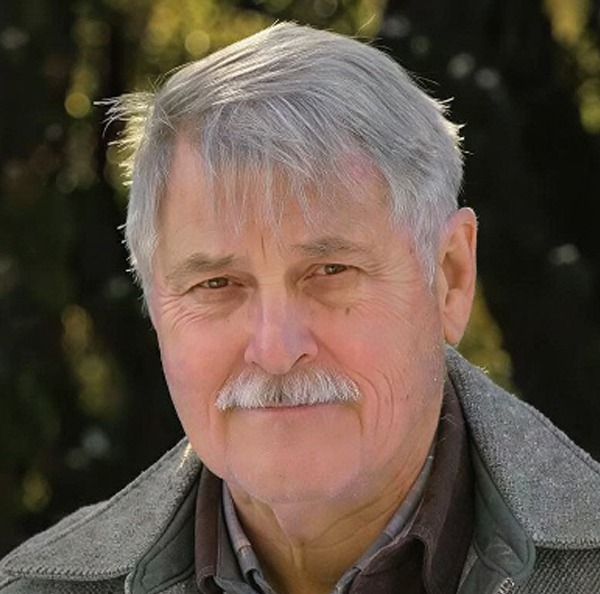
My name is Christen Elmo, Marcher Wemmer. Those were my given names. I grew up thinking that my name was Christen Elmo Wemmer. And when I was in my twenties, I found out that I had a second, second name, which was Marcher spelled with a CH rather than a K was my grandmother’s maiden name, my father’s mother’s maiden name. When I found that out, I told Shirlee, I said, I’m dropping the Elmo, which was my father’s name, and I’m now Christen Marcher Wemmer. So otherwise known as Chris Wemmer to most people. So that’s why I got my name. I was born in San Antonio, Texas at Kelly Field, which was an Air Force base on the 6th of July, 1943.
My father was stationed there towards the end of the war.
And my next question is, who were your parents and what did they do?
Well, my father was a music teacher. He, he was in his thirties actually, when he enlisted in the Army. He was not the ideal age. So he was in a training unit in Texas. And we moved from San Antonio to Wichita Falls. And I don’t remember too much from Texas, but I do remember that the Newsboy used to deliver newspapers from horseback. And that my mother told me, my first complete sentence was an animal observation. It was that “little piggy do big pee pee.” That was my first sentence.
My mother was born in a logging camp in Washington state. She was delivered by a Indian midwife belonging to the Tolt tribe. The town was called Tolt at the time, it’s about 25 miles, thirty miles east of Seattle. And her father was a logger and he was specifically a tree topper. He was the guy that went up and took the limbs off and created, took the top off and created a spar that the rigging could be hooked up to some, so you could skid the logs from point A to point B. And he got injured after several years. She was probably, maybe six, seven years old and broke his femur. And so he had to have that surgically repaired and that was the end of his career as a logger.
So he took the family and move back to San Francisco. And his wife was very happy about it because she had grown up in fairly primitive conditions in northern Sweden. He was a Swede too. And she said, I didn’t come to this country to live in a cabin and have to pee in an outhouse. So that’s how they were living up there. So anyway, they went back. My parents both went to San Francisco and I remember on the trip home, my father told me there was, you couldn’t drive through West Texas without killing a dozen rabbits, Jack rabbits, every mile. This was something he told me when I was a kid. I thought, oh, that’s interesting.
So many rabbits, you know, oh, wildlife. I was interested in wildlife. And he said, then we were driving that same night and we came upon this really big cat in the middle of the road eating a dead jack jackrabbit. I said, did it have spots? He said, I can’t remember. It was just big. So we closed the windows and we waited for it to finish eating. And when it got up and walked away, we continued on our way and rolled the windows down ’cause it was hot as hell. That’s one story that came from Texas in San Francisco. We moved in with my grandparents when we got back.
I remember that. And then we moved into an apartment. My grandfather owned a flat in San Francisco. It was his first house. And so we moved into a property owned by my grandfather, my father’s father. And I started going to elementary school, which was one block away down the hill Lafayette Elementary School. And then I went to Presidio Junior High School, which was maybe a mile away. I’d walked to school both ways unless it was raining. And then we took the bus, and then I went to Washington High School, which was the same distance.
Were animals part of your life?
Yeah, Growing up, I, from the earliest memories, I was fascinated, I mean, really fascinated with animals. I mean, I, I wanted to be around them. I wanted to hold them and, and just seeing them gave me a thrill. And my mother used to walk my, I had two sisters that we had a birth interval spacing of four years between us. So I had my sister Carol was born four years after me. And then Janet was born four years after Carol. And we, where were we before I added that little, We were talking about if animals were part of your life, Animals were part of their life. Yeah. So yeah, my mother used to walk Carol and me to the beach, ocean beach and the sea, the cliff house.
And there was seal rock was out there. And the big, big thing was we’re gonna see the sea lions or the, she called ’em the seals and there were stellar sea lions and maybe California’s out there too, but they just looked like big yellow things on the rock. But that was a big treat for me. And as I grew older, I became interested. Well, I, I was always interested in mammals, but I went through the phases of vertebrate interest that many boys go through. And so I went through a phase, whereas interested in amphibians and reptiles and then birds and mammals. And I had a school teacher who was a very important mentor for me because I had screwed up in school. I wasn’t learning to read because I wasn’t learning how to spell.
And the dumb kids who didn’t, who faked, who flunked the spelling test, had to take their spelling test home and get their parents to sign it. That Friday afternoon, we had to take our spelling test home. There was a group of us, a small group of us, and I knew that if I told my, this was in the fourth grade, I knew that if I told my parents or if I showed my parents that test, they were gonna get really pissed off. So I struggled with it all weekend. I knew that I could bring it to ’em at the last minute, but I thought, no, don’t do it. Sign it yourself. So I signed it, Mrs. Wemmer, and I brought it back and I gave it to Mrs. Steinberg first thing in the morning.
And she looked at the papers and she looked at mine and she said, Christen, did your mother sign this paper?
I said, yes, she did. And I just felt terrible ’cause I was in it deep now. Well, that day I felt so much anxiety that I forgot to take my lunch to school. So my mother comes to school, I see my mother waving to me in the class outside the window on, on the class door.
And she’s all dressed up in her cub Scout uniform, you know?
So she had her eye makeup on and everything. She was being beautiful for the world to admire. She loved to be admired by men. And Mrs. Steinberg went to the door and let her in. And she said, oh, Mrs. Wemmer, she said, thank you for the lunch.
I’ll give it to Christen, but do you have a moment to spend with me?
I’d like to talk with you about something. So when I heard that, I thought, oh shit, this is bad. Right? And I watched my mother through the window. I could see her face going from smiling to becoming very sour.
You know, she kind of got that squinty look like she would get when she was mad, you know?
And I knew I was gonna get it. And I did. When I got home that day, she laid into me, not physically, but shamed me for embarking on a career of criminality. If it’s a felon, you’re a felon. If you forge papers, you cannot sign checks. If it’s not your signature, if for somebody else, you know, it’s, you’re lying. And so she gave it to me, I was bawling my head off. And then my father came home and I got it from my father. And then my grandfather came up and he kind of was very philosophical about the whole thing.
He understood that boys do stupid things. And he gave me kind of a lecture about honesty and not doing things that you’re gonna regret later on. Anyway, Mrs. Steinberg was a very good science teacher. And the whole class had to learn about, first of all the constellations and then the solar system. And she had little models. So she would show us the planets that were circulated around planet Earth and we had to learn the planets, we had to learn the constellations. Our homework assignment was to look up into the sky, which was very hard to do because the sky was usually cloudy, foggy in San Francisco. And look at the constellations. And she told us the stories, the mythology behind this constellations.
But she was a teacher that was so engrossed in these topics herself that her enthusiasm was infectious. And so a number of kids really got into it. And I was one of them. And then from the planets, we got to the gravitation of the moon on the earth and the tides and low tides and high tides and how the inter-tidal zone was exposed with all these really weird creatures, sea anemones and sea urchins and nudibranchs and her daughter became an expert on neuter ranks. So, so she offered to take me and a couple of other kids on Saturday field trips several times. So we went to the beach and we collected invertebrates in the intertidal zone. It was during the real low tides, you know, and it was great. I really got into it. And my parents never did anything to discourage my interest in wildlife.
They were very tolerant of anything that I wanted to bring home if it was an animal. And they started to buy me books. I didn’t add that. My mother, my father assigned my mother to teach me how to spell. And what they were doing was the, it was a new spelling method. I, my wife remembers the name of it. It was, you’re supposed to look at the word and match it with the sound. Whereas my mother had learned the phonetic spelling method where you sound out each vowel and consonant and that that’s how you arrive at the spelling and the pronunciation. Well, she taught me that. And I was getting As in my spelling test, and if I missed one, I would be really upset with myself.
So that was, and then she taught me the multiplication tables, ’cause I was lagging behind in that. So anyway, I kind of got up to speed. I was never a brilliant student or anything like that. I was always distracted by other things that were out of doors. But there was a club at the California Academy in San Francisco called The Student Section. It was a student section of the Cal Academy. And Mrs. Steinberg knew about that. It wasn’t advertised, but science teachers would send kids to this club. So my best friend at the time, Javier Penalosa, and I went up there and became members when we were, I think we had just got gotten into junior high school at the seventh grade.
And they had weekend field trips. They had two Dodge power wagons and they’d drive the kids out to the East Bay or down down the peninsula, or to the San Bruno Mountains or to Marin County, and we’d collect specimens. And there was this wild guy who was one of the supervisors named Ray Bandar, had this great shock of hair that looked like he’d been riding the motor, a motorcycle all morning. He was a bodybuilder, he was tanned, he was a skull collector. And he was going to San Francisco State to get a teaching degree in art. And he became a role model for us. And I remember he took us out and he was gonna teach us how to collect beetles. And we went out into this cow pasture and he had a crowbar.
And I was standing there next to him. He says, to expose the beetles, you have to hit the cow pie whack. And of course I had cow shit all over my pants and he had ’em all over his pants. But then he was showing me these beautiful, colorful beetles that feed the larvae and the eggs of those species. So a lot of the kids in that club were into entomology. Some kids were into botany, they’re the snake chasers. Some kids were into astronomy. It was a real mix of kids that were in that club.
And the good thing about it’s, they took field trips during Easter vacation and during the summer that would be like a week to 10 days long. And they’d take you out and we’d all collect together, collect specimens. Well, about this time, you know, in the junior high school, I got real interested in taxidermy. And I wanted to learn how to make, well, how to make mounts mounted birds and mammals and stuff. There was a course that was given at, that was called the Northwest School of Taxidermy in Chicago, Illinois was advertised in the back of mechanics, Popular Mechanics Magazine. And I really wanted to take that course, but my parents didn’t wanna pay for it. So my mother bought me a book by Oliver Davies called The Methods in Art Methods in the Art of Taxidermy. It was published in the late, late eighteen hundreds.
She got me this book and it had these line drawings, very old looking line drawings, not the sort of things we’ve seen today, very stylized. And so I started trapping mice in the, the basements of some of my neighbor kids who knew that there were mice in the basements and trying to skin ’em. And eventually I did learn to skin small mammals and make study skins. And that happened at the Cal Academy. The other thing that was good about the academy is you could actually meet some of the si, the curators at the museum. So when I was in junior high school, I went up and I met Dr. Robert T. Orr, who is a curator of birds and mammals. And he had me into his office and he introduced me to his assistant, Mrs.
Schonewald, who is a, a French lady who, who had survived the war as a child and had immigrated to the US And she was his bio technician, a very nice lady. She was like a second mother to me. After several years I got to like her very much on him and very kind person. But anyway, Orr introduced me to the collections. And he would let me go into the collections and look at specimens. And through junior high school and high school, I would go to the academy every Friday afternoon and he would talk to me for about five minutes, 10 minutes at most.
And then he would say, well Chris, you go ahead in the collection and what do you wanna look at today?
Oh, I wanna look at kangaroo rats. Okay, just be sure to close the case when you’re finished. And I would go in there and look at specimens and read the labels and everything like that. And I loved it. I just, those labels were like magic to make because they’d tell you where it was collected and the collector’s name was on it and the date and the, sometimes they were, you know, very old specimens. And I just enjoyed the hell out of it. And I started collecting. And at that point, my grandparents, my grandfather decided the family needed to spend more time together. My parents were having some problems in their relationship.
So my grandpa said, let’s all go down to Ben Lomond, where he had a cottage in the Santa Cruz mountains above uc, Santa Cruz now. And so we started going down there on weekends and during summers and I started collecting mammals real seriously. And I got the neighborhood kids down there to help me. So we’d go out and we might take 20 specimens a morning using snap traps. And then my parents and grandparents tolerated me sitting at the picnic table next to the house. We had to cover it with newspapers and skinning mice and rats and making ’em into study skins and putting labels on ’em. So Dr. Orr was very impressed at the end of the summer where I brought this big box of specimens home as here’s this kid in high school, you know, 16-year-old kid in high school collecting all these things. So he said, he gave, he sent me on a mission.
He said, Chris, he said, he said, we have a few specimens of shrew moles from the Santa Cruz mountains, and I think the man whose property they were collected on is still there. He said, you might wanna look ’em up and see if you can collect some more. So we have a larger series of specimens. So I wrote a note to Mr. Greenley and he answered me about a week later and invited me to come up. And by then I was driving. So I drove up to his place and he lived on an old abandoned farm up in the hills above Boulder Creek. And it was a great place.
He showed us his spring and there was a dead wood rat floating in the waters of his spring. He had a colony of Myotis little brown bats in the attic of his house. He showed us where the shrew moles were collected in the redwood groves. I set the traps there and I collected sh shrew moles. So I impressed Dr. Or again, because I went out and I collected the shoe moles that he wanted. So that was kind of how I spent my junior high school and high school years. And then I went to San Francisco State and got into zoology.
I didn’t tell you about the music part because my father had us all learn instruments, but that’s another chapter in my early life. But at SF State, I loved taking zoology courses and met a number of professors, became good friends, remained friends with them till the end of their lives. And there was one professor named Larry Swan who had a TV program in San Francisco about science. And he taught a course in Zoogeography. So we learned about the Pacific Islands and the islands around the world and island biogeography and how a fauna comes to be constituted over time through immigration and dispersal by different species and that sort of thing. And it was fascinating. And he had early in his career, gone down and climbed Mount Orizaba with his, with an assistant that he had hired. And he talked about his adventures there. And he learned, learned to speak Spanish in on Mount Orizaba with his assistant.
And he said they came to the first village after the first month and he said he started speaking Spanish and everybody fell on the ground there laughing their butts off. Turned out that his teacher had a serious speech impediment and he had learned Spanish from this joker who couldn’t speak Spanish very well, who sounded like a clown when he was speaking. And he had all kinds of stories like that. There were always that his elections always had these stories. So one of the kids that got kid named Dave Englund, big Swede, he went and he asked Dr. Swan, he said, Dr. Swan, he said, you know, we could help you finish those studies down there if you could find money, you know, we could go down there and collect specimens. And Swan was skeptical, skeptical about it at first. But I went to him and said the same thing.
I count me in, if you’re gonna do that, I want to go to Mexico. And he got money, he got money from, well it was easy to get money in those days in the sixties, but he got money from like two sources. And so like four of us, we bought a 1952 Ford Station wagon. We painted Aztec symbols all over the side of it. And we drove 2000 miles to Veracruz, Mexico and we climbed Mount Orizaba and we collected specimens all summer and we meant went back and we did it second time. So that was kind of my involvement. That’s how I got involved into science and mammals. And I discovered when Professor Dietland Mueller-Schwarze took a job as an ethology instructor at SF State, I found out that you can study live animals.
You don’t have to kill ’em and make ’em into study skins. And when I found out that I could do that, I quickly switched over and started wanting to study ethology with him. And I did my master’s degree with him on Impaling behavior of Loggerhead strikes. And so that’s how I got into it. And from that it led to University of Maryland where I worked with John Eisenberg on the viverrid carnivores at the National Zoo and got the job in Brookfield and the rest of its history. But that’s the early history, probably more than you wanted to know.
Did did any teacher have an effect on your life?
And if so, how?
Yeah, all of them. All of those zoology teachers did, I mean, I loved it, But anybody more than others that, Well, Swan was, Swan was a can-do kind of person. So he, he made it possible for us to go down there. And I mean, it was a life-changing kind of experience because we, I’d never been out of the country before. I’d never seen poverty before. You know, we were sleeping on the sides of roads, route 45 going down the central plateau of Mexico. How old was I? 19-year-old kid with other 19-year-old kids collecting specimens along the way. So that was, and he came down and he helped, he joined us the second year and we climbed to the, we didn’t climb to the peak of, or we climbed to the edge of the crater, which was 18,000 feet. I didn’t have any sun protection or anything.
I got really severe burns on my face. In fact, it cracked, it looked like polygons in the arctic and seeped fluid for about a week before it started to heal. I don’t know what degree of burns they were, but it was serious burns. But yeah, that’s the stuff we did. And Jim Mackey was their herpetology teacher. I had a great time learning from him. Robert, I, Bowman had a bunch of sound chambers and he was studying song communicate song, song acquisition in Galapagos finches. And he was always running around in a white lab coat down the hall and going to that lab, I wanted to see what was in there.
All the students who were keen wanted to see. And eventually we, we were invited in, we could see those birds. And I mean when I heard what they were doing in research, I wanted to do the same sort of thing. So I kind of bought into the research ticket early on and decided to do a master’s degree, which kind of surprised my parents. And I said, I wanna go for a PhD, I wanna keep doing this. And I got married when I was in the master’s program, Shirlee was teaching school, so she supported us and we had their shrikes right in the house. It was my grandfather’s flat on Geary Street. We lived there when I got married.
And she was very happy to terminate her contract to go back east because she had a bunch of bad kids. They were making obscene phone calls to her after hours and stuff like that until I got on the phone with them and I gave them some of their own medicine and that stopped that. But yeah, that’s how we, that was what our early life was like in a nutshell. And we went to Maryland and it was a completely different scene. I had a plan if I got drafted that if I was gonna get drafted, I was gonna join and try to get into a, a medical unit. ’cause I knew they were studying mammals in Vietnam and they were studying scrub typhus and stuff like that. And so I, I figured that might be a way to do it. And when I worked in the museum the first semester, I found out about the collections they were making.
So that was an option. But then when Kennedy passed the deferment for having kids, we had a kid and that was the end of it. I didn’t have to worry about terminating studies and joining the army. When did you decide I wanna work in a zoo or was, was there I hadn’t decided that I didn’t wanna work in a zoo. I got my PhD and I was applying, you’ve got this on the other tape, that’s what I was applying for university teaching jobs. And I didn’t have the postdoctoral experience to be competitive. So Eisenberg said, go for this job advertised in Science, you might be able to get it. And I got that job. But your first entry into the zoo world was a peanut vendor at the San Francisco Zoo. That’s right. When did you get that? That’s Right.
What kind of zoo did you find there and who was the director?
Yeah, that was my friend Dave Rentz, who was also in the student section, was close friends with Cary Baldwin, who was the director of the San Francisco Zoo. And Dave was one of those kids that was always hanging around the zoo. And Baldwin had a television program too, I forget what they called it. And when they were developing the program, the producer said, what we need here is kind of a smart kid to ask hard questions. And so we can keep Baldwin, Baldwin was a character and so we can keep Baldwin talking, saying goofy stuff and that’ll make them laugh. So he told the producer on the first show, told Dave, he said, ask him the questions to keep him laughing. And so Dave was on that program and he knew Baldwin so well that when I wanted to band bats, Dr. Orr got me bat band so I could band bats. There was a huge colony of Myotis yumanensis in the hay paddock of the elephant house at the zoo.
It was a huge storage area for pay for hay. And it was above, it was like the first story level, so you had to go up the stairs to get in there and was absolutely filled with a little brown bats in the evenings. It was a night roost. So we would catch bats on Saturday nights and band them and then release ’em. And Baldwin said, you know what, you can, I’m just gonna give you a key. He gave Dave a key, he could get into the zoo anytime he wanted. He said, just be sure to talk with, to tell May Mayhew when you’re coming. Mayhew was the night watchman. So when it, when the peanut vendor in the zoo was looking for kids to employ, Dave found out about it and he told me, he said, come on, we can both join, you know, and we can get paid.
I, ’cause he wanted to buy a dissecting scope for looking at insects. And so he had a goal. My father always gave me enough money, I had a credit card to drive the car around. And he bought my first, he bought my first three cars before I went to college. Even he had a weakness for buying cameras in cars. So I didn’t really have any need for money, but I thought, well it’d be cool to sell peanuts there for a while. So I went and I worked at the zoo with Dave and you know, saw the chimpanzees throwing dung at the visitors and all this stuff that you see, the crazy stuff that you see in the zoo and you know, found it fascinating. And this guy Mayhew, the interesting thing, I remember this story in particular, he was a wino, so he’d be a soused the whole night.
And Kerry Baldwin knew that he was a wino. So when he came back and he reported that the wild dogs are running all over this zoo at night, Baldwin figured, okay, I’ll take care of it. And just forgot about it because he figured he’s a drunkard and he’s seeing stuff. And then one morning they found a wild dog loose in the zoo. So they started to explore and they found that the wild dogs had excavated a tunnel from inside their doghouse across the enclosure into a hedge next to the cyclone fence that contained them. And they had been running around the zoo all night, visiting all the parts of the zoo and returning to their enclosure in the wee hours of the morning before anybody ever noticed. So Mayhew was right even though he was soused all the time. And they fixed the problem.
So the wild dogs couldn’t get out anymore. But there were things like that that were happening all the time that I was learning about. For example, the saiga antelope would run, would get spooked and run against the fence and bash their brains out and they would end up at the Cal Academy and I would be there when they were preparing the specimens. So I was learning about zoos and the problems in zoos and I was learning about mammals the whole time. So I had a very rich education. And when I was an undergraduate, the, they, some abalone divers shot a, a toothed whale down in half Moon Bay, Risso’s dolphin is what it was. It was called the Risso’s dolphin. And they arrested those guys for doing it.
And the specimen went to the academy and Dr. Orr told Jackie Schonewald, call up Chris and see if he wants to flesh this thing out. I’ll pay him a hundred dollars if he does it. So it was maybe my, me first semester as an undergraduate, but I said, yeah, I’ll do it. And I found time during the week to go out there and take all the, this thing was probably about 12 feet long. So I had to flense it and remove the fat, the blubber. And then I had to remove the muscles and the tenderloins were so beautiful on that thing that I called up Mrs. Schonewald. I said, Mrs. Schonewald, I said, look at this. We’re throwing this meat in the garbage can.
I said these thing, this animal was killed with a bullet. It didn’t just wash up on the beach. I said, I’d, I’m, I’d like to take a piece of this home and put it in the freezer. And she said, you’re right. She said, I’m going to take some home for the cats. So I cut these big filets, they were like this long and probably like five by five inches the tenderloins. And I took two of them home, we wrapped them up and I put ’em in the freezer, told my parents about it, they were okay with that. And she took some home and fed her cats.
And we had a fuel trip up to the Sierra Nevadas to this guy’s a-frame cabin. His father was a medical doctor and they had an A-frame up in the Sierras. I told Dave Englund who went to Mexico with me, I said, let’s bring the whale meet up there and when everybody’s drunk from drinking beer, we’ll get the, we’ll cook it up. She said, good plan. So we went up there and Reno Taini, who was another friend, he bought these loaves of french bread and we had the meat and it was like 12 o’clock and everybody’s, the party is really rolling. Everybody’s happy and drunk and everything, drinking beer. This was a natural history of the vertebrates class, by the way. This was an official activity.
And I said to Dave, shall we get out the the meat?
He said, yeah. So they got this skillet going on the stove and he started frying the stuff and pretty soon everybody’s smelling this meat that’s cooking, you know, and they’re coming in the kitchen and everything and reno’s slicing up the french bread and we’re putting big slabs of this bloody meat on the french bread and giving everybody another beer. And they’re going back in the living room and they’re eating this stuff and getting blood all over their face and everything. And they’re saying, what is this? It tastes kind of funny. And I said, oh, it’s whale meat. I said, yeah, you’re full of it, you know. I said, no, it’s whale meat, it’s a Risso’s dolphin. It was shot down the half Moon bay and it had a livery flavor ’cause there’s lots of myoglobin for absorbing oxygen in the muscles of cetaceans. That’s what gives it that, that flavor.
And, but they were too drunk to stop eating it. So they ate the whole damn thing. We, you know, two big chunks of that stuff. We cooked it up and everybody ate it up with the French bread. They were happy campers. And they had a story to tell when they went home that they had eaten whale meat. Now you actually, then they get a, a job as a part-time animal keeper at the National Zoo. When do you get that? What year do you get that job and how did you get it and why did you want it? Well, The first year I was there was 67.
So the summer of 67 I worked as a specimen preparator at the National Museum. And Eisenberg got me that job through Charles Handley, who was a curator at the museum Connections. The second year they had temporary positions for keepers. So I worked in the collection, the basement of the Lion House with Gene Maliniak as a keeper. And that was when I rolled Whitey, the albino tenrec up in the newspaper and threw him in the garbage. And Gene checked the cages at the end of the workday and he found out that Whitey, who was like a sacred, a sacred pet for Gene, what happened to Whitey Whitey’s gone. What happened to Whitey Chris, you were the one that was on that cage. Did you see Whitey? I said, yeah, he was there.
He said, well what happened to him? He’s gone now. And I looked, said, I don’t know. He said, we better check the garbage. And we checked the garbage and I had rolled Whitey up in a piece of newspaper and thrown him in the garbage. I shouldn’t tell that story on myself, but it’s, it’s a true story.
What kinda zoo, when you were doing this part-time work, what kind of zoo did you find at this national zoo?
What were your first impressions and who was the director of the zoo at the time and do you remember any of the curators that were there?
Well, Ted Reed was the director. Bill Xanten was working there at the time. I got to know Bill early on. Don Bridgewater was there. And so I got to know those guys. And working in the basement of the Lion House, everybody at 10 o’clock would get the hell out of the basement because that’s when they flushed the cages and all the poop went down the drains through the basement of the Lion House. And some of those pipes were partially open. So that stuff was plopping down through the pipes and it smelled to high heaven. So everybody took their coffee break at that time and it got out of the building and had their peanut butter sandwich in their coffee up above ground.
And then when everything had settled after that, we’d go back down and continue to work. That’s one story I remember from, from there. But the other thing was that they had all these neat animals. They had Solenodons and tenrecs and pacaranas. They had pacaranas, they had large, they had pacas, agoutis, south American caviomorph, rodents. And I was taking pictures of everything, you know, after hours I was running around taking pictures of stuff. We were running encounters we think between tenrecs and things that they didn’t mind. John didn’t mind. We were learning the whole time we were doing it.
So it was a great job. And I remember Don Bridgewater and Bill and also Warren Iliff, were up there one day and the red panda had a baby they had given birth and was carrying the baby in the cage. And by that time I had watched enough animal behavior that I knew what was happening. ’cause I’d seen this with the genets and I knew that when you see this pattern of carrying them, you gotta get the baby away from ’em and get them in a place where they feel secure because, and it was best not to get the baby away. If they set it down, you could do that, but never try to take it outta their mouth ’cause they would crush it. And so I told ’em, I said, you know this, from what I’ve seen, this baby has to be pulled because she’s too nervous in this cage with these visitors on all side. It was a circular pen and there were people on all sides. She didn’t feel secure. She needed an alternative dinner too, where she could go up a tree maybe and feel secure. So they pulled it. So that was kind of the first time I, I saw my own behavioral know knowledge put to practice in the zoo.
And I felt good about it. You know, they relied on me, they listened to me and they made a decision based on my input. So that was rewarding.
And were you starting to form a philosophy about zoos or had you already developed it?
Not, not yet. There was much more to see before I started. I, that started when I went to Brookfield. So we’ve talked about your time at Brookfield. Yeah.
But ultimately in 1974, you lead Brookfield Zoo, right?
To do a full-time job. Yeah.
As supervisor, supervisory mammalogist at the National Zoo, right?
You returner, right?
Yeah. New responsibilities. Yeah. The way that happened was the zoo had just acquired, or was about to acquire CRC, the Remount station in front Royal. And John Eisenberg called me up, I remember the call while I was in the kitchen of the small mammal house at Brookfield. And he called up and he said, Hey Chris. He said, there’s some interesting things happening there. We’re gonna get this property. And he said, devs and I are gonna go out there and get that place started. I need somebody to oversee the research operation in, in the zoo.
So they had a big collection there in the zoo. And he wanted me to come and oversee that. He said, I want you to think about it. I said, John, I don’t have to think about it. I’ll tell you right now, I’m interested in it. He said, no, I want you to think about it. I’ll get back to you in a few weeks. A few weeks passed. I didn’t hear anything more from him.
So I called him up and he said, it’s, he said, it’s making way.
He said, we’re getting there. He says, but you know what?
It’s best for Devs I to stay in the, in the city. He realized that the work at CRC was not gonna be much research ’cause there wasn’t much of a collection there. And he said, but we’re gonna need a supervisory mammologist to oversee the mammal collection to get it started. And so I said, well, I’m interested. And then Jaren Horsley, who is an old buddy of mine at SF State, he was the general curator at the zoo, said, I’m sending in the applications, fill him out and send it back. She says, we’ll put it in. So I put it in, I don’t know who else applied for it, but I got the job. So on October 5th, 1975, we arrived at CRC with the U-Haul filled with our meager belongings.
And we went to the old commanding officer’s house, which is the one that Horseley said, that’s the one to take it. It’s the best house. And we moved in, that was one with Foster Dulles’s carpet. And we moved in there and Shirlee was very depressed. The walls were painted, kind of a deep green color. And horses said, pick out the paints you want, said I’ll buy the paints you guys painted. So we did everything got painted earth tones and kids were enrolled at school. And we started a new life. Now in 77, you take another position at the nationals.
Was is the curator in charge? Yeah, That was a progression. I was still there. And at first the different operations, maintenance, budget and collections were all managed out of dc. So I answered to the, to Jaren Horsley and Mary McComas answered to the budget chief at the, at the zoo. And the maintenance guy answered to the maintenance guy, to the, the maintenance superintendent at the zoo. So anyway, they decided that that wasn’t, you know, we were all listening to different instructors and not coordinating the work as much as they wanted. So at that point they kind of consolidated it under the curator in charge. Who, that was me. So then I had to assume greater responsibilities for these, these guys. No an no longer answer to the guys in the zoo.
They can consult with them, but they were answering to me. And then we started having staff meetings. We started to act, operate as a, a coordinated and unified office of the zoo rather than a divided office that answered to different parts of the zoo. But yet in 1985, you become the associate director for conservation and research. Yeah. That that was part of the different Title. Yeah, it was just a, at that time when Mike Robinson was in there, he wanted to have raise people to a higher level. So he was the director and then they were gonna have the associate director. So Devra was associate director of research.
I was associate director of conservation. They had an associate director of education, I think that was Dave Jan, Dave Jenkins came in. So that’s how it worked in those days. So I became, I was had a higher, I got a higher grade when that happened. And, but it was the same op, same program, but it was becoming more sophisticated and, and we were really figuring out what conservation was and what we could do for conservation. Whereas those first few years when we were there, we were just stuck building fences and renovating old barns and, and moving the animals in. And that was, that phase was over then. And we moved on to the next plateau.
What would you say was if there was one of the more unusual species you were able to bring to Front Royal?
Well, from the standpoint of conservation importance, I would say those Hawaiian birds, the Guam rails, Bali mynahs were important ones from, in terms of my personal interest, I found the binturongs very interesting. And we bred them and we wrote some papers about their biology. One of our interns wrote a paper about teat Hierarchies in ONGs that they have their own teat on Mom and they don’t deviate from it. That was something that Griff Ewer had described in cats years earlier. Interesting behavioral observation. The clouded leopards, a lot of people got excited about Joe Gale Howard, who was down at the zoo was keen on that. Larry was very keen on it. So I mean, I was, I got very interested in Hoofstock at that stage of the game at Brookfield.
The Hoofstock keepers used to come over and ask for my help when they had a problem with Hoofstock. And I’d go over and help ’em, and I, it kind of fed my interest in Hoofstock. So I started reading extensively about deer and antelopes. And then when I was at Front Royal, we had all these things coming in. So, and we were getting grants for, or we were giving out fellowships for scholarly studies, postdocs to come and do research on these things. So Joel Berger ended up out at the center studying the onagers. And you know, we had other students, Sharon Pfeiffer studied the scimitar horned orx. So we had a lot of people coming out to do stuff.
And that was when we had that great fiasco with the Bactrian camels. Jim Murtaugh, who is a keeper then. And I filmed the rutting behavior of the Bactrian camels, which is quite a scene to see. They have a occipital gland on the back of their head that produces the stuff that looks like coffee. It looks just like coffee, but it’s a little bit thicker than coffee. It’s like a Greek coffee. Yeah. Or a Turkish coffee. A lot of sugar in it and kind of sticky. And they rub that on their hump, and then they turn the tail underneath the penis and they pee on their tail.
And then they flap the tail on the rear towards the rear hump hump. So they’ve got one scent on the front end, and they have another scent on the back end. And then they go around, they have this bladder in the base of the tongue, which they fill with air. And they go, they kind of make this gurgling sound, which is the, their love song, which they produce to maybe charm the female, but also to intimidate other males. And then they get into neck fights with each other and they get down their knees. They’re fascinating. We made films of all this stuff, 16 millimeter films. And so Jim helped me write a paper on that for a symposium that Diet Mueller Schwartz held on olfactory communication and mammals. And he had been my masters advisor at SF State.
So he had now moved on and he was up at Syracuse University at the time. But yeah, so Ted was very anxious.
He was always asking, when are you gonna get baby camels?
There’s no baby camels. How long is it gonna take?
I said, well, they, they’re sewing, running behavior. I said, they’re fighting and we’ve seen him mounting and they, they never had any calves. And so finally Mitch Bush came out and I think he knocked Humphrey down and he was a cryptorchid male. The testes were, had never descended, they never descended into the scrotum. So he had the equipment, but he didn’t have the testes. He had the intromittent organ, but he lacked the testes. And so he can’t cool off the testes enough to have viable sperm. So he was infertile.
And when this news came out, the AZA found out about it. And so Ted Reed got the Zoo Goof of the Year award that year, and he was a good sport. He, he played the clown, you know, played the fool along with the whole story and got his award at the annual meeting that year. And, and then we did get a male who was fertile. But one of the first lessons for me there was we got a male from another zoo. He was kind of a small Bactrian male, and he had been in captivity for so many years that he had his cage stereotypy. And this just hit me between the eyes. I’d never seen, I’d seen cage stereotypies before, you know, a fixed pattern of mo mo motion that’s been induced by very close confinement.
Anybody recognizes them when you see it in the zoo. And this guy would just, he, he had 30 acres of paddock to wander around and he spent all of his time making a figure eight in front of the gate to the barn, Ollie, that was Ollie. And he just did the same thing over and over again. And it was such a kind of tragic realization I had of how serious, serious, I mean, this is like a mental, a serious mental illness. They only have time to, you know, carry out basic bodily functions. And the rest of the time they’re doing this one movement over and over again. And so that was a, a demonstration that stuck with me for a long time. And, and throughout your career, there have been accidents and things that have happened either at Front Royal, within the zoo.
Was there something with someone bitten by a snake?
Yeah, the first, the, my first night at the National Zoo, I was sleeping in a stockroom that the friends of the National Zoo used, and somebody knocked on the door brown after midnight. And the zoo police woman came in and told me that a boy had stolen a Gaboon Viper on Easter Sunday. And he then took the viper in a gunny sack up to the bus, boarded a bus, threw the sack over his shoulder, and the Gaboon viper bit him on his, I don’t know which muscle it is, deltoid or not his deltoid. It was on one of the long muscles on the back. And so it was an emergency, they had to get antivenin. But the zoo had a complete policy. And I just had to make a call to find out what the policy was. And we got the antivenin.
It had to be helicoptered up to the city from Tennessee or Kentucky, someplace, I think it was maybe Tennessee. And he was administered, he went to the hospital, of course, and he got the, and he survived. And then about a week after that, Nancy Reagan wrote a letter to the zoo and said she strongly recommended that the zoo hire this young fellow because he was obviously interested in snakes. And we kind of took a pass on that when we didn’t answer her or any, I don’t remember that we answered it and then it went away. So, but of course, a lot of people were up at arms when they saw that letter, but nothing came of it. And this is your first, That was my first night at the zoo Night as director. First night as director. Yeah. And you had different people keepers all throughout the zoo in your career.
It was a gentleman named Gene Morton.
What was his relationship?
Well, gene was, gene was an ornithologist, got his PhD at Yale and wrote some real seminal papers from his PhD work on propagation of different frequencies of bird song through different habitats. And he showed that the frequency of the song was geared to the kind of floral density of the habitats. So Grasslands had songs that were in a certain frequency range, and forests had a different fre frequency range for a variety of birds. And he demonstrated this with a number of species. So it was, it, it was convincing evidence that he had compiled.
And, but one of the problems, as John Eisenberg and Ted started to go around, John bought Devra on the staff and Ted asked John, when are you gonna make her an honorable woman?
And John got his nose out of joint about that. They weren’t for drinks one night, one Friday night. And that happened, and John got his nose out of joint about that. And so then John would go on the offensive and there was this kerfuffle that was taking place within the zoo.
And John told Gene, he said, Gene, he said, and John had asked, or Ted had asked John, he says, well, what’s going on with Morton?
What is he doing for the zoo?
All he does, he spends his time in the field, but why does, what does this have to do with zoo work?
So John got highly offended by that, you know, questioning the direction of Gene’s research. So John said, Gene, you better sign up for being curator. So Gene went and talked with Ted, he said, I wanna try my hand at curation. So Gene became the curator at the zoo. He was still, he kept his hand in research too. But he went and checked the collection every morning and met with the keepers and everything. And, and at that time, that spring Gene was really into Purple Martins. And he had put Purple Martin houses up out at CRC and he was studying the Purple Martins.
And somehow he had this network of people that were Purple Martin fans. And somehow he made connection with somebody who had found a pure white purple Martin that had fallen out of the Martin House and had taken it to the zoo. And so they hand reared this purple Martin, and it became quite tame and it fit into the bird house perfectly. It would fly, fly around. And when Gene realized that th this purple Martin was being fed on mouse pups, it completely blew his mind because purple Martins are aerial forages that forage on the wing. That’s what they’re built for. And here was one whose behavior was so distorted by captivity that it came down like a pet cat and roosted next to a bowl of mouse pups and gobbled mouse pups out of that bowl or out of that dish. And it just blew Jean mind.
I I remember, I I re reacted to it with humor because I found it highly amusing. He was so upset. I can’t believe it, can’t believe this.
Can you believe that this bird is eating?
I mean, that’s what captivity can do to animals. And of course we all knew that captivity could, you know, grossly modify behavior. I mean, Konrad Lorenz knew that. And Heini Hediger knew that. I mean, we all knew that. But this was a demonstration of a, that had an impact that nobody had, that Gene had never experienced before. And it kind of changed him. I mean, he realized that there were challenges within the zoo in dealing with captive husbandry that he had never dreamt of. He was interested in natural behavior, but it was, was, I was highly amused. And a lot of his friends were amused by his reaction to it because he was deeply, he was the kind of guy when Gene came around, he was so enthusiastic about what he was doing.
And that, that you just felt good afterwards.
It was like, well, what’s coming in now?
And he’d tell you, oh, you know, it’s the yellow warblers are coming through now and, and the Indigo buntings are starting to nest. And then he’d, I found some really interesting findings about the Song of the Indigo Buntings. And he’d go on and on and, and it was, it, I enjoyed so much seeing somebody that was enjoying doing their science. And Gene was, he always inspired us to just to listen to ’em and see that. And he was dragged into curation with all the problem personnel problems and everything else. And White Purple Martins that were eating mouse pups, you know, At, at for Royal was the largest animal, the Bactrian camel.
Did you ever have rhino?
Well, we had giraffes, We had sable antelope. We didn’t have the giant sable, but we had sable antelope. We never had giraffe. No, we had Wisent, the, we were pretty big, but I think the Bactrian and the male Bactrian, I don’t know, they were probably, maybe they were close. You’re talking over a thousand pounds. I mean, we may be talking 1500 pounds for those camels for a big male. You know, one time I was tempted to climb on the camels. I was young and was not averse to risk taking behavior.
And I saw ’em there and I saw that when they came in, I could actually jump onto a camel and get between the humps and take it for a ride. Nobody was around. I would go out to the Barnes myself and we were collecting materials from, I, we did, we were working with a chemist at Howard University to analyze the scent from those camels. But I didn’t do it. I didn’t do it. I thought, you know what, if you get hurt, you’re gonna look stupid. And I had done a stunt like that at the Brookfield Zoo, which I’ll tell you about. ’cause I’m an old man now, and it’s not gonna affect my grade or my pension, but there was a cloud of leopard or a snow leopard every morning I came in, it was behind the Lion House and had a very large pen. It was like a corn crib, a huge or two corn crib cages together with vertical bars. And every morning I came in, they had these logs in there and it would hide behind the logs and stalk me.
And I was checking the exhibits, you know, so I’d come in there and check everything out and it’d be stalking me. And you’d see it kind of peeking at you from behind the log. And then it would go down and then it would show up over there and it would peek at you again.
You know? And if I approached the, the wall of the cage closely, he would run up to the front of the cage and he’d reach out at me with one, one forearm, you know?
And I thought, you know what? I got boots on and they, they’re over the ankles and everything. I’m gonna see what happens here. And there was a guardrail behind me. So I put my foot up there, one foot, and he grabbed it, and those nails just went right into the boot and he started pulling. But I had the guardrail behind me so I could pull back. I wasn’t gonna get dragged in, but I knew he wanted to get that other arm through the cage. And then he’d have me with two, two prehensile, forepaws with retractile claws. And so I quickly terminated that.
I just pulled away and he let go. And that was it. And that’s the only time I did that. And I didn’t tell anybody about it. I didn’t tell George, George would’ve been very upset. But we had other experiences too, that George would get upset about. And one of them was, we had these two Eastern Europeans, new immigrants to the United States that were welders working in the sloth bear enclosure. And the slide door on one of the dens at the far end of the sloth board, sloth bears had rusted and broken. So you couldn’t close the door.
Well, and the bears could open it. And so these guys were in there welding, and I knew they were welding. Jimmy was keeping an eye on him. Jim Jimmy, Jimmy Rowell, and Jimmy came to me and he said, Chris, we got a problem in here. He said, the sloth bears got out of their holding cage and they keep going in with the welders. And the welders had these welding masks on, so they didn’t know what was happening. The sloth bear would come in from the side and all the, the welder could see was his vision was getting black on one side from the hair of the, you know, the, have a hairy head. And then they flipped up his mask and he saw this Dan sloth bear with these big lips.
It was right next to him, to him. And they were taking the tools they had on the ground and taking ’em out into the grotto and dropping them into the moat. So they had lost like half of the tools they had there to the sloth bears and the slot bears were having a ball coming and going. So Jimmy and I worked together to get the soft bears over to the other den, and we locked them inside so the welders could get their tools and everything. And then I called up George, but we took a, took care of the problem right away. And George was hopping mad when he came over there. He was just ready to blow. He was so excited. And I was giddy because we had solved the problem.
And I was laughing and that was making George even more mad, you know?
But finally I said, George, I said, the problem is over. Now we, we, we took care of that problem. We solved the problem. But I, but I said, you have to admit that it’s funny. I said, nobody got hurt. These guys, they barely spoke English and they kept getting their vision kind of blocked off by the head of the sloth bear.
They didn’t know what was happening. You know?
And it was just this kind of comical zoo situation that I found, found the highly amusing. And I always laughed in those situations. You know, I, I couldn’t get too serious about it. Nobody got hurt.
What do you think is the biggest change in the zoo profession that you’ve seen?
The biggest change in my lifetime? In the zoo profession?
Yeah. Well, I think during the nineties or the, was the eighties, I think it actually started maybe in the late seventies, was the awareness of the problems of poor management of captive populations and the growing awareness that this can lead to inbreeding and all kinds of other problems. And that led to the SSP program and really a major kind of revision within the AZA in coordinating activities between zoos in the management of wild animal populations in captivity. So I would say that was probably the biggest thing in my lifetime that happened. I mean, I was amazed at the energy that people put into that. I mean, people discovered kind of a commonality in their views towards animal management that hadn’t existed before. And people popped up and said, I want to be the chairman of the Bali Mynah committee, or whatever it was, you know, and all those different SSPs came into being. And then we had the, I was responsible for the figs, the fauna interest groups. ’cause I realized there were a lot of members of AZA who were doing work in the field, like the Aruba Island Rattlesnake, that they were working in the field abroad on species that were in their zoos.
And so we developed the fauna interest groups, which they changed the name of, I don’t think it’s active any longer. But that was another kind of niche for the biologists, the zoo biologists in the community to get involved that differed from managing the cappa populations. And you know, the little workshops developed out of that. And that took place at the AZA meetings on various aspects of demographic management and that sort of thing. So I think that was, to me, that was the biggest thing probably that happened. There was also the growing awareness of ethical issues in the management of wild animals in captivity. But that one had been kicking around. I mean, Hediger and the old timers were concerned about what was proper care of, of animals in captivity.
And I remember he remembered the rhino exhibit in Zurich where he had the floor was uneven. He said, A perfectly flat or floor is not natural in nature, you know, it’s irregular. So he, I remember Christian Schmidt made a big deal about that. And this is Hediger’s contribution here. And he had the oxpeckers on the rhinos in the zoo. mixed species exhibits was something that came up and it kind of became a craze. It wasn’t the be all end all of anything, but people wanted more interesting exhibits because a lot of animals are nocturnal and they’d sleep in front of the visitors. So somebody came up with the eye, well, let’s put some species together that occur together in nature.
And they found that it was a headache, that there were problems that one species was interfering with or eating the other one and or stepping on ’em and that sort of thing. I remember the oxpeckers never worked that well. They were great to see ’cause they’re beautiful birds, but rhinos and elephants in captivity don’t get enough external parasites to keep them happy. So that was one problem that came up with that. So there was kind of growing awareness. There were experiments that were tried and some embarrassing consequences. And that kind of evolved. And there are things that you can do that you can get away with.
I remember the mixed species exhibits with, there’s penguins in something else in the Singapore Zoo that worked quite well, and they had a refuge for the penguins, whatever it was they were in with, maybe it was a sea lion or something like that.
That wouldn’t be right, would it?
It could be a southern South African fer seal or something like that. Anyway, they could mix together, but if they were harassed, they could get into a, a creep area, you know, like a, a creep pen that they could get through the barrier. But the, the first seal couldn’t get through. It was penguins. I can’t remember what the mix, what the other species was. But, so those are a few thoughts on it. So when you started, there were certain skills that were important in some of the things you’ve talked about.
What would you say are the skills, in your opinion, skills or roles that are becoming more working for zoo professionals today?
Well, I, I would break it down into maybe two areas. One would be management, personnel management, knowing how to deal with human problems, because those are always big obstacles, people working together. It’s like any kind of primates society, you know, you have a dominance hierarchy and stuff happens within the group, within a zoo. You have natural kind of groups forming within a zoo based on expertise and education, that sort of thing. So, you know, you have the keepers and you have the curators, and you have the veterinarians and you have the directors. So you have a dominant hierarchy and kind of a chain of command, which is supposed to work properly, but doesn’t always, because not everybody follows a chain of command. So that’s one set of problems. And in the Smithsonian, we all had to take manage personnel management courses.
And there you learned that when you made decisions within a group with input from the group, you solved the problem. But they had exercises that you would do in a classroom setting. And the problems always got the better result when the group participated than if you had a dominating figure that wanted to call all the shots himself or herself. So, and we had, we had to take a number of those courses. I mean, they kept coming up, you know, it was like, and you had to go away for like a three day retreat and sit with people from other parts of the institution and do these imaginary scenarios. And I had, I had an interesting experience there. There was a, I was put into a group and I forget what the purpose of this whole exercise was, but there was this young gal there that was in our group, and I was supposed to advise her in rather harsh, dominating sort of terms about some problem. And then she was supposed to react with the lesson she had learned in the class, you know, diplomatically with me.
And so I came down, I said, you know, this is completely unacceptable behavior. I said, this is an embarrassment to the whole staff in the place, and you just can’t, you know, you can’t do this again. So I was being like, I was being like the hard-ass boss as being the badass. And she said, oh, I’m so sorry, I’m, I’m really apologizing. She did everything that she wasn’t supposed to do. And, and the teacher pointed this out and she told me afterwards, she said, you know, my father’s Greek and my mother’s English. And she said, Greek men are like Italian men. She said, they’re very dominating.
And so I learned never to argue with them, you know, if he reprimanded me about anything. So there was this cultural factor that they hadn’t taken into account that affected that little scenario that we were enacting in the course. So that was, but we did a lot of that stuff. So we’ve talked about the personnel part and then the other part was animal expertise and understanding the subjects that you’re working with. And I’ve always been a staunch believer that you need to really understand the critter as well. You need to understand not only how they act in captivity and what you can do with them in captivity, but you need to understand something about their physiology and their ecology and their natural history, reproduction, all that sort of stuff. Because sooner or later something’s gonna come up that you’re not gonna be able to solve unless you can understand the biology in a bigger realm. And I’ll give an example of that.
One of the things was infanticide in monkeys for a long time, time when that happened in zoos, people thought he’s a bad male. That bugger has to get outta here. You have to keep him separate. You can’t put any females or young animals in with him because he kills the babies. Well, it turns out it’s natural behavior in primate societies, many primate societies and males will kill offspring so that the lactating females stop lactating, they’re no longer in an anestrus and they start cycling again and then he can sire offspring. So there was stuff like that that’s in our manual, but I think we put that one in the zoo zoo biology manual. But you know, things like that, it, I saw in many cases where somebody did understand kind of the natural behavior and had insights into the social organization, mating system of the animal. They could make better decisions than somebody who didn’t.
I remember one time we had a, we were giving a course in Morocco and there was this very sincere young man who took the course and he was in a zoo management position. And he told us, we were talking about Kate crate training animals, cate tra crate training ungulates. And he gave this example of what they did where they did everything wrong. I mean, it was like horrible. And it was so horrible that I’m very embarrassed about this, but I couldn’t keep a straight face.
It was like, oh my God, you did, and then what did you do next?
It was like, I can’t believe it.
You know, this is ridiculous. You know?
And I’m so embarrassed that I was, you know, laughing when this guy was telling you. And everybody was seriously listening. My other co-instructors were listening and taking notes, but it just struck me as being a horrible thing that happened. But it was based on the fact that he wanted to do the right thing and he was doing what his instincts told him, but they were wrong because he didn’t know anything about the nature of the beast. You know, it’s like Jimmy Rowell, who is the small mammal keeper at the Brookfield Zoo. I remember Jimmy was a very sensitive person. He loved his animals and he was a great lead keeper. And Jimmy was telling me about crate trading and how they took a reindeer in a crate to O’Hare airport.
And he said, he, he said, you have to watch it. You have to make sure it gets on the plane. He says, the guy with the forklift set it down. And when he backed up, he knocked the crate over on its side. And he said, I was there totally helpless, I couldn’t do anything. And he said, the animal died within minutes because it totally freaked out and stressed on the hot tarmac inside that crate. You know? So these are the kinds of things that you learn. I mean, that’s kind of a common management, common management knowledge that it’s common sense really, that we know.
But then there’s the other things like the infanticide in monkeys that is not, and let’s say introducing animals, new animals to a group.
You know, when you throw a a, a new baboon into the cage, he’s gonna have to pass muster with everyone else, right?
He’s gonna be tested. And that’s just understanding dominance hierarchies. And there are ways of getting around that. For example, with Meerkats, I think what we found out is that we could acclimate the, it’s a closed social group. You know, their society is a closed social group. So if you take an outsider and put it inside the group, it’s going to be attacked because it’s not a member of the group. I think it’s the same with hunting dogs, wolves all too. So what you do with the Meerkat is, I think we put it in a cage and introduced the scent and it socialized through the cage, but nobody could be aggressive with it ’cause they couldn’t get at it. And then after a while it was like this Meerkat’s, a member of our group, let ’em out of the cage, the introduction cage, it’s integrated.
You know, that sort of thing. So those little tricks based on knowledge, you could put rags in there from the animal’s cage. And just the scent would be, because it’s basically a scent scent that they’re using to identify one another with, that was another example of that sort of thing. So that’s just biological knowledge that comes about. And you talked about a little about the, the needs animal welfare.
How do you think zoo professional tries to balance the welfare needs with what the visitors have?
Expectations or sometimes even the limitations of the exhibit?
Well, it all, it’s all education, isn’t it?
I mean, the, the big problem is, is educating visitors without making, making them feel that they’re in school. You know, you wanna, you have to be kind of subliminal and how you get messages across to them. So real simple signs, announcements and that sort of thing. I mean, the whole goal to me of Azu Zoo is education. It’s animal management, but it should be to educate people about wildlife.
They’re not there for entertainment alone, you know?
So did that answer the question?
Yeah. Do you think that zoos have been mostly successful in that concept of the education of the public?
I think people that are exposed to animals in zoos generally relax, react in two ways. There are those who reject captivity on principle and who just don’t feel good looking at animals in cages. Those are often the animal rights people. That’s kind of the far right. And then people on the left are visitors that come and moms and dads with kids. And it’s entertaining seeing the, you know, the lion with its cubs and they enjoy it. And the kids have fun and, and their reality is, is quite different from the reality of the animal welfare or animal rights person. And it’s really kind of in between what the real situation is.
You know, you, there is an issue with captivity, it does change animals, but there are positives in keeping animals to captivity also. So there they’re trade-offs.
Now when you were, you spoke about the different groups when you were at the National Zoo, did you have to interact or ever deal with, or be part of decision-making on how to deal with animal rights or people who were opposed to what the National Zoo was doing?
And how did you approach that?
Well, we had a major issue at the National Zoo with that deer hunt. I dunno if you remember that. But when Dr. Reed acquired the Remount station in front Royal Virginia, the Ayleshire Quartermaster Remount station, it was a 4,000 acre mule and horse breeding farm for the cavalry. And we, we didn’t get the full 4,000. It was divided up between some other groups, agencies in the area. But we ended up with maybe it was 3000 acres. And Dr. Reed did not want any hunting on the property. And so even though the employees had in the past hunted for deer on the property, they were prohibited from doing so. And I had to come down pretty hard on some of the staff because they, the old habits didn’t go away easily.
And they liked to sneak on on the weekends and that sort of thing. But anyway, the orders were no hunting on the property. And what happened is, over a period of years, the deer population increased. And then Dr. Reed wanted to know why he had to buy hay from Kansas rather than the hay that we were growing on the property. And the reason was that the white-tailed deer were eating it. And so he said, well, we gotta have a hunt. This is in 1982. It started in probably around 1980.
And so I said, Dr. Reed, let me just check with Virginia Game Commission. I said, because they’re the ones that manage whitetailed deer. And let me ask them what we can do to take care of the problem. Because if we have a hunt, it could backfire on us. And he said, okay, do what you have to do. But he said, I want the, I want the hay. We can’t have this going. I can’t be paying thousands of dollars dollars shipping hay from Kansas.
So I met with, what was his name?
Jack, I forget his name, but he was the commissioner. And we talked about it and he said, you know what, what you can do is he said, you can have a controlled drives. He says, you have to get a bunch of people together. And he says, you have some fencing. So you take some of the fencing down so that you don’t have to jump over the low fences that you have. We had cattle fences and some chain link, but the deer couldn’t go through, go through that easily. And so we started to have these drives. We did advertisements in the community and we had, you know, the community members came out there and we’d make formal line and kind of march and drive the deer out.
And they’d go out the fence and then we’d put the fence back up. And, and we did, we did that a number of times, but it didn’t make the problem go away because it was a semi-permeable, permeable membrane. The fence was so that we could get back in. We needed an impermeable membrane to keep them out. Well, so the next step was the hunt. So Dr. Reed gave me the order, you better, you better do the damn hunt. So we organized the hunt with the advice of the, the game commission. And you know, we had kind of a lottery system to, for PE people to get assigned a plot.
And we put stands out in various areas and we made sure to keep them away from where we had the Eld’s deer in the Pere David’s deer. So nobody would make a mistake and shoot the, the animals that were out in large paddocks. ’cause we had thirty acre paddocks for some of the animals. And we had the hunt. It was a success. I mean, it was a success. Success in one sense. They wanted us to take bucks and not does. They can only take those on the last day. So the important reproductive unit within the population were the does.
If we’d taken out as many does as we’d taken out bucks, it would’ve been a different situation. But we didn’t, so the males can breed with lots of females, but each female gives birth to one or two or three, sometimes three fawns. So what happened is that the population continued to grow, even though we were having the hunt. So the second year we were gonna do a does hunt. It was gonna be open season on those for two weeks. And there was a group in Washington, a group of people that were violently opposed to the zoo having hunts. And they’d gotten wind of this. And I remember that our public relations office sent out this little group for a tour one day.
And they were incognito. We didn’t know, really know who they were. And we took ’em around. And then Mrs. Free, who was the leader of this group, asked the pr, our PR guy said, you hunt these things. And he says, well, we have hunted them in the past, you know, that’s all she needed. And she went back and the next morning it was in the papers in DC And so we were in the frying pan at that time. So this was an issue. You asked about welfare issues that are brought to the attention of the general public.
And this was one welfare issue that came up. And so I had to go down to Washington DC with one of my staff members who was a keeper, and he had helped organize it. ’cause he was a wildlife management major from Virginia Tech, but he also chewed tobacco. So he had a big wad of, of chaw in his cheek when he went down there and he had the baseball cap, he thinks. So he cut the kind of image that that didn’t pass muster with the citizens in Washington DC who were in Maryland, who were the suburban suburbanites who were concerned about this issue. And so the next thing that happened was that hearing in the picture here and the appropriation subcommittee, it was brought to their attention. And I had to go down and testify. And Ripley didn’t want anything to do with it.
The secretary of the institution S. Dillon Ripley, he figured, this is Ted, this is on your plate, you know, this is, this is your bailiwick. You take care of the problem. So Ted, Ted Reed went down and Sam Hughes, who was the undersecretary at the Smithsonian, yours truly, there’s somebody else in that picture. I can’t remember who they were. But anyway, we all went down and testified and it was a losing battle. And your congressman, Sid Yates was chairman of the sub subcommittee. And his wife had cancer at the time, and she did not wanna see those deer killed. And so I answered all the questions as well as I could. But we had a number of members of the community, I’m sorry for moving That’s okay.
Who, who had grievances because they didn’t get the best deer stand that they wanted to have. And so it was, it was kind of chaos that hearing. But I knew I was beat when it was over. And the committee, well actually Sid Yates’ aid came up and he said, you did a good job. He says, but he, he, you ruled with the punches. But he said, we’re gonna make sure you get the money to put up that fence. So we got $800,000 to put the fence up, the chain link fence around the whole place, which, which kept the deer from getting in.
But we had to periodically, they’ll, they will even go over an eight foot fence during the rutting period, you know?
But that took care of the problem. So we were seen in a more favorable light by our detractors after that happened. But when I think that that particular incident gave Secretary Ripley the ammunition and that he needed to get rid of Reed, and I told this to Mark Reed, he didn’t know this, but he felt that you got us into this embarrass, embarrassing situation, Ted. It’s time for, for you to think about retirement. And Ted was not ready to retire. In fact, we were all very happy with Ted as a leader. Everything was going quite well in the zoo. There had been some personnel changes within the zoo that had disruptive personalities in them, brilliant people and everything.
But that had all smoothed out. And we were happy work with Ted, but he had to leave. And so Ripley asked me to be the acting director of the zoo. Called me down to his laboratory. He used to have a little bird laboratory. He had one, one day of the week on Thursdays. He’d go up to his bird laboratory and do research. So I drove in and I went up there and I met him and he asked me if I, we talked about birds and mammals of India for about a half hour.
And then he popped a question, asked me if I’d do it. And I said, yeah, I’ll, I’ll try. And so I went down there for about a year and a half I think it was. And Challinor said, you should put your hat in the ring for this, you know, for the job. So I did. But that group that opposed the hunt was very active and formed kind of a, they did a power block. So I got a lot of bad publicity. And with the search committee, they said this guy had a hunt of deer at the center. He’s not qualified to be a director of the zoo.
And the other thing is that Mike Robinson was a very good competitor. Mike was a very eloquent speaker and he had a long history with the Smithsonian Institution. And he was kind of at that age where if he was going to advance and go up, this was, was it, I was still in my, I don’t know if I was in my early forties maybe. And so Mike got the job and I was perfectly happy to go back at that stage of the game to go back to the center because I had things that I could do. And I had a taste of living in Washington and I knew I could do the job. I was afraid that it would be difficult. But I found out with the staff you had, we had good people, you know, it was pretty easy really. You just had to listen to people and make things happen.
So that was an animal welfare issue that had far reaching consequences.
So you had, you wanted the job as director?
Yeah. I decided when Challinor said you should try, I thought, well, maybe these guys do want me for the job and maybe I can get the job. And when you had the job as acting director, you were in charge of Smithsonian, you were in charge of the zoo and Front Royal. Yes. And so you were exposed to different things as director, obviously, than you had been just awning from Roy. Yes. Which may have changed or solidified some of your philosophies about running a zoo. And by that, how you have actively been involved in, in conservation and research.
What would you say are the research or conservation projects that you, when you were there, were most excited about?
And have they continued?
I think that when we were, when we started out, most of the initiatives were about building facilities and stocking facilities at the center. And so it was really about establishing collections and getting things going. And that’s what we spent the first years doing. But after the Endangered Species Act passed in 1972, it took probably another two or three years for the Fish and Wildlife Service and the various agencies, NOAA and other agencies to develop their operatives for conservation recovery plans and that sort of thing. And I think once that got going and things like the black-footed Ferret reintroduction came along and other reintroductions and recovery programs that needed captive breeding as part of the solutions, that it got very interesting and challenging in ways that just managing Pere David’s deer and Eld’s deer were not. So that was a big change that came about. And those were exciting challenges within the zoo. I mean, the zoo challenges were quite different.
I mean, the first week that I was there, I had to spend the week at the zoo. And then on Friday I went into Front Royal and then I spent the weekend with my family in Front Royal. And then I, Sunday night, I drove back to the zoo and they didn’t gimme a grade increase or anything, but I, and I had a room, a storage room in the administration building where Fawns had a lot of boxes of books and pamphlets and things like that. And so I had a cot in there where I slept. And then after that there was a washroom on the second floor of the floor of the admin building and a in this little cubicle with no windows. And I had a bed in there. So I slept in there and I would go to the washroom and take an Asian style bath in the morning with a dipper and everything, which I was used to doing. It wasn’t a big deal. But that’s how I lived for a year.
And it was a little bit stressful on the family because I was gone most of the time. And then on the weekends when I went to Front Royal, people wanted to see me and interact. And so they were over at the house all the time. So the family felt that they were getting shortchanged. So when I came back, they were quite happy. And that’s when we, well we didn’t start taking our long summer vacations, but I used my annual leave every summer and took the family to national parks in the West. And those are the best memories my kids have. Yeah.
So how do you, how do you see the role of the modern zoo evolving in a global conservation effort?
Well, I’m not really up to date on what’s going on nowadays, but I know that the stressors are still there and getting bigger and more threatening than they’ve been in the past. Because they all have to do with basically human population growth and exploitation of natural resources. And those things affect wildlife everywhere. And now we have, climate change is another factor. So it’s, I think it’s going to always be an ongoing dynamic. And I don’t think there’s ever going to be a happy equilibrium, even though we might hope ourselves for kind of a stabilization where inputs and outputs balance and everybody lives happily, including the wildlife that surround us. But I don’t think that’s going to happen. I think that it’s going to, society’s gonna, and global society is going to become more and more complex and the demands are going to increase as we just have seen in the newspaper this morning with protected areas being encroached now by mining and exploitation utilization of natural resources.
So those things are not gonna go away. I think that zoos have to just continue doing what they have been doing and maybe try to reach out. And you know, it’s difficult even doing that when it’s considered Poli Pol Pol politicization to talk about conservation.
If conservation is a political issue, how can you talk about conservation without being identified as the enemy within, you know?
So I think the challenges are even greater than they were in the past. I mean, now the latest thing, one of the most Wisent things that have happened is that the, the public lands in the West where the black-footed ferrets have been allowed to expand to provide the prey for or prairie dogs have been allowed to expand, to provide prey for the black Fred Ferrets. Now that’s gonna be capped at 5% or of the land area can be, be set aside for prairie dogs. Well it’s not gonna be enough to sustain a predator like the black-footed ferret. So all that effort that’s gone into that reintroduction is now threatened. So those are the kinds of things that are happening. I don’t have a very auspicious view of how things are gonna be in the future. As Eisenberg used to say, we’re lucky to have lived in a time when we could go see the tropical rainforest because it’s not always gonna be there.
At least in the same form that it was in its pristine condition. And so make the most of what you’ve been able to experience, be happy that you lived in that kind of warp in time when we were here. You mentioned the name Eisenberg.
Can you kind mention who he was and what his effect was?
Certainly zoo management or conservation biology. Yeah. Well, When Ted Reed lost L Grimmer, who was kind of his research man and scientist at the zoo, Ripley was pushing him to get another scientist. ’cause Ripley was all for research and science, you know. And so Ted knew that if he got a bird guy that Ripley and the bird guy would be in cahoots together if he got a researcher who was into birds. So he said, sure as hell, I’m not gonna let a bird guy be our next resident scientist at the National Zoo. So he found Eisenberg somehow, Eisenberg actually had a position out at the University of Maryland. He was a assistant professor at University of Maryland. He’d come from UBC.
And so John got hired and he then set up offices in the zoo and he became adjunct at the University of Maryland. And he was, you know, he just, he just went for it. And he, Reed gave him what he wanted. So he got the top of the reptile house. It was a great big area in the top of the reptile house. The carpenters started making cages. He brought in all kinds of Australian marsupials, carnival carnivorous, marsupials dasyuridsand things like that. And then he gave him the basement of the Lion House, the Old Lion House, which was this dungeon like space.
It was like the catacombs. And it was horrible under there. His fungus growing on the walls and stuff was when they hosed down the lion cages stuff was coming out of the foundation into the place. You had to get the hell out of there ’cause it stunk so much. It was not a suitable place to have animal cages. But they did the best they could. He had Solenodons and he had a big collection of tenrecs from Madagascar. And so anyway, they, you know, the zoos started to change with Eisenberg’s presence. And he was a very dynamic person.
He was a brilliant person, had a great mind, could be highly entertaining. He had the gift of Oratory, he had a lot of things going for him. And he and Reed struck it off well to begin with. But it kind of got, it got a little bit, John was a very willful personality. So and so was Ted. So they started to kind of cross swords now and then. And that led to problems. So, but meanwhile what John did is he brought on students, I was one of his graduate students and a lot of them wanted to do field work.
And he had a big project with Hal Buechner who worked down at the Museum of Natural History as an ecologist famous for discovering the Lek system, the Lek mating system in the Uganda Kob. And he had been a professor of Eisenberg’s when he was at Pullman at Washington State University. So Buechner and Eisenberg got this Sri Lanka project going. And John took a whole group of students to Sri Lanka to study elephants and and primates. And then he picked up some Sri Lankan students also who became assistants. And he had brought some Brits in. He had Mueller-Dombois who was, I think he was a German. The Hladiks were French botanists.
I mean he had this huge team that went out there and were doing research on ecology of vertebrates and plants and everything in Sri Laka. It was a fantastic project and I had a chance to go there. I could have studied, I was interested in viverrids and mongooses and things, small carnivores, but I knew it wouldn’t cut it with my wife ’cause we had two small kids and it, it just wouldn’t work. So I just, I was happy to work on the collection. So I got to know the people in the zoo and to supplement my salary because I was on like, I don’t know what we were living on, if it was 2000 or 4,000 a year was a assistantship at the University of Maryland. But John, through his connections, got me jobs as a specimen preparator at the MA National Museum during the summer. So I got to know the museum guys. So I met Al Gardner and Don Wilson and Hank Setzer and Charles Handley who was Career of Mammals.
So I kind of got a little bit into that, that work, which was nice. And what, what else were, Well you mentioned, Where were we, Well you mentioned that with, with John, just to follow through with that, you mentioned with John that he had a number of small males that were u unique right, in the collection. Right. But someone had to take care of and perpetuate that collection and, and move it forward.
Right. Could you speak of just a bit about each gentleman who I could say was the senior keeper who kind of ram ratted this collection and value?
Yeah, that was Gene Maliniak. Reed gave, actually, Reed made tremendous sacrifices for Eisenberg. You know, he knew that research was important to Ripley so he could satisfy Ripley and also be a leader within the North American zoos because there wasn’t much of this going on in other zoos at the time. So the research capacity just grew and grew and grew. And Reed gave John his best keeper. And that was Gene Maliniak who came from a small town in Pennsylvania. He was a Ukrainian American and he had a, a distinctive but slight accent, which was amusing. And he was a very dedicated and very serious keeper and very meticulous in what he did.
So I actually worked for him one summer in the Lion House basement, cleaning the cages. ’cause there were these two giant bays filled with tenrecs and the newspapers had to be changed every day. And the water had to be changed. And then they had to be fed in the afternoon, chopped up worms and hamburger and all that kind of stuff. He had Solenodons, or he had one Selena Dawn when I was there, which was great. So for me, from the standpoint of my own personal education, I was learning about mammalian diversity. You know, firsthand, I, I like to say that the Lion House basement was a place that went bump in the night because the lights would go off in the afternoon after the feeding. And then I used to get my camera out and the electronic flash and take pictures of stuff.
And I always gave John copies of ’em. I was very pleased when I saw that he even had ’em on the walls of his house. You know, like a tenrec sticking his head out of a cardboard nest box. And John had it on the wall of his living room. So yeah, Gene Maliniak was there and then John hired a biotech and he actually offered me the biotech job. But it would’ve meant a disruption in my education. ’cause I was taking, I had to take a ton of undergraduate courses or graduate courses in ecology and physiology. ’cause those were my two minors.
And my major was in ethology or animal behavior, classical ethology.
And so where were we?
What was I trying to say? You’re Talking about Gene and his value?
Yeah, so well yeah, Larry. So Larry came on, Larry, I met Larry out at University of Maryland one afternoon. I was getting ready to go home and Larry was looking at the bulletin board and he said, excuse me. He said, are you a student here? I said, yeah. He says, I’m a school teacher, but I want to get into animal work. I’m gonna quit teaching.
He said, can you tell me about the professors here?
So I went down the list of his doc. There was Hailman, there was Morse, there was slight, there was, oh, Keith Nelson, John Eisenberg. And Eisenberg was the last, and after I finished he said, that’s the guy I want to meet. I said, well he is, he’s works down at the zoo. I said, you can find him down there and you can talk with him. I said, just call up and make an appointment with his secretary. Why Holden? So he called up and the next time I saw, next time I went to the zoo, which was several weeks later ’cause I was taking courses at that time, Larry was the biotech in the research division. So John had the research division with Gene and his biotech.
And he had this huge collection and he had a number of keepers that worked for Gene. And that’s kind of how it started. And I was one of the first who started studying the captive collection. I wasn’t studying the animals. He had, they had a big collection of viverrids in the small mammal house. And that had been accumulated by Ernest p Walker and who was a real animal nut. But he had gotten all of these strange viverrids from Southeast Asia and Africa. And sometimes they were only singleton’s, but sometimes they had pears.
And the genets were doing quite well. They had the large spotted genets, which was breeding. So I started getting the offspring of those and hand rearing ’em. And I built a whole series of cages out at the University of Maryland. And I had like a 40 by 40 room that Rob Horwich had occupied with his eastern gray squirrel studies. And when I moved he said, don’t even ask. He said, just start putting animals in these cages and make your own cages. And he says it’ll be yours.
So I did that and nobody in the department ever said anything. It just transferred into my hands without going through any kind of official authorization process. So when John came back from Madagascar and he went out to see the lab, I had already built these, they were four by eight by eight foot wood frame cages with mesh on ’em. And they had wheels so I could wheel ’em off in the cement and clean the floors and everything. And he paid me a very nice compliment. He said, you’re a working fool. He said, because he saw all those cages that had been built and I already had genets out there and African palm civets. And I had a number of things that I could get from the zoo.
I could basically take anything off exhibit and bring it out there to study myself, which was great. So that’s, that was my involvement in this, in the John’s research operation. It was kind of a ancillary facility out at the University of Mar Maryland where the specimens would go back and forth. And, and Larry then got support from one of the, an early founder of FONZ, and that was Nick Arundel. And Nick Arundel’s father paid for him to go to Australia and collect data on the management of Australian marsupials. And that led ultimately to Larry’s master’s thesis on the management and care of marsupials in captivity, which was a huge monograph. It was like this thick. Yeah.
You had talked about conservation and one of the questions I had was, do you feel there’s still a wild out there?
Or is it now just a wild zoo being managed?
No, I think there’s, there’s wild areas that are still left that pretty much resemble what they used to resemble. But I haven’t been out there lately. I may be wrong about, but, but traveling in Southeast Asia, I mean there are areas, protected areas in India and Southeast Asia and Burma, more so in India that have the complete compliment of the historical fauna and flora. It’s there, there’s tigers, there’s leopards, it know there’s even lions still in Gujurat in India. There’s wild elephants. I mean it, there’s a small mammal community, fantastic bird populations. But you know, even with the birds, the migratory birds that are moving between the north and you know, the, the northern hemisphere and the subcontinent into Africa, or even here in South America and North America, those populations, those migratory bird populations are under the gun, you know, because of habitat destruction. So it’s all changing.
And the, the effects of habitat degradation, degradation are having their effects on those populations. I’m sure You mentioned front royal and you gave a bit of a history. Could, could you talk about, this was an idea from Ted Reed, the director of the National Zoo.
What was his idea about this unique facility front Royal and how was he able to manage through the bureaucracy to actually acquire it?
Okay, so that’s kind of a complicated question and I can get off on a tangent depending on where I jump in. But lemme just say that he had this idea of getting federal land, which he could get off of the, what is it, the GSA or whatever that was inventoried all federal properties. And they came up now and then when they were, they had lost their old function, their traditional function, and they could transfer between agencies. And he found out about this and they had already looked at a number of areas down on the Piedmont and areas around Washington, DC and Maryland and Virginia and maybe even as far as North Carolina, I’m not sure. But nothing was suitable. And then there was a guy, a retired naval officer named Ted Rivinus, and he was a friend of the Smithsonian. He knew Ripley and he knew Ted Reed and he found out about the AyleshireQuartermaster Remount station. And so he told Ted about it and he might have even had enough influence to kind of pull some strings to seal the deal on how it happened.
But anyway, the zoo got, and the Smithsonian got the property, it was transferred to the zoo and it was also divided up with the four H Club. And you know, they had the sniffer dog training operation that was a federal operation. They got some of the land. So there bits and pieces that were popped off and given to other agencies, but we had the main chunk. And so it had barns that had, it had like a maybe 60 buildings on it. When we first went out there, it had three blacksmith shops for shoeing horses and mules. It had carpenter shops, metal shops, auto shops. It had barracks, it had dormitories, it had a dental office, health dispensary.
I mean, it, it was like there was no end to what it had all these buildings. And it was a wonderful place to wander around and explore. The state department had had a big section of it. They taught bugging in several of the buildings. There were bugs in the walls. So it, it had, that was gonna be a backup facility. If the government closed down, they could move part of the state department out to front Royal to the Remount station. Although it was, yeah, it was remount and they had this, it was before we got it and they could switch the operations out there.
In fact, John Foster Dulles’s Carpet was in the house that I lived in, which was the commanding officer supporters. It was an old worn out Persian carpet that was there too. So there was a lot of history tied in with the place. And it was just a wonderful place when I first went out there to explore on the weekends, just exploring the buildings and finding out what was there. And then I remember Ted wanted to get rid of a lot of the stuff and it was kind of a sad moment for me that they had all this blacksmithing stuff and all got bundled up and taken out and thrown in the dump. And it was like the history was being that these squirrel cage bellows for heating the fires, all that stuff got thrown on the dump.
So, but what was Ted’s, why did he want it? What did he want it to do?
Well, he wanted, he said that he used to have, I’m trying to think of what he, he had these grievances with history and that what happened to all the camels. He’d say, we used to have camels in all those zoo. He goes, you don’t see camels anymore. He, we need to, we need to have some of the animals that we’re losing someplace where they’re gonna be saved. We’re not gonna lose them. So that was one of his motivations. So, you know, when it started out we got Pear Dave, his dear Scimitar Horned Oryx, which were breeding very successfully at the zoo. And it was basically a backup holding facility for those.
But we could breed ’em in much larger numbers. And nobody was worried about the population bomb or anything like that at the time. And then he wanted Bactrian camels. He got, he got a b in his mind about bact camels. And in a way, what Ted did is he, he, he created a problem for himself by hiring somebody like Eisenberg and all these scientists that started to come on and get hired on the staff. So, you know, Dale Marcellini came on, he had a PhD in Jaren Horsley. He didn’t get a PhD, but he was at SF State Marcellini Horsley and I all came from SF State, far end, other end of the country. We all ended for, ended up at the National Zoo for some strange reason.
It wasn’t a plan, it just worked out that way. And you know, they hired other people like Harold Egoscue, who was a very meticulous researcher, very interesting man, raised on a Basque sheep farm in Nevada. Great person. So they kept hiring all these educated people. And even the keepers, you know, they had degrees and some people were pursuing master’s degrees. And so this infiltration of all these kind of scientists started to create problems for Ted because they would disagree with him about things. And one of the things that when he wanted to get the Bactrian camels, we used to do these research projects where, which was basically a literature review on that species, what was its status in the wild in captivity and what were its difficulties in management and all this sort of thing. And Harold Egoscue used to do these documents and they were quite complex.
And it was like, what are you getting Bactrian camels?
They’re domestic. There are no wild Bactrians left in the wilder. If there are, there’s, you could count ’em on two hands. And so he was getting resistance to ideas like this. And you know, Bill Xanten was kind of in on it too. He was, and Miles was another one, Miles was very well informed, you know, had a technical mind about all this stuff. But when he, the white, white Tigers, for example, Ted started to get challenged on the white tigers and he loved the white tigers and his whole career had been built on the white tigers. And, and his wife had played a role in it, hand rearing the white tigers and all that sort of thing. But the zoo was challenging him on these ideas because they had kind of a different philosophy about how, about how you selected species for captivity.
And I remember one time Ted had been to Europe and he’d seen a beaver exhibit and it was, it had like a glass window into the lodge and the lodge was made out of cement with fake logs in it and everything. And the beaver used it and he thought it was really a neat exhibit. ’cause you could see the beaver in there scratching itself and sleeping in its lodge. And he wanted to put that in Beaver Valley. And I remember everybody raised hell about it and gave him trouble about it. And it was a, a battle royale. I, I can’t remember if he, if he got what he wanted on that or if he, he kind of folded on it and gave in. Xanten would know I wasn’t around the zoo in Washington that much.
It was always for meetings, not looking at exhibits. But, but he had all these problems and they were kind of, of his own making because he had this highly technical educated staff that we challenged him on stuff that, that jumped up at me when you asked that question. And now I forget what the question was. Well, you, you were at Front Royal for, for many, many years and it charged a bit.
And well, the first question then would be, did you, you had other animals other than the ungulates, how were they chosen to come?
The Bush dogs, the maned wolf, did, was this a decision you made?
Was it Ted Re’s decision?
How did they come, how did these animals come then to front Royal?
Well, let’s just take the South American canids, the bush dogs, the maned wolf and the crab eating fox. Those were these three species that Devra had worked on in, in London when she did her PhD with Desmond Morris. And so she wanted to continue that work. And the way that we differed from other zoos is that the Smithsonian had a number of competitive grant funds. They were allocated to each of the bureaus. And so the National Zoo would get a chunk of money and which it could disperse to various curators or scientists on the staff to use for special projects. And Devra wanted to do a study of comparative study on those three species because they were a study in contrast, the bush dog with little short legs, the maned wolf with the big long legs and the crab eating fox kind of in between. So it was kind of a, a spectrum of adaptation within the South American Canidae that she wanted to investigate through graduate students.
She wanted to get graduate students and have them come in and work on that. So Ingrid Porton came in to do a study of it. You remember Ingrid and Chuck Brady came in, he ended up being direct. Is he still at it? Was it at Tennis? Memphis entire. Okay. So they were students that worked on those projects. Golden Lion Tamarin. Here’s an interesting story. Devra kind of made her career on Golden Lion Tamarins because she and Ben and Bob Hoage, a lot of research went into them and they did the reintroduction. It was a highly successful program.
But Ted Reed got that being as bonnet by going to Jersey and who was it at Jersey that followed Jeremy Mallinson Mallinson. Jeremy Mallinson. And he heard about the bull line, the GLT and the problems it was facing. So he came back and he wanted to help. And so he told Eisenberg, he said, you know, you need to get something going on the Golden Lion Tamarins, they’re really endangered and they’re beautiful species and public loves ’em. And, and you should get Devra working on that. So John mentioned to Devra and she, her view is, this is the university of free thought and no administrator’s gonna tell me what I’m gonna do research on. So she rejected it out hand offhand.
And I think John realized that it would be pragmatic to do a project. I mean, if this is what Reed wanted. They’re interesting animals. There’s been very little work done on them. Let’s think this one out. So he convinced Devra to go back on her opinion and she said, okay, you know this, this might be interesting. And then it took off. So that was a species that came out to Front Royal and that’s kind of how that happened. Although they had a breeding facility in DZR in the Department of Zoological research at the zoo, but they needed more space to breed ’em up for the reintroduction.
So that was a highly successful program for the National Zoo as well as the center. I mean, we all played a role in it. So that’s how that species came out. And then the hoof stock was kind of like kind of hit and Miss Larry had to get an idea, well, we could do onagers, you know, they’re endangered. And so we got honors. And then Przewalski’s horse, Ollie Ryder was big on that. So he was the stud bookkeeper. And so that all worked. It’s worked out.
And we got Przewalski’s horses and that’s how the, and then we got European bison wisent, they were endangered. But you know, it was, we just didn’t have the money to launch in-situ two conservation projects on those species, you know, on all of those species. But that’s how the collection grew by leaps and bounds up until a point. And then we kind of stabilized, We talked about Front Royal and the things that you had there and how you got them.
Did Front Royal fulfill ultimately your expectations of what it should be?
Well, I didn’t have any expectations, to be honest with you. I was there, you know, I was a fuzzy cheek little kid kind of learning the ropes. I’d only worked in a zoo for, what was it, two and a half years at, at Brookfield. So it was all new to me and I didn’t have any expectations. I, I knew it was gonna grow and everybody in the administration of the National Zoo was involved in the planning. We used to have, I dunno, they were weekly or monthly planning meetings. So Ed Kohn would be out there, the deputy director and Redd didn’t always go, but Eisenberg would be there, Kleiman was there, and Jaren Horsley and various people would be there. And we’d talk about the collection and in very general terms.
And gradually things started to take shape in terms of a plan and process.
How do we choose species and who has inputs and all that, sort of, what are the criteria?
That’s what we went through, kind of developing the operations. So it wasn’t like we developed a long-term plan, a plan or anything like that. We might have done a five year plan, but you know what, I’d seen five year plans before. And it always changes. If you stick with the plan as you planted five years ago, you don’t benefit from what you learn along the way, is what I found out. So you wanna be able to adapt to new knowledge and insights that you get in executing the plan. You have to be able to adjust. So we didn’t have, you know, a plan that was really viable in terms of something that was gonna be fixed in stone.
So eventually, you know, my philosophy of zoo and my philosophy of conservation developed, and that was guided in part by things that happened at the zoo and the research that was going on. Kathy Rall’s research on inbreeding and captive breeding and that sort of thing. It was also based on, you know, just getting to know the business and learning from people that were in the zoo business curators going to the, I, I wasn’t even a member of the AZA until something happened. And Bob Wagner mentioned me for some, they knew who I was. And then Reed found out that I wasn’t a member of the AZA and called up and you better join, join right now. How much is it? It’s like over a hundred dollars. I don’t pay. I was a member of the American Society of Mammalogist at the age of 16. I used to pay $4 a year and I got four journals.
You know, AZA was like $124 or something. It was really high. It was a pricey thing, you know. So I joined the a DA and then that was a little leap in getting to know people and interacting with people in the, and you know, that we were all on the same track. We were all learning, you know, there was no one that you could go to that was a major authority. There were the old silverbacks, like Hediger and Marvin Jones was always a source of information. And Bill Conway always had his opinions and George had his, George Rabb and Eisenberg was in the mix and others, you know, but it was all evolving. You know, it wasn’t, it wasn’t a cut and dry process in how it happened, but it happened. And, you know, then eventually we got into the assisted reproduction, artificial insemination and cryo-preservation of gametes and all that sort of thing that came to the center.
That kind of evolved in the zoo with, through Mitch Bush’s operation. He and Dave Wildt and Steve O’Brien were cooperating on that research, going to Africa and doing the cheetah work. Found out that Cheetahs had very low genetic diversity. And you know, AIDS research was involved in that. I mean, they made some, I, I can’t give you the details, but it was major breakthroughs in understanding the evolution of cheetahs and their genetics. So, so anyway, all that happened that came to roost at the center. People then Wildt wanted to be at the center, so he was transferred out there. We, you know, so the place kind of grew and there was always a dynamic tension between DZR, ’cause Devra was in charge of research, but we were doing research kind of independently of her.
She wasn’t directing us to do anything. And we accommodated her when she wanted to use the facilities and that sort of thing. So, you know, it, a lot of things were going, there were a lot of threads in the tapestry, you know, of how we evolved and what we came to be seen as, as an image, you know, within the community of zoos as a conservation initiative. So that’s kind of how it happened. Now, you mentioned about different species would come to re braille and you were talking about the different types of species you bring in.
Can you tell us why elephants stayed at the National Zoo?
You have all of this space at Front Royal, but you did bring them and, and rhinos and giraffes and hippos were deaccession from the zoo, but elephants stayed, but they didn’t come to Front Royal.
Why not?
I don’t know. It was never proposed. We could have accommodated elephants. It would’ve been some heavy duty structures that would be required. And even the fencing, I mean, an elephant can go through a eight foot chain link fence pretty easily. So no, it, I think it was just viewed as impractical at the time. And everybody knew that elephants were extremely challenging in terms of handling and management. And people that work with elephants have interesting personalities. And you know, the, it’s kind of the, what do you call it, the bull phenomenon.
You know, the, the guy that wants to be, they’re like truck drivers, you know, they, they’re driving big, they manage big rigs that are dangerous and can do a lot of damage. And when they’re coming along, you get out of the way. You know, so there’s ego involvement of keepers with elephant work. All of those things were things that we might have considered. And I did get interested in Elephant Management when I was working in Nepal. And you might wanna save that for another kind of chapter in terms of lead in rather than jumping in at this point.
So let’s just continue Front Royal, and can you tell us about how this happened in 2001?
Front Royal is saved from closing. How did this even start?
Well, one of the things that the Smithsonian did, it was a, a standard practice in si, excuse me, was to have reviews, review committees would come. And it seemed to me that there was a period there where every four or five years we were having another review committee coming in, and they would, you had to prepare all these materials. It occupied a lot of time preparing for these guys. So the committee would be put together at a higher level of the institution, in some cases, at a higher level of the zoo. Or, I was tasked with getting people and putting it together, because often the, the initiative came at a level where they didn’t know anything, but they wanted us to do it because it was processed within this si. So Wemmer get together a team of experts that are gonna review your operations. So then I would recommend names and everything. And, and you know, they, they were all people I knew usually, or were known by members of my staff.
And Ulie Seal, for example, he was a reviewer in there. And they came out and they do these reviews.
So that’s, what was the question? You were asking about closure?
Yeah. How did that occur and what was your role in it and how was it saved?
Oh, okay. Well now those were the reviews. And we had, I should say that after four or five reviews, we had a very good record. They always had something to say, you should be doing this, you need more coordination with that, and that sort of thing. But when Larry Small was hired as the secretary of the institution, we were in the midst of hiring a new director for the National Zoo. And I was on the search committee, and we were down to several finalists. One of them was Ann Baker. There was a Parks and Recreation guy that was in there. There was up, I can’t remember his name.
There might have been one other person. And we were very close to making a decision. And when small came on, that process was stopped and we didn’t know what was happening. And then it was announced that a director had been selected for the National Zoo. We were all called down to the meeting room in the admin building. And I drove down to Washington and Larry Small announced it.
Lucy Spelman, who was the veterinarian at the zoo at the time, I guess, was Mitch gone then?
Was she working under Mitch? I can’t remember. I don’t think she was. I think Mitch, I can’t remember. It was a traumatic period in the latter phase of my development at, at the zoo, my career. And there’s probably some, some forgetfulness that’s crept in. But anyway, she was announced as the director. And it, it’s, everybody was kind of shocked because I think Lucy was regarded as a good veterinarian. She was certainly devoted to her work, and she was, you know, always on call. And she had good rapport with the keepers.
But, but she went to our staff meetings and she never had anything to say at the staff meetings that, that dealt with larger pictures of, of management and, you know, zoo issues. She just didn’t have, she, I always got the impression she wanted to get back and be working with the animals. So when she was chosen, it was like, wow, I wonder how that happened. So Lucy became the director, and, and then not too long after that, I can’t tell you how long it was, Lucy, I was having a meeting one day at the center, and she called up and we were just breaking up in the meeting. I said, let me just take this call. ’cause I, or it was from Lucy and she was then the director, and she, she told me that the decision had been made and made that they were gonna close the center down. I was like, what? You know, I’ve been here for almost three decades and now the center is no longer relevant to the zoo or the Smithsonian.
I don’t, don’t get it. We’ve done well on all these reviews, what the hell’s going on?
And I broke it to the staff and they were in tears. Everybody was extremely, I didn’t, not the whole staff, but the, the department heads were there and they just couldn’t believe it.
So it was like, what the hell is going on?
Well, we had, we had, at that time, we had a, a support organization called the, the, what was it?
The friends of CRC that was headed up by a, the third largest law firm in dc. His name was, Took Crowell, he did with defense contract lawyering. And he headed up this, the, our, this fundraising apparatus that had been approved by Mike Robinson. And, and so that was in place. And when he and his board heard about it, they said, this is ridiculous, you know, you gotta go down there and go to Congress. And he, and took said, come on, I know those guys we’re gonna go down there. So I went down with took, which was now, whenever you met with Congress, you had to get approval. And there was a channel for doing that.
And the gal who was my contact there, I’d known for many years, I called her up and I said, I gotta, I said, I gotta go down and meet these guys. And she said, okay, we just need to know what you’re doing. So it was registered and it was recorded that I was doing that.
And I went down there and we met with a number of congressmen and told ’em what was going, they wanna know what’s going, they were upset, you know, what the hell’s going on and why did they decide to do this?
And to make a long story short, resistance movement developed very quickly. And a postdoc who was then one of the zoo postdocs who had become a professor at Loyola, I think it was, no, it wasn’t Loyola University in Baltimore, it was the other university in Baltimore, and not University of Maryland. He kind of jumped in and he had a lot of kind of repressed aggression, all the, and this is just what he needed in life. He was like the George Patton of Herpetological researchers. And he kind of, he assumed a persona of a Smithsonian postdoc who is now employed someplace.
And he, I, what the hell was the name?
I can’t remember all these details. But this guy started writing messages to people in and mustering support and letters, went out to everybody that had taken Rudy Rudran’s Wildlife Management Training course, and people that had taken the zoo biology training course. And pretty soon the Smithsonian was swamped with letters of protest, and they were sending copies to the congressmen. And so pressure was brought to bear on small, and I was being called by various friends who worked in the federal government, who I knew, who were involved with endangered species conservation and whatnot, US Fish and Wildlife Service, national Museum scientists and everything. And all the curators in the institution kind of joined us in the aggregate and became a very forceful pushback on the movement. And I was getting calls from the Washington Post every day at the end of the day, they’d call me up and would talk for an hour, and they were quoting me and they would quote, quote small, and then they would quote me, and I’m not sure I sounded as good as they made me sound, but he sounded pretty damn good when it came out in the paper the next morning. And then I get calls in the morning and people would call up, say, damn, that was great, what you said, you know, that sort of thing. And the Board of Regents decided to snuff it out.
So he wanted to close, actually it was, I think it was three different units of the Smithsonian. Each of them had the name conservation in their titles. One of them was a materials conservation lab that dealt with conserving archival materials, paper and wood and things like that. And they were the specialists within the institution that dealt with that. He wanted to close that down ’cause of that word conservation. So anyway, that’s, that ended it. But then the whole institution was really thrown, thrown into turmoil over this. And nothing was as it had been, we always knew what to expect.
We knew what the givens were, we knew that research was high. And you know, these quotes had come out that small had said, we’re gonna get those curators under control. Because in fact, most of the curators probably at the Smithsonian were left-leaning kind of intellectual types and were seen as, as not the kind of people that would go along with orders that well university if we thought sort of thing. So that’s what happened. It was, it came close to being shut down. But at that stage of the game, I realized when I had, we were had these assignments of bean counting where we had to report on a weekly basis how much of this we did, how much of that we did it with us. Hey man, we used to do, I mean, yeah, we did all of these things, but we didn’t have to keep stats on it. And I just realized that the freedoms that I had had and the scientists in the zoo had, had, were quickly vanishing.
So I real, I had, I figured it out, Daryl Boness, I was on vacation, I took some leave and I was out in California. Daryl called me up and he said, you know, Chris he said, he, he said, you’ve got, you know, another year and a half to retirement. He said, and then you’ll have your 30 years, which means I, I’m not, I wouldn’t take a hit on my retirement pension. And he said, what, you know, what you could do is you could, if you bring it up that you wanna retire now, he said, you could shoot for a, a year of sabbatical and you can get an extra year of salary and then you can finish off your projects, your Burma project and the other things you’re doing. So that’s what I did. And the institution agreed to it. So we went out to California and we bought a house pretty quickly. We found one that looked that it was suitable. It was 10 minutes away from my daughter lives in Magalia, California.
And kind of wrapped it up and left, got in a pickup truck, actually, we, or pick up a U-Haul. We took two trucks, drove to California two times, bringing our junk out, got rid of a lot of stuff, got rid of a huge number of books, still came out with, I don’t know, a thousand or more books I took to California, which are in the many of, are in the garage and boxes. But I go out there and I open ’em up and it’s like going to a used bookstore. I love it. And that was kind of the end of their career. And then Steve Monfort said, you know, you don’t deserve to go out like this. You need to have a party. So about a year after I was gone, I went back and they threw this big bash for me. Well, actually before I left they had a, a bash down at the zoo.
And I don’t know who did it, I didn’t set it up, but they got, my secretary knew all the people that I interacted with in the Smithsonian. So they all made an appearance and they all, and George Rabb came out for that. And they all got up there and said a lot of nice things. So that was nice. And then after that, and Lucy was there watching, that was interesting. She just kind of sat there quietly and watched. Then I went, went out to California and then a year later I didn’t want to go back for a party. It was like, Hey man, I’m, I’m happy out here. I’m getting used to not working anymore.
But I went back and they had a big bash out at Front Royal and I mean, they had the loud speakers in music and everybody was playing volleyball and getting, drinking beer. And I got up and talked about what I was gonna do and what a great place it was. And that was kind of the final chapter.
When, when you were doing this with the front royal, the closing potential and, and the saving and stuff, and you were in the news and so forth, what was the director’s position with you and your being quoted in man?
Supportive, not supportive. Neutral. I would hear, well, she didn’t like it. I can’t remember. I mean, I dug my heels in, you know, I, I didn’t like what was happening and I let it be known and I thought it was a mistake and I didn’t like the way it was done. And so there might’ve been comments in the papers, you know, to the contrary of what I was saying, I I don’t even remember that much of it. You know what I have, I kept a, a daily log of phone calls I got from people and who said what. And at one point, Steve Montford was invited down to the Smithsonian and he had to meet with Dennis O’Connor and a guy named (Tony) Coates, I forget what his first name. He was a geologist that came up from Stri. And Steve secretly tape recorded the whole thing.
And he gave me, he got it, audioly improved. They edited it and cleaned it up so you could hear it better. And basically they wanted to, you know, gimme the ax job and get me out and make a deal with him. And I, I knew that he had that meeting and he was so upset by the things that had been said in that meeting that when I called up, Lori told me, you know, when he, he got back that day, Lori told me he can’t talk right now, give him some time and he’ll call. And then he called me back and he just said, you know, it was a coup, it was behind the scenes, kind of, let’s get rid of this guy. And then there was a, there was, I forget what her name was, but she worked for very high undersecretary sort of level in the institution. She had been Newt Gingrich’s aide and she had a Smithsonian job.
And Bob Hoage, who was a good friend of mine, he was in charge of the, the PR department used to go to meetings with them, the PR people then in the Smithsonian and somebody, I think maybe it’s, I won’t mention names, but I think it, it was a secretary or an aide to one of the upper echelon administrators in Smithsonian said, well how can we get rid of Wemmer?
And you know, he’s the problem, if you get rid of him, you’ve cut the head off the snake. And those aren’t the words. But that was basically the, that’s how I interpreted what I heard. And this gal who was working in the Smithsonian who had worked for Newt Gingrich, she said, you can’t do that. She did. She said, he’s a maid man. And I didn’t know what a maid man was. But then Hoage explained to me what a maid man was and I realized, okay, they can’t touch me because it’s, I’m too dangerous because I’ve got too, too much backing within the community and the Smithsonian and far beyond. George Rabb came out and spent a couple days in Front Royal when all of this was going on to kind of advise me in here.
And then he went to his representatives here in Chicago. And I mean, it was a nationwide sort sort of thing, saving the cons, those conservation departments in the institution. It was an amazing thing that happened and it was an amazing response, but we were able to change it, which is not exactly what’s happening now. Well let’s talk about, let’s talk about front royal and things in a much bigger venue here at Front Royal and at the Zoo, animals died.
So what was your philosophy and how do you think zoo should be reacting to dealing with the deaths of animals, especially sometimes their charismatic animals within the public and their staffs?
How did you deal with it?
Well, I mean, if an animal is a celebrity, they’re going to be noticed when they die. And the newspapers are gonna find out about it and want to want the story. And the keepers will have things to say. The director or the PR person are gonna have things to say. And there’s nothing wrong with that. I mean, that’s what the public wants to hear. So the animals have been personalized. And then there’s a lot of other animals who are just anonymous.
They die. We had a, this was kind of amusing. We had a, a Malagasy Fanaloka, it was called, it was a little viverrid civet from Madagascar that it evolved into a small fox like body form. So it looked like a little fox. And there was only one born at the National Zoo. And I’d hand raised that thing and I used to carry it to the campus in a workman’s lunchbox. And once I got to the campus, the big malls at the University of Maryland, I used to let it out. And it used to follow me around the campus and then I’d take it up to the lab and I put it in a larger cage in the lab. It wasn’t completely weaned at this age.
And that animal eventually went, when I finished my PhD, went back to the zoo collection and it was sent out to live, its last days at CRC. And John Watson Jones, who was a keeper out there at the time, was fond of the animal. He knew its story. He knew that it was kind of, there was no other fanalokasin captivity that we knew of. And it was a unique species, all species are unique. But this one, as viverrids go, was not following the, the norms in terms of terms of form and function. It was looked like a fox rather than a civet . And so when it died, you know, he called me up right away that Ajax has died. We named it Ajax.
And my girls used to play with it at home ’cause I’d have it in the apartment at married students housing at University of Maryland. And so he had a little ceremony there as I recall, just for, or memorialized Ajax when that happened and called me up and as if I was grieving at the loss, I really wasn’t because Ajax would’ve bit me at that stage of the game when he was, you know, 12 or 15 years old, however old he was. He was a longevity record. ’cause there hadn’t been any others in captivity, captivity to compare ’em with. But you know, so the keepers I think are the ones that probably are affected the most by these things. But life goes on, if you have a captive breeding program, those genes are in the subsequent generations being pre the rep representations is being preserved. So, you know, life goes on With unique species. You, you mentioned at one time you said opportunities are lost, the zoo lost opportunities.
And you mentioned the thylacine.
Yeah, the Tasmanian wolf. What did you mean?
Well, you know, we had our photographer, I wanted a picture of the thylacine because they were so neat. I mean this was a marsupial that wanted to be a wolf. That’s what I titled that, that’s the subtitle of that paper. And I just got inspired one night I used to work in the basement writing at, in the latter days of my career at the zoo. And that idea, I was active in AZA at the time. And I, that is kind of a lament that we didn’t spend more time in the past actually trying to find out about the biology of weird and wonderful species that were in our collections. And the thylacine was one of ’em. ’cause we had photographs. I mean, I think the old footage of the locomotion of the thylacine and how they use that hind leg.
’cause it was trying to be a digit digi digi, a digi degrade carnivore walking on his toes like a dog. But it didn’t quite make it in the, in the hind legs, but it was close. It looked more like a, a German shepherd that has dysplasia. You know how they, the leg isn’t straight up bent to the right angle at the ankle joint or the toe joints, but it kind of leans back. That’s what the thylacine was like. But anyway, that’s that, that doesn’t really matter. The point I was making was that, that, you know, you look at a species like that and you just think, man, this thing was really weird. I mean, it evolved to feed on kangaroos as a curial predator running down kangaroos like a dog.
And man, this is, wouldn’t it be wonderful if they found it again?
But it’s not gonna happen probably. And so I was just kind of lamenting that loss and the fact that the, or the zoological parks that had the opportunity to have species like that didn’t have the scientific curiosity to find out more about them just by watching ’em and photographing ’em and maybe doing some studies of their habits. That’s what it was about. Nothing more. And I, I, I remember I had a phrase in there that zoo directors had came up with lame excuses not to put money into studying, things like that. And I think Danny Wharton was the editor of Zoo Zoo Biology at the time. And he, he said, take out the lame excuses. He said, that’s not gonna fly. You know, so I took the lame excuses out and got that published.
George Schaller actually wrote me and wanted a copy of it. Yeah. Not that there were any brilliant insights, it was just something a lot of people know. But I had put it into words Within the profession. And you’ve been in it a while, many years. Many years.
What do you think keeps people in the field despite the challenges?
Well, it’s what, it’s kinda like what Steinbeck said about Cir Circus work. You know, it gets into your blood and it, it is transmitted through generations often, you know, the Wallendas have passed on their skills to multiple generations. And I think it’s the same in zoos, zoos, that people get it in their blood and they don’t want an alternative to that. Although occasionally they do get out of the work and sometimes they get forced out ’cause they don’t have the, the, all of the attributes necessary to do the best job possible. But I think it’s just, it’s, it’s a very special kind of work. There aren’t many substitutes for it. And people get hooked on it. And it becomes, I mean, it happened with you.
I didn’t want to get into zoo work. I wanted, I wanted to get academics. You know, I dunno if you want to cover that in the next section or get into it now, but you know, when I, let’s talk about it. When I finished my PhD, I was trying to get a, an academic job. And at that time was like, you had to have like two or three Eisenberg said you’re gonna have to have like two or three postdocs before you’re competitive to get a university position. I’m not sure that was true, but that’s, it wasn’t easy to find jobs. And you know, your CV wasn’t long enough. You didn’t, you hadn’t done enough stuff and or people that had more experience in you and had a, a reputation as a scientist or as you didn’t.
So it was hard to get those, those jobs. And so John said this job was advertised at the Brookfield Zoo for a curator of small mammals. And John brought it to my attention and he said, look, he says, this is a job I might be able to help you get. He said, you’ve got the experience for this kind of thing. He said, but I want you to promise me something that you give it your best. You know, you throw yourself into this and do your best to get the job, you know. And I said, okay, I’ll, I’ll do it. ’cause time was running out.
I had to get the hell out of the university. I was going to get the, you know, I was graduating in June and then I was out. I’d have my diploma go back to California and sit around with your parents or you know, find something else to do. So Crowcroft came out to the National Zoo and visited John and he was all, you know, Mr. Personality and very likable and debonair and humorous. And he had the right kind of Eisinger Eisenberg said, you know, this guy’s got a interesting career, you know, he wrote this book on shrews and he wrote this other book Mice All Over. I said, this is, this guy’s kind of a powerhouse, you know, he’s, he’d be a good person to work for. You know. So then they invited me to go to Chicago and I remember I put on two pairs of socks ’cause it was wintertime and I had all these layers of clothes on.
And I came out and I, they flew, flew me out, flew me out in my circulation. My feet was bad for, ’cause my shoes were too small. And I had two pairs of socks on and I bought my, I had an eight millimeter projector and I brought some films to show them genets behavior. And I went out there and I talked about small mammals and managing genets in captivity and predator be predaceous behavior. I have pictures of genetss killing rats and all kinds of crap. So, so I showed it to the scientist, Gil Boese, Ben Beck, George Rabb, Rob Horwich, I don’t know who else was there, but they had a little research building and, and I showed ’em what I was doing and, and to make a long story short, I got the job. And when I went to Brookfield, somebody told me, they said, you know, or Crowcroft I think told me, he said, he said, we had hundreds and hundreds of applicants for that job from all over the world. We even had applicants from Egypt.
And he said there were people that had worked in the agriculture minister, they had some connection to animal work, but they weren’t qua. He said, you were the only one that had the kind of qualifications that we were looking for. You had the degree, which was good, you know, you had advanced degrees in fact, but you’d been working, you’d worked as a keeper. You’d worked with a lot of different types of small mammals. I mean, I could make a long list of that maybe I did when I applied. So I was lucky I was in the right place at the right time. And it was a great experience going to Brookfield. The problem was that I didn’t know if I worked for George Rabb or if I worked for Peter Crowcroft because they both gave me orders and the orders were always different.
So, I mean, they might be contradictory orders. So, but George did more follow up and checking up and George showed more interest in what I was, the challenges that I faced in the collection. Whereas K Crowcroft was like, if we bred some species that hadn’t been bred before, because Jimmy Rowell didn’t want them to breed you. Peter made out like, oh, this is what, this is what we need in a curator. Look at the stuff she’s breeding here. And Jimmy was kind of like wincing because now they had to get rid of the offspring. So he was breeding stuff he didn’t wanna breed with good reason, you know. So there was that difference between Crowcroft and, and Rabb.
Rabb was kind of into the deep management and the science and everything and the challenges of the zoo. And Peter liked me because I had a German name and he would call me, mein Junge. And so, you know, he had this kind of fantasy of who I was or something. It was interesting. But anyway, what happened is, one of the first problems that came up is they wanted to renovate the bear Grottos at Brookfield Zoo, which means they were going to tear out the old gunnite where it needed tearing out and they’re gonna rebuild them and do everything. And they wanted me to design the bear grottos in clay with Masonite and cardboard and make a scaled model of it, which I’d never done before. So I tried my best. And then Dick Matter, remember Dick matter, he was a gunite crew that worked there. He had a gunite company that came out of Madison, Wisconsin, I think, or maybe it was Milwaukee.
Milwaukee. And Matter said Chris, he said, you gotta, you, you have to make it easy for the keepers to hose out the crap and stuff like this so you can’t have these angles in it and everything. So then I was learning and then George would come and he’d look at it and everything. And so he came up with the outside design. And then the other problem was the breeding.
They, they had two females and they had, was it Ross?
I think the male might have been named Ross. And he bred with the two females, but they always lost the cubs. So George thought we needed to improve the inside dens. And he said, I want you to study up on what polar bear dens are like in the wild. And he said, get back to me about what you find out. He says, we’ve got a mason, a mason here, Bruno, who was like six foot five giant Italian mason. He said, he’ll build the whatever you need inside those grottos. ’cause the grottos were, well they were almost as big as the dining room in the kitchen here, same width, but that long.
And the bears didn’t have any privacy there. So what we came up with was kind of a hemi igloo. It had a tunnel made outta cinder block, cement block, had an expanded half rounded chamber and it was all cemented to the wall. And we put a little heat vent in the back so we could blow warm air in there. And it had a little boundary at the beginning, at the front so that the straw and hay wouldn’t come out. And we beded it with hay. And as we were building this, the keeper, his name was Axhi Dardovski, he was from Albania, I think. And he was built like a fire plug.
And he used to push this great big cart with the bear, big B five pound buckets of bear food around the zoo and deliver it in the afternoon at character. And Axhi said, “Mr, Chris, new den will not work. Too different!” he said. “New den will not work. No good!” And I, you know, I started to have pusilanimous thoughts as they say, you know, faint hearted thoughts because this was a big deal. The zoo was putting a lot of money into this. And, but we finished it and Axhi locked the bears in. And when he locked them in, he came to me the next day, he says, Chris, he said, bears go in, bears go in den. No, come out! In den! I can hear, you know. And then we waited and like a month later the bears gave birth and we could hear the youngsters in there.
And then Axhi said, I think we need heater. Very cold. You know, it was a cold winter put on the heater and shot a blast of hot air up the butt of the bear who was lying there. And she came blasting out of the tunnel and he became alarmed. He shut it off. And he told me what happened. So we decided the heater was unnecessary. The bears generated enough heat to keep the cubs warm in the hemi igloo. So it was a big success. And the, they raised the cubs that year.
And so the, the Chicago, it’s the Sun Times, what’s the other one? The Evening Tribune, daily News, Chicago Daily News got on it. And the photographer came out and took a picture of me standing in front of the bear grottos with Ross behind me, you across the moat. And it was like this big achievement, you know, Brookfield Zoo solves a problem, you know, and Dr. Chris Wemmer, blah, blah, blah. And it was really all George, you know, he’s the one that told me what to do and how to do it. I did the research and everything. He never took credit for it. And he was just delighted. He thought, oh, this is great achievement, Chris, this is good.
You know, he liked it. And then we did the, the outside. I think we gunnited the outside Grottos maybe the next year. And George was like, there was, I remember this, there was this one rock, and George was really into the geology. I had to go down to the geology section of the field museum and meet the geologist. And they took me to this big room where they had all these canvas bags with these rock samples. And George said, you know, I think there’s a, there’s a black basalt in the Arctic. He said, be really nice to, you know, he’s, you know, George was, he’d be smiling and kind of chuckling, you know, he said that, that might make a good background, you know, if we get that black basalt. He said, but you look around, look at, look around and find out what’s the natural rock that’s up there.
And he says, and let’s talk about it. And so I knew he wanted the black basalt. So I came back and I said, George, the black basalt looks great. I said, the samples, I just, I said, I couldn’t believe the size of samples they keep in the museum. I thought they’d have rock the size of a tennis ball. No, they had small boulders, you know, in their collection in canvas bags. So that was kind of an eye-opener. But anyway, the, and then George got hung up on this one kind of crevice in the rock and dick matter.
And the guys were all kind of always chuckling. ’cause he’d come in the afternoon, he’d study, he’d be standing there, he’d be studying it, you know, and then he’d come over to me, you know, he’s still looking at it, Chris. He said, there’s something not right about that rock. It just doesn’t look natural. I didn’t know what to do. I mean, it looked natural to me. But finally he did some tweak on it and he had the gunnite guy shoot a little bit more.
And then he was convinced that it was geologically, correct?
Correct. But George was a, he was kind of a, a, you know, very meticulous and, what’s the word, you know, Fastidious. Well, he was fastidious, but what’s, you know, ex Yeah, forget it. Detail guy. Yeah, he was, he was into detail. Yeah, definitely. So, but you’re the curator of small mammals.
What are you doing with bears?
Well, my title was Curator of Small Mammals, but I was in charge of the large carnivores and the bears. So I was Axhi in charge of the, the bear, the bear grottos, the lion house, the small mammal house. And then they gave me the Australia house and, and that was it. But I had a, i, I developed a good rapport with the people that were there. I liked them and they were interesting keepers and everybody, I liked the keepers. There was an old keeper in the Lion House. Joe Geneser was his name. He was a, a veteran from the Second World War, raised in a German American family.
And he was the one when the allies were taking over and the Germans were surrendering. He was the one that spoke to him in German, told him what they had to do. And he was a fantastic sculptor. And he told me about his, his sculptures. And one day I told him, I said, geez, I’d love to see it. One day he brought in this gorilla sculpt. I mean it was fantastic. It was a scaled down model that was like this big, but all the details were there, the hair, I mean, it was perfect, beautiful stuff.
And he had done like lion’s heads and stuff like that. I don’t know if he ever sold his stuff or if he just did it for his enjoyment. But a very interesting man, he was in the Lion House. Joe Geneser. Yeah.
So when you first came to Brookfield Zoo, what kinda zoo did you find there?
What was your impression?
Well, I mean, it was a fantastic zoo. I, the fact is, is when I worked at the Smithsonian, I thought that there’s no life after the Smithsonian Institution. You know, when I was taking that job, I thought, you know, nothing, nothing can be like the Smithsonian. And then we moved to Chicago and Ben Beck was kind enough, he was buying a house and he, we, we got the lease of his house, the house that he’d been living in renting. It was a farm, like a five acre dairy farm house out in Downers Grove. So we just moved, moved into his house and he moved into his new house. He had just bought, it was great, you know, it was kind of out in the fields. And there was an old German lady immigrant that lived out there.
Erna Moeller was her name. And interesting neighbors. And we got kind of fit into the community a little bit and used to commute with Ben to work, met all the lead keepers, you know, like Jimmy Rowell. And it was, it was great fun. I liked the, the office staff there were fun. All the gals that worked in there, they knew all the gossip going on in the zoo.
What was your relationship with Lincoln Parks?
I went up to Lincoln Park. I don’t know if I met you at Lincoln Park. I remember meeting Dennis and Eisenberg was always impressed that Dennis had this armadillo collection. And you know, ’cause one of the bennys of working in a zoo, if you’re a curator, is that you get to select species and you can go a little bit overboard if you want, if you got backup holding space. And that’s kind of what Dennis did. And John did that. I mean, we all wanted to do that if we were interested in any particular group. And he usually did research. I mean, it was for research purposes really.
So yeah, I got to know, I mean, of course I met Les Fisher and I used to, they used to take us down to the board meetings someplace in the loop with the mahogany paneled, you know, board room and the old guys that were railroad tycoons and the Korhummel family was there. And I mean, they were all there, you know. So it was a good experience. And then what I found out was that living in Chicago is just as exciting as living in Washington DC with the Smithsonian Field Museum was a fantastic place. And there were all these universities. And I remember I gave a talk at this. George wanted me to give a lecture to their benefactors and members one night. And I had, I probably had two beers before I got up and spoke.
But I got up there and I was waxing eloquent about the evolution of a social organization and ti in Saber tooth tigers, which was something I was very interested in. I had already published a paper, ran it by George Schaller and made the argument that if, if Saber tooth did take down very large ungulates and ground sloths and glyptodons and mastodons and things, they had to live, they probably lived in prides, like African lions did. So I gave this paper there and, and got a very good reception. Everybody was very pleased with it and came up and wanted, there were a number of people from universities that showed up from that. And I made friends with some of those people. But I always regretted when I, they were the kind of people that you meet that are really interesting and you want to get to know him better and have ’em over for dinner or to drink beer or to go out to the pub with, and it never happened. So, but it was a, a very interesting community and like I said, the, they said that half of the spoke German and that maybe two thirds of the zoo spoke some form of bohemian. So ethnically, it was a very multicultural area, which I liked.
I was used to that having grown up in San Francisco, I remember there was one guy, this was a friend of George’s. I mean George knew everybody in Chicago, all the scientists down the museum. He had long standing relationships with them. And for some reason we went over to one of the universities in Chicago and there was this guy that was doing neurological invest experiments with frogs. I don’t know if they were bull frogs or what they were. And he had this wizard who worked for him who was, did mechanical stuff. He worked with Little Motors and things like that. And he had this bench that was probably the size of this table.
It was just covered, there’s a heap of parts, mechanical parts that had been pulled outta motors and things like that. And he had made that, what they wanted to do is breed these frogs in captivity so they didn’t have to buy them from the wild so they could breed them. But once they got ’em to the little frog stage, they had to feed them and they didn’t want to have to buy insects to feed them or mouse pups. They might’ve been bull frogs. So this guy made a conveyor belt. It was this, it looked like the blade of a change of a very large chainsaw. And it had this track that ran on it. And they would make up these little balls of hamburger and they’d put it on this track and then they run it by the frogs.
And it was like a feeding trough for the frogs. So they would come up to get fed. And I was just fascinated and amazed and highly entertained by seeing this kind of research going and meeting this character who was this wizard at electronics or at electrical circuitry and mechanics, you know. But he said the problem was, and this is where the biology came into it, is that a frog will not swallow a ball of hamburger unless it moves. So when they eat an insect, they expect the legs or the wings to be moving. They said they’d spit it out. Now, I don’t know if that’s the be all, end all of the story or if there’s more to it in terms of subsequent research, but it was just interesting as hell. And those are the kind of people that I found in Chicago.
You know, it was this community of scientists doing all kinds of work and a lot of ’em interfaced with the Brookfield Zoo, the Lincoln Park Zoo. And it was just an interesting place to work. I liked it a lot. And there were challenges. I had to get into personnel challenges. One of them was that the small mammal keepers in the small mammal house that worked for Jimmy Rowell were a couple of old guys. And there were two young gals that had college educations and they had their own ideas about how things should be done and with good reason. I mean, they, they knew something about the biology and they had, we had two tarsiers there, two Philippine Tarsiers, I think they were. And the gals had been pressuring Jimmy to put the tarsiers together.
And he re he staunchly refused to do it. He said, we’re not gonna do it because they’ll fight. He said, we’ve done that. So I talked with Jimmy and then they went to me, they kind of went around the chain of command and they came to me and said, Chris, you know, he’s been doing this his whole life. You know, we know his story. You know, that sort of thing. We want to try this, this, it’s terrible that those two animals have to live apart. You know? And I said, yeah, but if they fight, like Jimmy says, you know, and the response was, you know what, if their quality of life is better living together, then it doesn’t matter if they die younger, you know, that at least the quality of life will have been preserved, you know, would’ve been improved. So anyway, so Jimmy said Chris, he said, call up Saul Kitchener and talk with him about it. So I called up Saul and he said, yeah, I know those, I know those tarsier.
I said, well, here’s the issue. And I explained it to him and he says, don’t do it. Keep ’em apart. He says, as soon as you put ’em in, there’s gonna be a fight and one of ’em is gonna die. He says, you can’t do it. He said, you cannot put ’em together. He says, they only come together, they’re breeding and then they live apart. So he says, you know, at least with this species.
So I said, is there anybody else I can call?
And so he gave me somebody a San Diego Zoo. So I called San Diego Zoo, same thing. So then I brought the gals together and we sat down and said, okay. And they were waiting ’cause they wanted to press, this was gonna be a full court press to get their point across on Jimmy so we could put those tarsiers together. And I told ’em, I said, this is what I found out. And I said, okay. I know they were disappointed, you know, but they had lost and they still maintained that they, they would, the Tarsus would have a better life being together in con in a consortia, you know, rather as consorts, rather than living separately as, as incel, you know. So anyway, that’s how, but that was my introduction to personnel management, you know, getting between, you know, opposing groups within your, your zoo staff, you know, that sort of thing.
Now, based on that running front, royal being in charge of the national zoo for a time, you feel today that curators probably need more classes, understanding of people management aside from animals?
Well, I think it, yeah, I mean that should just be part of the package. Yeah. I mean, anybody going into that where you’re, you’re managing personnel if you’re, well, you’re talking about keepers, I’m talking about curators, I’m talking about curators. Understanding, yeah, They Have to, Yeah, caters have to, yeah, they have to know basic rules and practices of personnel management, you know, never show your anger. That was one of the messages. As soon as you show your anger, you’ve lost your case. You gotta keep your cool, even if they’re throwing mud at you, you gotta keep your cool.
That sort of thing, you know?
I mean, I had that, I had one keeper and Jimmy, he had it in for this guy because he was a union guy and he didn’t want anyone pushing him around. And Jimmy said, we can’t have a keeper who can occasionally change their, their runs. You have to be able to do other runs if somebody’s missing. So I said, okay, I want to try it. Jimmy wanted to try it. So this guy came in one day and Jimmy told him, I want you on the, the outdoor run this morning. He says, I don’t wanna do it. He said, my run is, and he, he tried to define what his job was.
So I talked with him, he said, I gotta talk with, with the union steward. So he went over to the shops building and talked with the union steward. And union steward said, no, he is gotta do it. You know, so he told him that he had to stick with the orders of the, he had to carry out the orders of the supervisor. So he was sour grapes for him. He didn’t like it. But that’s the kind of stuff that, you know, you know what it’s like that stuff comes up, happens. Now, there were, and again, you had different, in your career, you had different species you worked with that exhibit types and, and many of those things.
What’s your opinion? Are there species or that you expect to either disappear based on your experience in zoos or maybe to emerge?
Well, I mean there are trends in species, in zoos. You know, giant pandas are probably always gonna be popular. There’s the bread and butter species. I remember Bruce Read always talking about the bread and butter species. And Ted Reed considered the B and camels to be a bread and butter species. People expect to see it when they go to the zoo. So I think as if you, if you do a really good job with your bread and butter species and a few others that you want to celebrate because there’s something unique about them, you can have a damn good zoo that will satisfy the public’s needs for recreation and education. If you want to get into some of the, if you want to do the exhibit for the bullfrog, if you wanna make the perfect exhibit for a bullfrog, because it has a very interesting lifecycle, that’s a challenge.
But nobody’s done Bill Conway’s dream yet. ’cause that’s what that famous paper was like, was about, which, the basic premise of which was that any species, if you know enough about its biology, is fascinating and can teach us a lot. That was Bill’s message in that paper, as I recall.
So even a bullfrog could be made into a wonderful exhibit if you had the money to do it and you thought about it real hard, Could you define what a bread, and could you talk about some other examples of what you said bread and butter was, is that the same as charismatic or are they different?
No, it overlaps. I Mean, they’re, I mean, charismatic are, you know, the megavertebrates, I mean, they’re all charismatic in their own ways. Even bactine camels, which are kind of silly, are really interesting. But they’re not identical though. You know, you can have a charismatic, the star nose mole is a pretty charismatic mole and it has a very interesting natural history.
But how the hell do you exi exhibit something like that?
So PE people can appreciate it. It’s not worth doing because it’s never gonna work as well as seeing a lion with cubs or something like that. Right? But if you’re a biologist and you want to go out in the field and study how, how they live and where they live and look into their nest chambers and that sort of thing, or, or do experimental research on how that star nose works, because it’s a receptor for electrical fields and it can detect earthworms and things like that. Anything that has muscular activity and gives off very small currents, it can be detected by that organ, if I remember correctly. It’s a really neat story and it’s fascinating, but those are things for a scientist to investigate. They’re, they’re not easy and you’re never gonna sell the public on stuff like that. The general public is, wants the easy, they want the low hanging fruit in terms of zoo exhibits, I think. So they’re the big interesting things.
Charismatic vertebrates for the most part. You’ve been in zooss a while.
What do you, what’s your thought process?
What do you think zoos will look like 20, 25 years from today?
Will they all be front royals or what will they be?
No, I don’t think, I don’t think front royals have maybe as good a chance of surviving as, as your urban zoo. And they’re not gonna propagate so that you have lots of ’em. I don’t think so because they were, they weren’t, it wasn’t a public institution. It was basically a research institution. And we ended up doing training and doing research and doing it. We got into environmental education at the end, and the friends of the National Zoo developed a program at the center. Clint Fieldssaid, you know, we have members that really wanna see the center and wanna know about it.
Can we develop a program out there and see what we can do?
So we, two things came about. One was a summer camp. They wanted to do a summer camp. So we had all these dormitories. And so we did, I don’t know how long it lasted, if it was like six weeks, they had several different classes that would come, come in, kids from Washington DC and they met the scientists, and the scientists would go down and talk about what they did. Janine Brown would talk about looking at hormones in poop and that sort of thing. And you know, and I remember that all the, the, the assistants that were working for the zoo on that project told me about how all these kids were on pills. A lot of kids take pills nowadays. I don’t even take pills. But anyway, the world’s changing.
So we had the summer camp and it generated a lot of funds. And so we got funds back from FONZ. Now this is a little amusing story, but Mike was a big spender of the budget. In fact, he went over budget once and got in trouble for it. But Clint Fields told me, he says, this was after the program had been running for a couple of years, he said, you know, Chris, we don’t tell Mike everything about how much we make because you wouldn’t get as much money in the payback for this, for the summer camp program if we did. I said, well, thank you very much. I’ll keep that to myself. So, and then the other thing we did is we started something that was called, it was an evening program on Saturday nights. And I worked on that kind of directly myself.
And at the time I got, I had a friend who became an entomologist and became an Australian citizen, became famous in Australia studying ortho opera. So katydids, crickets and that sort of thing. So I had made a collection of katydids and crickets as a recreational activity towards the last few years of my career. So I had this great big collection of all the species that occurred in on, on the, the property. And so we had one evening that was called Songs of the Summer Night. And we had these kids come out and they, all the programs were like this with their parents and grandparents. And then I or somebody else would talk about crickets, the relationship of calling rate to temperature, air temperature, and their use as (human) food and the, the widespread use of stridulation to communicate sound production and all that sort of stuff. And we had specimens there.
I had dead specimens pinned, and then I had live animals. And then we took ’em out with flashlights and we found the calling ones because, and I’m sure it’s the same here in the summertime when you go out in the woods, it’s just a racket of katydids calling. And so I went out and I knew where the, the different species were. And so we could identify sp and the kids were just, and the par everybody, you know, we’d get up to ’em with the flashlight real close and they could see ’em singing. It was like, I never knew they looked like that. So it opened their eyes to something they had never thought about before. And the only reason I knew anything about it was that I had a very close friend who was a specialist in it. And then we did another one that was called the Spring peeper fest.
And we, that one started out like, you’ve all heard em, right?
Can you hear him now? Yeah. Have you ever seen him? No. Said, well, tonight we’re gonna go out and we’re gonna find him. And then I talked about spring peepers and amphibian reproduction and all that sort of stuff. And egg met, you know, frog versus toad egg masses and all that sort of stuff. And then we’d take ’em out and the kids loved that. I mean, they, I remember it was raining one time and they were running around getting wet, wading around in the creek and catching stuff. And everyone was having a ball, you know, and there was this one little girl, the parents, the father worked for the Bureau of of Standards and she was like, she was more of a tomboy than the, than the guys were. I mean, she was into everything.
And the father called me up afterwards and he said, I noticed that you had that, that vest that had the vials in it.
He said, where can I buy one of those?
And I said, oh, I said, they’re really expensive. I said, you can get ’em from Bio Quip in la. But I said, I had that made by a tailor in Burma, ’cause I could get it for, you know, $2. But I said, they cost like 45 bucks. He said, that’s no problem. So his daughter wanted the little vials in the vest to go and collect. And then the next year he called up and he said, we’ve got a stink bug and it’s late eggs. He says, I wanna know know if we can keep it until the eggs hatch. So I told him what I thought he had to do.
And then I called up a friend of mine, Dan Polhemus and Museum of Natural. He said, you told him the right thing. So the eggs hatched and everything. So that little girl was, the last time I saw her, she was, she was getting a, she was like a pre-teen and she was kind of changing a little bit and she was getting a little bit, well, she was changing in personnel. She was becoming a little young woman. But it was interesting, when you see those kinds of results in an education program, even though they’re very limited in a small number of people, it makes you feel good because it’s affected the whole family. That family didn’t want to do the right thing by their daughter’s interest in natural history. And they felt gratified when she could participate and do things at home.
And, you know, that’s what it’s all about.
So if you had unlimited influence, if you did within the profession, not necessarily right now, but based on your experience, what would you change about the profession if you had unlimited influence?
I don’t know, that’s a kind of pie in the sky kind of question, which I appreciate because you got me kind of stumped. But I’ve always been a scientist that liked to conduct experiments and you know, in that training course that we did in zoo biology, we were there to teach them western methods and practices in zoo biology and animal care. But I found in doing that, that I learned a lot by going to different countries and seeing what they did. And I learned things from them, even though they might not be accepted as in American practices, but they knew a lot of biology about the animals they kept. And I think that if you keep pushing the envelope and trying new things for specific purposes to improve the welfare of the critters in captivity or to explore even assisted reproduction in captivity or to understand lactation, I mean, if, if you, if you get the most out of the species in captivity, I think you’ll be doing a service to science and to society as a whole, rather than having a fixed sort of program where is formulaic and this is what we do and this is how we do it and it works and we’re not gonna change it because it ain’t broke. I would tend to take a more precautionary but experimental approach to trying new things where you feel that improvement is needed. But I think that’s the best I can do for that question right now.
What do you think is a misconception about zoo work that you wish that the public understood?
Well, the basic problem that I see it is that people don’t, the public doesn’t understand very much about wildlife. I mean, all you have to do is at this time of the year, look at YouTube and see the number of people that are getting beat up by bison in Yellowstone National Park. I mean, I think everybody who goes there must know that they’re dangerous animals, but because they’re kind of slow and they look like a cow, they think they can walk up to them. And I think the, you know, there’s never an end to educating the public about wildlife and kind of the realities of nature, ecology, behavior, reproduction, all of that. I mean, the more you understand about the natural world, the more you’ll value it. The problem now is that the where, where, where you have a country where the leadership doesn’t understand those things, there’s a much greater chance of losing ’em because they’re only valued for their economic value or other resources are valued for economic reasons rather than for intrinsic reasons.
Ecological services, I mean, a lot of people would say, well, why, why save the black-footed ferret and prairie dogs?
And then there’s another group of people that feel that it’s part of the legacy and heritage of America. And that the prairies were a vast ecosystem that provided important services for the indigenous people. And we’re fully evolved kind of ecological communities with inter dependencies and mutuality and everything else. You wanna get rid of that and turn it all into crop land. If you do that, you might get some surprises. You know, it’s just like clean water and clean air. If you don’t pay attention to the technicalities of water and air and the physics and the, the, the realities of what it is as elements in our society and our environment, you can make some mistakes that you can make life difficult for you in the future.
When you were director and had that position, what would you say was the hardest part of your job that people rarely saw, if ever?
I don’t know. I didn’t, I didn’t, the biological parts of the job were not that hard. The human parts of the job were the hardest parts. You know, it was just looking at your videos, who was, it was saying Bill Braker was talking about the people problems. You know, you’re, you’re trying to steward wildlife in captivity and you’re trying to deal with education and animal welfare and research and, and satisfying the public curiosity and make it an enjoyable experience. And providing vendor services so people have food and the toilets work and all that sort of stuff. And then you have the people that are making all this stuff happen. And the biggest problems are when you have problems between the people, either philosophical differences within an institution. We had those kinds of differences at the National Zoo, but just personality problems, you know, that somebody does something stupid for, you know, or does something wrong for the, something they think is a good reason.
You know, you have to be on the guard for all those or, and those are the things, like if they’re avoidable mistakes, it hurts like hell when it happens. But if they’re on, if they’re not avoid avoidable, if they’re acts of God as they call it, acts of nature, there’s nothing you can do about it. But if somebody gets hurt or killed or loses a hand because of an animal, that’s an avoidable mistake. I remember old Ralph Small, he was one of the keepers. You remember Ralph, he was a wonderful bird keeper. He bred eSense McCaw in his basement in a little house in Brookfield. And he was a real character. He fought in World War ii, he was in Italy during the war.
And he had one hand, the other hand was a hook. And the curator said, stick your hand in that cage with the panda and see if he’s sleeping. And he did it. And the hand that took panda took his hand off at the wrist and there was no sewing it back. And that’s the kind of mistake that shouldn’t have happened. Ralph shouldn’t have done it, but he was following orders. When you follow orders, the consequences can be tough. That’s what happened to him. But he was a wonderful person or a real character and he really knew who he was talking about.
But that curator shouldn’t have done, I don’t know who the curator was, but shouldn’t have happened. So you don’t wanna put your staff at any kind of risk of losing life or limb for whimsical reasons like that. Yeah, that’s, that’s what I would say is the human problems. Or I mean, I could, I wasted, I had, I spent a lot of time trying to satisfy ego requirements of staff that they wanted their different titles and wanted to feel more important and, you know, and these proposals and they’d come in and be serious about it.
And it’s like, what’s wrong with your title?
Is the job gonna change?
No, but I feel I deserve more credit for what I’m doing. I mean, this kind of stuff, it just takes up time, but you have to do it. It’s kinda like dealing with the family, with the kids or family members that you may disagree with about things and, but it’s not gonna go away. So you try to, you do your best to, to address the problems, but it’s, those things are always gonna be there and those are a pain in the butt to deal with, but you gotta deal with it. You had talked, we had talked about that animals at the National Zoo Rhinoceros, giraffes, hippos had been deaccession.
What factors do you think drive decisions about adding or phasing out the species within?
Well, you know what I, I didn’t know about phasing out the giraffes at the National Zoo. I’m sure Bill knew all about that. But the broader case, but generally, generally it comes into two categories. One would be insufficiency of housing, caging facilities you can’t address some need or the cost of correcting it is are too great. So you deac acquisition the species. That’s one reason. The other reason may be that you, you feel that whatever role that species plays in the collection is being addressed by other species. So removing it is not gonna have any dire consequences for the program. You know, if you don’t have camels, nobody’s gonna write to their congressman or senator if you don’t have camels at the zoo, you know, but they expect to see other species.
So, you know, bill Conway said, I’m not, we don’t want pandas, I don’t want pandas. If they wanna see bears, they can see bears. ’cause a giant panda is a bear, it’s just colored differently, you know, that was his stand on it. And nobody turned away going to the Bronx Zoo because they didn’t have pandas. But the National Zoo got a lot of business because it did have pandas. But Bronx Zoo had a lot of things to show.
So it was always gonna be an attraction for visitors. So, Well, you were director and even at Front Royal when you were in charge, did you have to deal with donors?
Yeah. And what do you think motivates donors to today?
Possibly as compared to when you had to deal with that? Or is it the same?
Well, I don’t know. I don’t know what’s going on today. I know that there are a lot of people that want to identify with an institution that they love and that they feel is important. And so they would like to adopt the institution and they want to give it money in some cases they want to give it money to have influence on policies. There was a major donor at the San Francisco Zoo that paid for fantastic exhibits, but he had a key to go into those exhibits. That was kind of the trade off there. That’s usually not the case. So direct me back.
Did you Get the leash on me again?
Did you have to, did you have to work with donors to try and Yeah, Motivate them in certain directions?
I, I was, this is something I was not good at. I was taught from a very young age not to ask for things, not to ask for. Asking for money to me was anathema. I just didn’t know how to do it, didn’t feel right about doing it. I was not the guy that could do the ask. And so, but we did have fundraisers working for the institution. I could certainly take people around and show them what we were doing and explaining things to them. But I, I was not the guy who could cultivate somebody with, you might call an ulterior motive to get money for the organization.
That takes a certain kind of personality and a certain kind of outlook on life and certain justification rationalization, which I could not muster. I don’t pretend that I’m any better than anybody who can do that. I’m not, but I just didn’t have the skills for it. I had to depend on other people for that.
When you were from wild and even in National Zoo, how important do you think is it to make rounds?
Well that was something I did as soon as I started at Brookfield. And I loved making rounds because it was kind of a, it was a challenge to find something that your keepers didn’t see. It kind of proved your value as a curator. So when you made the rounds, you were looking for stuff. I remember I went to the Australia house one morning and the wombat was lying on its back. And I was looking at it and the pouch opened and there was a baby wombat inside. So I went to the keeper, I think his name was Soderlund. Nice guy. He just hadn’t seen it yet.
But I told him and his face dropped. I was like, what?
He said, you’ve got a baby wombat. And I mean, the keeper wants to be the one that reports those things, but if you can show him up doing it yourself, it keeps ’em on their toes. You know, you don’t let it slip, let that one slip through your fingers. You know, you want to be the first to announce it. So I was pretty good at that because I had a good eye for behavior. I could see injuries and stuff like that, behavioral changes, and I was ahead of them, all of them in that category. I could always surprise them and I enjoyed doing it. And it was a fun part of the job there.
I’m trying to think of some other examples of that. Well we had, we had Arctic foxes at the Brookfield Zoo, and I found out that, well they came over and they got me to do the, help us catch the Arctic Foxes. They had a litter and they have huge litters. They’d have like eight pups, maybe even more. And they could nurse them all and pull off a litter that size. They might lose a few. And I had read about Arctic Fox biology and I knew that they’re extremely aggressive in the litters and they’ll kill each other when they’re pups. And that the, the instinct to dis disperse and get the hell out of the den and fledge and move on is very, very strong in it. And that would happen every fall at Brookfield Zoo.
I don’t know if it was like in September, it was probably in late September, they’d start getting out of the cage and they’d be running around the zoom. We’d catch ’em and the practice was to bring ’em back and put ’em back in. You hadn’t changed the barrier. So they’d get out again and then somebody might get injured in a fight. And that’s where the biological knowledge comes in. Because I just said, look guys, you can’t, you have to put ’em in a separate cage and just get rid of them. If you’re gonna breed them, you need to have arrangements to send those young off by this time of year every year because you’re gonna have problems with them and it’s not gonna make you look good if they’re always getting out all the time. So those were the kinds of things that I felt as a curator, I did pretty well in dealing with those projects. Problems In, in Sun Zu today, and I don’t know if it, it happened at the National Zoo Zoos have feeding programs for animals, giraffe feeding.
What do you think could messages that, those type of feeding programs conveyor, what they should convey?
Yeah, I’m not in favor of them. What, Just off the top of my head, because you’re not controlling the diet of the animal, you know, I, I’d say grab their interest and their involvement in another way.
Do you think zoos and aquariums need to be more involved with animal welfare?
Oh yeah. Always. That never goes away. That’s what it, that’s part of the job. The welfare of your animals is what keeping animals in captivity is all about. Right. So yes, definitely. You were in a unique position because you were in a national zoo.
What do you think is the most efficient way if there is to deal with elected officials and bureaucrats in order to develop and manage a zoo today or when you were there?
Well, you have to, you have to listen to them because they’re used to being listened to. And then you have to educate them if you can. Mac Mathias was a, he a congressman, a senator, I don’t remember in Maryland. He was very interested in the zoo and he would come out to the center. He came out probably two times when I was there in the early days. And then he retired and just said he’s gone now. But he was interested and some of our local congressmen were interested also. One time, this is a good story, I got a call from the international relations office and they said, we have two congressmen want to come out with their aides and see the camels and see the center and there’s no turning them down.
You know, if they wanna come out, you make an arrangement. So that was a Saturday I was gonna have to work. And these guys came out, I don’t know who they were, they were young guys and they had these aides, these cuties that were their aids. And they came out there and they were, I could tell they didn’t know anything about wildlife and this was just an outing.
So they got in there and one of them asked me, he said, is it true that they store water in their humps?
And I, with a straight face, I had to tell ’em that it wasn’t true, but that they could create metabolic water by metabolizing fat. You know? But this is the kind of thing that I remember, I was astounded at the time that he asked that question. I thought everybody knew that the camel’s hump was made of fat connective tissue, but nobody thought it was made of water. But that’s really a demonstration of ignorance, biological ignorance that a lot of people have. They’re not interested, they, they’re not looking for answers to questions like that, but they pop up when they, under the circumstances where the question raises itself naturally. And you gotta answer it. But, so you do your best, you know, that’s all you can do. I had another one, we were pressured one time I had a, my, I’d come back from a trip, a trip and my secretary told me, she said, you have to take care of this right away.
She said, Congressman so-and-so called, or his aide called, his name is such and such. And he said, you, you told his daughter to F off. And she said, I told him he doesn’t talk that way. I don’t believe it. So she stood up for me. And so I called up Mike Robinson, I told him this is what’s happened. And I said, I got a call at dinner time a week or two weeks ago from a young lady whose father was a congressman and she wanted to know if there were jobs at the center. And I said, well there are no jobs now. There’re federal positions.
I said, we do have internships and you could apply for an internship.
And I said, what’s your, what’s your college major?
And it had nothing to do with biology at all. And I said, well, I said, we have a lot of people who have an education like yours, but they come out and they volunteer and they can be volunteer keepers or they can be volunteers on animal projects, you know, where they can work with hoofstock, for example, in our barn. Or you know, I told her what all the possibilities were and she thanked me and hung up and, but she told her aide that maybe she said he blew me off, you know, didn’t want anything. I don’t want to, didn’t wanna be bothered with me. But my dinner got cold that night and I talked with her for probably 20 minutes on the phone. So that’s the story behind it. And so I called up Robinson and then Robinson said, he said, call up Jim so-and-so who was very high assistant to one of the secretaries in the Smithsonian. And I told him what it was and he said, well, we may have to give her a job because he could affect our appropriations.
And I said, okay, thanks. The problem went away. It didn’t go any farther than that, but that kind of shows you how things work. Now another story like that was Ted Reed called, this was early on in my career there, this is probably back in the seventies, Ted Reed called and he said, Chris, he said, Daniel Patrick Moynihan’s son needs a job. He said, I want you to put him on the hay crew. And I said, Ted, I said, I dunno if I called him Dr. Reed back then, I, I called him Dr. Reed for a long time. But we eventually got him a first name basis, let’s say. I said Ted, Ted, I said, Burke Pomeroy selects those kids out here because they’re farm kids and they know what bucking hay is all about.
I said, you see those kids developing in the course of three months in the summer?
I mean they get, they’re all flexing their pecs at the end of the summer, you know, acting like Charles Atlas. And I said, if he’s a real skinny kid, I, he might not be able to cut it. He says, I don’t care. He says, take ’em on.
And I said, well who’s gonna pay for it?
He says, I’ll pay for it. He says, you take ’em on and get ’em out there. So anyway, so John Moynihan Jr. Came out, or Patrick Dan or John, John Moynihan, the son of Daniel Patrick came out and he was this kind of tall, skinny kid. And I could tell right away that he was a kid, kid who had some needs for entertainment. He was real smart and he was like a monkey that doesn’t have enough toys. I mean he needed things to do to keep busy. He needed some challenges.
And the aide was looking out for Moynihan’s son, you know, trying to get him a job that would be interesting and everything. So we got him on a research project and oh, a few weeks into it we had a young lady that was out doing Bluebird Nest boxes and she was driving around in the Jeep and he command commandeered her Jeep. She had gotten out of her Jeep and he came and snuck into the Jeep and drove off with it. So we got the report that he had commented the Jeep. And it was nothing that I took serious, it didn’t get me angry at all. I just found it amusing, you know, I realized the cop, the kid was smart and he was kind of a clown, you know, he was kind of a goof off, you know. And I was like that I’d been like that myself. So I talked with John, I had a minute.
He said, I just thought it’d be funny. He said, she’s always driving around having fun in that Jeep and everything. I won’t do it again. You know. So it passed and then a couple more weeks passed and I had a, a intern that was working for me. Her name was Lucia de Leiris and she was a fantastic artist. She did all the illustrations for the Pere David’s Deer book that Ben Beck and I edited, actually he did all the editing. He added my name to it. He did the work and Lucia was a great artist.
And one Monday morning we came in and there were wanted posters on all the doors of the major buildings where we had personnel and we had these sketches that were accurate sketches of Larry Collins, luckless Larry and Wiley Wemmer. And there was a picture of me, my face and Larry’s face. And they’d gone through and done this with the staff. There must have been four or five staff members that were being mocked in these wanted dead or alive. And then they had our crimes that we had committed and you know, we were all just laughing our butts off. But we got ’em off the buildings and I kept them for years. Unfortunately, unfortunately they did come out, they did not come out to California with me because I, I’ve wanted to write about it. ’cause Moynihan was a real character as a kid.
The other thing he did in the, I found out after I started asking around the other interns is he would go in in the dorm. The kid kid had been in his room at night and somebody knock on the door and he’d listen. Then he’d hear something collapse and then he’d open the door and John would be lying there in front of the door. And he had a way of dragging himself with his arm. So it looked like somebody was dragging him away. So he was just, he was creating, you know, very stimulating circumstance, circumstances, environmental enrichment is what he was creating at the zoo. So he was great fun to have there. And I guess I had taught him to make study skins and he learned to make study skins.
And what happened is he got into, he told me that he, I asked him, well, what do you want to do?
He said, I want to do cartoons. I don’t wanna learn cartooning. But what he did is he got into a writing pro journalism program and he went to sea. He didn’t, his father didn’t want him to go to sea. And he went on a oil tanker and as a writing assignment. And he wrote a book and I just bought the book last year. And I read the book and it was a great book because he was the target of all kinds of crap because he was a senator’s son on that ship. And it was a good, he died, but it was a great book.
He, he did a good job of it. And so that was another, another connection with the Senate and government that played out in ways that you don’t see. And oh, we had, one of the Kennedy kids volunteered in the reptile house and he wanted to be the curator. He was giving everybody directions. And I don’t remember the name, but I remember Jaren Horsley telling me about it. He said he was a nice kid, but he said he wanted to, he wanted to change the whole collection plan. He was used to be being given a lot of free reign, you know, I don’t know who it is, but I have my suspicions. So anyway, those were the days at CRC, that’s what it was like and the kind of stuff that came up.
And those were, were all management problems that chip we had to deal with.
How would You Describe Your Management style?
Well, some, some people thought I wasn’t, I didn’t act like the boss enough. I wasn’t a kind of kick ass person. But others seemed to be quite happy with it and appreciated the relationships we developed. I was there for 30 years for, or my total time at Smithsonian was 30 years. I don’t know, I was maybe at front royal 27 years. I don’t know. It was a lot. It was pushing three decades. So I had to take care of all kinds of problems. We had the deer hunt problem, we had personnel problems, we had people getting old and senile.
We had family disputes that came into it where lawyers were involved in and I mean we had all kinds of problems, but we managed to stay focused on what our goals were and the place developed and grew and, and ended up with a robust stable of scientists, biologists, and keepers and, and curators. So it was a success and it’s evolved and has changed now. So it gave me a great deal of satisfaction. I enjoyed it. And I was courted by Portland Zoo one time and I never wanted to leave CRCI was, it satisfied me as a job completely. There were lots of possibilities. I could be involved in overseas work, I could come up with programs like the Zoo biology training course. And I kind of got the international training program going by hiring Rudy Rudran when I was acting director. So I was happy. I mean that was a great job.
In fact a lot of people who were academics would come out there and that’s what I wanted to get into. And they’d see the facilities we had and the animals and all the possibility and, and I could just tell they envied the position that I was in working there and having the authority to make things happen. Having access to funding trust funds and grants within the Smithsonian and beyond USAID. I mean there were a lot of possibilities for supporting programs. I forget how we funded the zoo biology. Well that came out of a, a Pew Charitables Trust grant allowed us to get the zoo biology training course going.
How would your staff describe your management style?
I dunno, I didn’t have many problem. There were a few that were problematic, but I got along with most everyone. We had one staff member, I remember he came over to my office and we had these German students. We had lots of foreign students who worked there, supported themselves, Dutch, German. And anyway, the Germans were planning a tower, an observation tower in the alfalfa field to count deer. We were trying to estimate the deer pop population because we were having those problems with deer, eating the alfalfa. And this keeper came over, he was a wildlife biologist, good guy. I liked him a lot, knew his wife.
And he said, you know, Georg and Stefan their making this this tower, you know, they wanna make this tower and everything. He says, I’m a wildlife biology major. And they didn’t come and talk with me about it. And I said, well you can talk with them about it. I said, go talk with them. I mean, you know, they’re friendly guys. Tell ’em which I, they’re Germans, they work together, but go over and talk with them about it, you know, and he was insulted that I just bounced it back on him. So, you know, living in the country when somebody drives by in the pickup truck, you always wave.
You know, he always, for a year I’d be walking home for lunch or going back to the, the office and everything I believe. No response. Then he applied for the, that biotech position or I think he became a biotech. Yeah, moved outta the keeper ranks and he applied for the job. And so we had him in for interviews.
I could just tell he was just wondering, you know, is this guy gonna pick, pick me for this job or gimme a fair shake?
You know, because I’ve kind of ignored him for a year and we listened to him and everything. I treated him just like good old times, you know, and everything. He got the job so we never talked about it. But he found out that I was fair. So that was kind of a fun little experience. Everything worked out fine and he had a good career and had a happy time working at the, the center after many years. He used to drop in all the time when he was working before he got the job. And he’d come in like once a month and I’d chat with him and everything.
And finally he applied for a job and he got hired and he had the wildlife degree. That was good experience, you know, good background to do what he was doing as a keeper. So it all worked out.
And you had alluded to, and let’s talk about it now, the zoo biology program, how was it developed?
What role did you play in it and what did you feel its value was to Foreign Zoo?
Well, before Eisenberg left Rudy Rudran and John (Robinson) up at WCS in charge of their conservation programs, primatologist, you know who he is, I can’t think think of his name right now. Anyway, the two of them applied for grant money and they got grant money to, from NIH to develop a kind of primate biology training program because NIH was bringing in lots of primates, but their expertise in primate biology was not real strong. There were problems and everything. So Eisenberg kind of worked with them and they decided that they were gonna start a training program and they could get grant money, which they did. And so they got the money and they started doing this training program and I thought it was great. When I heard about what they were doing, I thought, you know, this is the kind of thing that we should be doing. We should be lending our expertise as a biologist, you know, to people that work with primates for medical purposes because they have different goals completely of which husbandry and management may not completely overlap with our goals in those areas. So anyway, that got going and I met Jon Jensen of the Pew or Pew Charitable Trusts up at the meeting in Wisconsin.
And we, we were in a food line and I got chatting with him and he wanted to know what we were doing and I told him we were doing this training stuff, but we needed to tap into some more fun funds to expand, expand the program. And he said, he said, well, you know, you’re welcome to apply to Pew. He said, we’ll give you a fair shake. We’ll see if it matches our goals. And so when I got back I had to go to the fundraising office at Smithsonian and get clearance from them. And so I said, I met John Jensen, a few charitable trusts, said we had a good talk. I said, I think there’s a chance that they might be interested in entertaining a proposal for this international training in wildlife biology and zoo biology. ’cause the zoo biology was just an idea at the time.
And so I got a call from their office and they said, oh no, STRI (Smithsonian Tropical Research Insititute) has a big proposal they wanna put into them. So we want you just to hold back and forget about it for now. There’s other places you can go, we can help direct you to the other sources of funding. And so John Robinson. And so I went, I went back to Pew to John Jensen and I said, well, I said it’s not gonna work.
And he said, well what did they say?
I said, well they, they, they’ve got hopes to get a grant for STRI. He said, we’re not interested in doing that. He said, whoever you talk to, lemme talk to him. Gimme the number, I’ll talk with him. A couple hours later I got a call back and said, go ahead and put the proposal in. We’ll run it through the mill here and then you can send it to Pew. So we got a big grant. It was I think over a million dollars.
But the initial grant that got the zoo biology going was a, was a, a little grant fund that they had in the Smithsonian for scientists for, it was like a new opportunities fund. So I proposed, we had a couple of Thai zoo biologists that were working at the center as keepers and learning zoo biology, the American way.
And so I talked with them about what would it take to do a training course in Bangkok and how many zoos do you have?
Well we got Chang Mai, we got Bangkok and we got Kheo Kheow Open Zoo. So they helped me write the proposal and said this is how we could do it. Oh we have accommodations for you and everything. So I put in their proposal, we got the money. So that was the first course that we did. And Charlie Pickett, Andy Tier, I forget if anybody else was on it might have been just the three of us. And after that I thought, you know, we need to have a manual. So Andy and Charlie and I, I outlined it and I gave him sections to write and we wrote that manual and I was just having fun burning the midnight oil doing that.
I’d sit in the dining at the kitchen table after dinner with my computer and just hammering away and doing the chapters. And it was just flowing. You know, it was, writing can be hard sometimes, but this was easy to do and it was fun ’cause there were challenges to learn about the various curricula that we were gonna cover in the chapters. So we got that done and then we started using that. And then as you know, it was translated into several languages and we never published it. It’s just out there. Anybody can use it. There’s no copyright on it or anything. But that’s how it got started. And the idea for the training for me for the zoo biology training was going to Indonesia three years in a row, 78 to 1980 and working out of the Kebun Binatang Ragunan, which is the Jakarta Zoo, and working with the staff to collect and collect some biological data at the same time about the, the Cece Giant ct, it was called, it was only known for maybe a dozen specimens that were in some Dutch zoos that were collected during the Dutch colonial period.
And we picked something that very little is known about, kind of a mystery species. And we got the money to do that. So I went over two years in a row and then on the third year I brought Larry Collins and Ken Lang, who is a keeper at CRC and we live trapped one. But I had enough money in that little grant that was a separate grant to pay for a PhD student at a university in, in Jakarta to pursue a field study. And he went out there and he collected them live specimens and made observations and he got a, he did a dissertation on that. But I never interra interacted with him directly. I worked through Jack West who was a Dutch Indonesian who was a general curator at the Jakarta Zoo at the time. So working with the keepers at the Jakarta Zoo, they always wanted me to give a lecture for the Keepers.
And these guys were really anxious, they were hungry for information and I got a very good feeling for ’em. And they also, they knew more about North American and South American mammals than I expected. I was really surprised they were pretty well informed these guys. And when I came home I wrote a little article for the Zoo Goer magazine called Reflections in a Javanese Garden or something like that, some kind of corny title. But it kind of put together my reactions and feelings about working with those people and that these guys need training and we have the ability to do it, we just don’t have the means to do it. And that’s what stimulated getting those grants to do the training program in zoo biology as well as working with Rudy. I hired Rudy when I was director, acting director at the zoo. So he had a federal position and then he could pursue that training full-time, which he did.
And he did a fantastic job. So we had the wildlife management training course, which Rudy headed up, went all over the place doing that. And then we had the zoo biology training course, which I headed up and then I started to farm out to people like you who knew how to take the show on the road. So that’s how those two things got going. Some stuff on conservation, which you’ve been very active then regarding conservation.
What worries you or what gives you hope?
What gives me hope?
As long as peop as there are people around who care about the natural world, I would say there’s hope. But the minute these scales turn and the primary concern is on population growth, spending exploitation of natural resources, non-renewable, the exclusion of non-renew of renewable resource management and that sort of thing. I think that it starts to, the prospects for the future are sad.
So I think we have a duty to educate people as much as we possibly can about the natural world where all these animals come from And what can small zoos or even we size zoos, well not the big zoos like San Diego and so forth, what can they do to help conservation?
They don’t have the big fun.
Yeah, well I mean in the old days of the SSP programs, if they had any species that were SSP species, they were participating and they had a piece of the action and they could contribute and exchange, inform information during annual A-A-Z-P-A conferences, right?
So that’s, that’s the way it used to work. Work. I don’t know how it works now. I know that I think AZA has kind of backed off from the, OR softened the mission for conservation. Now it’s mainly recreation for Judith sent me the terminology and I just looked at it and I thought, well this is too bad. The connection to the natural world is where we get all our specimens has been kind of watered down a bit. And so conservation is not a primary driving force, I don’t think. Maybe I’m wrong about that. I hope I am wrong about it, but, and I haven’t been in AZA for quite a few years, so maybe it’s unfair of me to say there.
What is the role of conservation breeding or breeding in zoos for conservation?
Well, one of the things zoos can do without pie pine, the sky goals is simply to gather information on good husbandry protocols and reproductive biology, reproductive behavior, estrous cycle length, basic statistics of reproduction and things that can be done on all is used by keeping good records. So that’s one thing that will can feed into the, the mill of managing wild animals in captivity and and contributing to conservation efforts beyond that. So that’s one thing. We’ve talked about this before. I mean there’s the educational role that zoos can play. Get the message out to the public and let them know that these specimens you’re seeing in the zoo are coming from threatened populations or they have relatives that are threatened populations in other parts of the world. You know, the sad thing is that a lot of Americans don’t have an understanding of global geography like they used to get maybe when we were kids going to school. You know? So that’s important to know about that there are places beyond the borders of the US where these animals live and that, that those habitats are are not secure either. And we, we’ve talked about you, you have been very active in your career in dealing with elephants.
You were editor for elephants and ethics, you said about Burma. The chance to see wild elephants in their native force was an opportunity I couldn’t pass.
What did you mean by that in relation to the elephants?
Well, most elephants we see are domesticated, right?
They’re trained in in captivity. They may have links to the wild, but seeing real wild populations that are don’t hang around for, for you to observe them is something I wanted to see. But my interest in elephants actually started in Nepal because we had the Tiger Ecology project and I was the scientific advisor on that project starting in 1977 and going into the eighties when it pretty much ended. And so I would go over there every year once at least once, sometimes twice a year. And we had a stable, the Smithsonian had a stable of four elephants that were purchased to help capture wild tigers for the radio telemetry studies that were being conducted by American and Nepalese biologists for PhD dissertations. It was a joint, a joint project between Nepal and the Smithsonian institution. So it was called the si Smithsonian Institution, Nepal Tiger Ecology Project. And they used those four elephants for hauling in the beat cloths that they set up in the field in the grassland and carrying personnel, getting the personnel up into the trees where they were gonna dart the tigers and all that sort of thing.
And I was fascinated by the mahout tiger relationship. And I started to read Kipling’s stories about mahouts and I realized that Kipling knew a lot about elephant ma mahout relations, where he had a good imagination and was making stuff up. So I started paying more and more attention to it myself. And I started to collect data on it. And then I applied for A-U-S-A-I-D grant to study the mahout elephant relationship. And I was never able to accomplish all the things I wanted to do because my job was getting a bit more complicated and there were more demands on the job and more problems that were coming up, but had enough money to pay people to collect data. So we, when we were doing the zoo biologic training courses, we collected blood samples from domestic elephants and we got all the information on the origin of those elephants would forest, they came from that sort of thing. And then Rob Fleischer ended up doing the analysis on the genetics of the Southeast Asian elephants based on that information that we collected.
And that was paid for out of that USAID grant. And then we, and there may have been, Rob might have put money into it from other grants that he had as well. And then when I was in, I went to a conference in West Bengal Jaldaparae Parra Wildlife Sanctuary in 1981 and I met a lot of elephant workers. It was an elephant conference sponsored by the, maybe the Bombay Natural History Society. And I met these people and I realized they were really interesting people and they had interesting jobs. Most of ’em were veterinarians, some were pharmacologists. And one of those individuals was Dr. V Krishnamurthy, who is a forest veterinary surgeon that was the title of his job.
And he had spent his whole career in the forest of Tamil Nadu, south India, looking after the numerous elephants in their timber camps. And so I asked if it’d be possible for me to go down and see the elephants. And I did, he took me around and then I asked him if he’d be willing to work with me on some experimental approaches to, to looking at, at the relationship between keeper character, mahout characteristics and elephant performance to see if there were good and bad mahouts and that sort of thing. So we worked up a protocol to enumerate the various commands that the elephants could perform and the command words and signals that were used. So we ended up with this lexicon of terminology that the mahouts used to command the elephants. And then we measured the, the response time in the elephants to the mahouts running the elephants through a performance trial like you would give a border collie at a performance trial meet. And so we gathered a lot of data and we found out that there were significant differences in the repertory in different parts of India and Nepal. And we found out that there was a lot of variation in the responsiveness of the elephants to the commands.
And I think I’ve listened to those tapes now this last winter I listened to ’em ’cause I’m digitizing those tapes. One of the things I realized is that there was the, it was very complicated subject and it needed to have some validation of techniques to prove that what you said you were me measuring is what you were measuring. So while the data were suggestive and interesting, I really would’ve needed, or somebody else someday I hope, would take this on before it’s too late and carry that experiment, those experiments to their termination. One of which would’ve been to meAyleshirecortisol in the elephant and the hoot to see how the str, if there’s any correlation between stress hormones and the proficiency of the hoot in getting the elephant to perform its various behaviors, commands to respond to specific commands. So that was something that I did. And then we had a student in Sri Lanka that did a study of hoot elephant relations and kind of investigated the attitudes of mahouts towards elephants, the macho factor and all that sort of thing. And she did we, we developed a body condition index, Krishnamurthyi and I and several other Indian veterinarians. And that was published in zoo biology.
So it was basically a numerical score that you would assign, assign by looking at various parts of the body and grading them on the amount of body fat contour differentiation, that sort of thing in those characters. So that was something else that came outta that project. That’s pretty much it.
Well, regarding elephants, when a zoo spends multi-millions of dollars On A elephant of tiger exhibit it critic says, why that money is that for used for animals in the wild?
What do you say?
Well, the obvious difference is we don’t have the control and the use of the funds and the execution of a plan in the wild as much as we do in captivity because we’re working in our own country, in our own institutions. So we can control those variables ourselves very easily. And if you wanted to do experiments on stress and that sort of thing in captivity, you could, and it has been done. Janine Brown’s done a lot of works, a lot of work like that. Not only in the US but abroad in Thailand and beyond. So that’s one reason that, I dunno if I answered your question, but that’s one thought that comes to mind. And then the other thing is that definitely we should, I mean we did a, we got US Fish and Wildlife service funding to survey elephant populations in Burma. And that was wrought with a lot of challenges and problems working within the existing bureaucracies, mainly the Timber Management corporation.
And, but I also paid for one veterinarian there to collect data on elephant culture, el domestic elephant culture in Burma. And we found out that the much vaunted old traditions of the mahout or the Ooozie they call it in Burma, growing old with his elephant is a dream from the past that now these mahouts, they can be like 12, 13 years old and they’re learning how to manage an elephant, but then they’re separated from the elephant because of the management practices of the institutions. So, and not all mahouts are equal in their abilities. So the performance of the elephants under constantly changing conditions with mahouts changing does not work in the favor of good elephant management over time and that sort of thing.
So yeah, I was gonna say, speaking of good elephant management, in your professional opinion, what is your view regarding zoos, maintaining elephants and how it should be done correctly based on your vast experience?
Well, I think if you give them plenty of space where there’s natural forage, there’ll be happier animals. It, it’s more natural for them to exist under those conditions than on cement floors with bars, even if you do let ’em out into a, a lot or a yard that is has dirt, it’s just nothing compared to how they live in the wild. How domestic elephants live in the wild where they’re released into the forest just night, they may have a drag chain, they usually have a drag chain, but they go out and they forge by themselves all night long. They fill the gut with vegetation and then they come back in the morning and they, they get their bath and they get their, their treat, they get their ragi balls to eat and, and they get the cooked supplements to their diet and they have veterinary care and that sort of thing. And then they drag, they dragged timber. They didn’t have to, they worked for their living, so to speak, part of the year. At least that’s the way it was traditionally done. Of course, elephant Bill wrote all this stuff up, you know, about how it was done in, in Burma after, before World War ii.
It’s been a while since he lived in and managed elephants there, but it was based on a very, you know, elephant management in South Asia. The roots go back really far in time to the Mogul Empire in India. And, and a lot of the command language uses words that were introduced by the mogul ruling families and that society. So it, it, it really goes back and there’s ancient tests, ancient texts on elephant management that are very, very old illustrated texts and everything. So it’s something that’s been around for a long time and I don’t know if there’s any, been any kind of synthesis that boils it all down for the 21st century, the literature’s out there, but somebody needs to go in and pull it all together. And that’s what I was trying to do. But I, that was kind of something I had to do in free time ’cause it wasn’t really an important part of my job. It was something I could dabble in, but I enjoyed it greatly and I find it found it highly rewarding.
And probably the most important thing I did is I took Dr. Krishnamurthy and helped him put to print all of his knowledge about Elephant management. Well, not all of it, but a lot of it. So there is a, now an archive of his dissertations on tape about how you deal with various problems and how elephants were managed in South India treatment of various illnesses. And then we came up with that body condition index and he, we also, he had access to these very old records pre-World War, between the first and the second World War. We actually had some that went up before the first World War and we took all that stuff together and we summarized it. We wrote a paper about kind of the history of Elephant Veterinary Medicine that was published in Zoo biology. And I wrote the papers for him, but they, the knowledge was all based on his experiences.
So he was always the first author on those things. I was a co-author, but I, I considered that to be an, an important contribution to the literature, was channeling his information into the written word so other people had access to it.
And we talked about out when, when you were at Front Royal and again running the organizations, what, what were, and we may have hit this, but what were some of the harder administrative decisions you had to make?
Was it personnel issues as opposed to animal issues?
Well they, they were the least fun, the personnel issues. They, they were always a pain, a pain in the neck to deal with. Not all of ’em. I mean, some things could be solved fairly, fairly easily, but when you had dissent within the organization, that sort of thing, that was tougher to deal with, you know.
Did you, was there any important piece of advice you received that stayed with you throughout your career?
Well I found that in, in general, there’s just something my grandfather taught me is just the best policy is to be honest and open about things. Not to cover things up, listen to people, give ’em a chance to contribute if they can give ’em a pat on the back if they deserve it, that sort of thing. Give credit where credit is due. Your a thought flashed through my mind here when you asked that question. And I’m trying, it’s escaped from me now, but it had to do with the problems. See if I can remember what that was. There were difficult problems to solve. Yeah. Oh, Let’s, let’s go on, and you may pick up that thread.
You talked about the zoo biology program.
Why do more zoos do you think, have sister zoo relationships?
I don’t know. I think that, Do you have one with, were you I don’t, I don’t remember that we did.
I know that some zoos did, I think, didn’t Milwaukee have a sister zoo relationship?
Yeah, I, you know, it may have a lot to do with the director of the zoo and his interest in things beyond the boundaries of the United States. I think if you had a well traveled director who’s visited zoos in other countries that it might spark some interest in in developing some cooperative projects, sister zoo relationships and that sort of thing, that’s the sort of thing that could be promoted by AZA and maybe they do, I don’t know, encouraging zoo directors wherever possible to look to bonding with sister organizations overseas that share some commonality with you and maybe geographic characteristics and that sort of thing. Tough about travel.
Are there any issues in the world you particularly admire?
Why do you admire them if you do and where are they?
Well, I was Aside from the nationals.
Yeah, well I was critical of the nationals and I had my, as critic, you know, we’re scientists, were critical about things, right?
We like to ask the hard questions, but I, I would say in the early days I was impressed with the things I saw in Europe, the German zoos. Reed always wanted you to go see the German zoos and the Dutch zoos and see how they did things. And I know that the staff was sent on various trips abroad to look at exhibits that we might get ideas from. So I think that was a valuable experience. And one thing that’s nice about working in a zoo is you have an excuse for going to zoos and you can’t be faulted for that. Somebody might say, well you’re just, you’re just having fun going to zoos. Well yeah, it’s part of my job, you know, so, you know, we all did that. We all had to go and look at those very zoos and meet the young curators who are often peers and you know, you got ideas doing it.
And I can’t remember right now what ideas I got from it, but I think it helped in enlarging my perspective. And I made some good friendships with Christian Schmidt was a good friend in the early days and Ulrich Schuerer became a good friend. We used to buy books for each other. He’d buy me books in German, I’d buy him books in English and they’d cross the Atlantic. And we never kept tabs on who owed what to keep the score even. But worked out fine. We were happy with it.
In, in your long career at the, at National Zoo and and the other zoos you’ve worked with, what would you say is your proudest accomplish?
I just think kind of being a cus custodian of the Conservation Research Center and being there, being responsible for some of the directions it took in endangered, you know, in pursuing the endangered species research projects and that sort of thing like with the black-footed ferrets and Scott Derrickson’s work on the Pacific birds, endangered Hawaiian birds and that sort of thing. Maybe taking, you know, bringing on staff who changed directions because in the early days our bird programs were focused mainly on artificial incubation and taking eggs out of nests and out nest boxes and putting ’em in the incubator and then hand rearing the birds. So they ended up being imprinted on people rather than other birds of their own species. And when Scott came on board, he really wanted to stop that. He wanted to get the birds of breeding and rearing young themselves so that when you did reintroductions of hooping cranes, they didn’t think they were sandhill cranes or wherever the surrogate species was that he was working for. He, he pointed out that, you know, the, once they were imprinted on a species, they don’t tra transfer over to their own species that easily. It’s a pretty much a non reversible process. Sometimes you might be able to do it, but not always.
So that was an important sort of thing. I think reinforcing a scientific approach approach to scientific management was something that our organization bought into. Nobody argued with that. The center was like that and the zoo was like that. We believed in it and I played a role in that with a lot of other people in the organization. The international training was something that I reinforced and enhanced by hiring staff and getting external grants with Rudy. So that’s something I’m proud of. It’s, I don’t, I think that’s all gone now.
I don’t think they’re doing that anymore. That was the main things that I can think of.
Are there programs that you wanted to implement but they just didn’t happen?
Well the limiting factor was always budget. You know, if you had an, if you had a, you know, $2 million you could spend a year on projects, things would happen. I mean, that project that we had in Burma came about because I had FONZ funds for that. And so I could invest every year into training, doing training courses in biodiversity monitoring. So we had, we enlisted the, the participation of scientists from different Smithsonian bureaus, mainly the Museum of Natural History. So we got entomologists and ornithologists, mammalogists, herpetologists, these guys all worked at the museum. Botanists. And we got them involved and they gave training courses for protected area personnel in Burma. And that was centered mainly on the project where we were exploring the possibility to begin with of reintroducing the Eld’s deer to Burma because this was a species that we’d had for a long time and we were successful breeding them in captivity.
But that was kind of the end of the road for us unless we could reintroduce ’em to the wild. And we kind of explored the possibilities in Thailand and they were not interested because it wasn’t the right subspecies. And then we went to Burma and they said what we’d really like to do is a field study on Eld’s deer. And so we kind of put aside the idea of reintroducing them. We said let’s find out what is the population of Eld’s deer and Chatthin Wildlife Sanctuary, which is where that initiative took place. And we went back, well I went back there 24 times and we did training courses. CRC staff went back, Steve Montford, bill McShea, John Rappole, a lot of staff went back there as well as a Natural history museum staff. And they gave those courses. And out of that came, I mean, Rappole did a great job of championing ornithology studies and Nay Myo Schwe, who was one of the wardens in Chatthin Wildlife Sanctuary.
He went on to get a PhD, I think out of Bat Thai University. And he’s now written a book about the birds of, I dunno if it’s Northern Burma, I don’t have it, but all based on that field work. And they were collecting specimens. I mean they were putting up mis nets and collecting specimens and making specimens that went into the museums and were looking at taxonomic relationships and all that sort of thing. And George Zug came from the Museum of Natural History and did reptiles and amphibians. And then the Cal Academy of Sciences kind of joined with us. Cal got a very aggressive program going with NSF funding. Joe Slowinski, who lost his life over there being bitten by a krait.
Very unfortunate thing that happened. But I mean, I don’t know how many species there, reptiles and amphibians they described as it was in the twenties. It may be in the thirties in now. New species that were just described as a result of our opening the doors to and negotiating the means to do it with the government agencies that were there. So that was something that I was proud of that work even learned a little Burmese along the way. I can order a beer in Burmese and Curry, but we made, we did some real strong bonding with people and one guy was, Ang was his name, U-M-Y-I-N-T-A-U-N-G, Ang. And we got him over to the us we got him to get a master’s degree at the Forest Research Institute in India. And he was an outstanding, I mean a real people person, outstanding warden.
And they built facilities in the parks and everything. And a lot of good things happened as a result of that relationship. And we got a whole team of people trained as excellent field biologists and they’re still over there. It’s just that the, it’s probably not a high priority of the government now, it wasn’t really a high priority then, but there were sectors within the government where people really wanted to see these things done. And those were the sectors that we interacted with and and made things happen. So that was, for me, that was kind of my swan song at the institution as well as the Elephant ethics book, which was co-edited with Kate Christen, who was Peter Leimgruber’s wife at the time. As, as the person in charge of Front Royal, I presume you had surplus animals.
How does the zoo, how did you deal with surplus animals?
Well, Larry dealt with that for the mammals and he had a set of relationships and we got animals in to keep the genetic lines separate and we shipped animals out to other institutions. Devra was working with the GLTs (golden lion tamarins) and she, that was all worked out on her side of the zoo. So, and then the black-footed ferret reintroduction program in Scot’s, Hawaiian bird studies, all that was to, to develop basic tech technology for captive husbandry and management. The bird stuff was for the Pacific Island birds. And Another, another aspect of zoos is does euthanizing of endangered species that could be surplus genetic issues still pose a political problem for seus. And of course I think it probably always will. Why? General public. They don’t like it. I mean, you know, when we had that deer hunt, I was basically the bad guy after that, you know, because zoo people aren’t supposed to kill animals. Well the public doesn’t know that. Sometimes you have to make hard decisions and sometimes things happen.
Like if Mitch’s video where he tells a story about, about not knowing the dosages of the drugs that you had to use in those days and sometimes you overdose and you lost an animal. You know, it’s one thing that’s occurred to me over time is that people who are attracted to working with wildlife as small children and adolescents and young adults, whether it’s being a husband of domestic sheep or working with wild animals, stuff happens where animals lose their life and suffer. It’s just a consequence of the interaction. You know, kids go out with BB guns, they love nature, but they wanna shoot a bird with a BB gun. So there’s, you know, that’s the price you pay maybe to educate and grow a young naturalist into somebody that really cares and does good things for wildlife. And you know, it’s the same with whenever you have that interaction between man and animal with imperfect knowledge and lack of total control over circumstances, things are gonna happen that you don’t want to have happen. You’re gonna lose animals, mistakes will be made and they’ll be suffering. And that’s kind of like, that’s something you can never pull out of the human animal equation.
You know, those things are always gonna happen, but the public doesn’t realize this. They think that it’s a, it’s a more ideal idealistic scenario in their mind, but in reality it isn’t. You know, and that’s something that I came to realize over time. I mean, that’s my conclusion. You can never tease out the possibility of doing harm when you’re working with wildlife ’cause you just can’t predict every situation. And our knowledge is imperfect.
How successful do you think zoos and crams have been in achieving the reintroduction of species back into the wild?
Well, Scott and I wrote a paper that kind of summarized the literature on this for AZA many years ago. And I’m sure there have been all kinds of things that have happened. Maybe, maybe the number of cases now is double what we had compiled, but it was, it was a long list. And I just am not up on what’s been happening.
But I know that if you look at black-footed ferrets, yes, the reintroduction has taken place, but will they still be around 25 years from now?
And even now when they’re releasing them in the field, we really don’t know exactly how ferret numbers in the wild have to be geared to population size of prairie dog populations in order for ferrets to continue to thrive and reproduce. And as long as you have different agencies in the federal government calling the shots what prairie dog populations are going to be, you’re not controlling all the variables, all the critical variables that affect the survival of reintroduced ferrets. So it may sound good on paper and it may look good in the field that you have these populations established in several, several different, different areas. But a lot can happen in the space of a quarter century. And there’s no guarantee that all this effort that’s gone into a lot of conservation initiatives is going to remain the same.
That’s my view. It may be a bit pessimistic, but Do you think, does, does space continue to be a problem?
You were front of oil with thousands of acres, but does space continued to be a problem for zoos and aquariums?
I don’t think it has to be a problem. I think if you concentrate on your priorities and do a good job about them, gonna do a good job of it. You don’t have worry about increasing space. You know, we, we get into this idea that growth is good and Ed Abby was the one that said, growth for the sake of growth is the ideology of the cancer cell. So, you know, societal growth for the sake of growth, in my view is not the answer to, to all of the futures challenges living in equilibrium within your resource base is the answer to longevity of human society and, and biodiversity. And we’re not going in that direction. So that’s, that’s something that I’ve become even more pessi pessimistic about in old age. But I realize there’s nothing at this stage of the game I can do about it.
And, but I just hope that, that a concerted effort is made by those who have the wherewithal to do, to take the right steps. We think animals need to earn their keep in a zoo. No, I know directors feel that if it’s not an interesting species, you shouldn’t have it.
But if you’re educated and you see an aardvark for the first time in captivity, you wonder where the hell did this come from?
And why, why would an animal that looks this ridiculous be still living on planet earth?
Why didn’t it, why didn’t it disappear several millennia ago?
But it’s highly specialized social insect feeder and in the right place, it does quite well. And to me, one of the great wonders of nature is just the diversity of life forms that’s out there. And things like aardvarks or star nose, moles, elephants, everything else has its own story, it own evolutionary story to tell and can teach us many lessons about all branches of all disciplines of biology.
Would you recommend Azure and aquarium field to a young person with a sincere interest?
Yeah, sure. Conservation and wildlife?
Yeah, I just a few, I mean, if you just wanna work with animals, being a zookeeper is a respectable profession and, and you’re going to learn a lot of things in the school of hard knocks. They’re not gonna be able to teach you everything stuff’s gonna happen that you’re gonna have to deal with. And it can be a very rewarding, and a lot of keepers I know who just loved their, their job Bess Frank started out that way, I think as a keeper. And so yeah, I’d, I would recommend it. And even for, if you wanna be a curator, I think if you have a, a desire to make your job into something that’s more interesting than just personnel management and everything, if you’re gonna the right institution, you can realize some of your dreams and even travel and see animals in other zoos and other parts of the world in the wild.
As director you I’m sure have touched on it, what would you say are the keys to maintaining visitors attention?
Well, engagement is one of them. I think engagement, personal engagement with another per another individual, a spokesperson for the zoo or a spec specialist that knows that species and can tell you what’s going on. I think that is a, that’s a key way of getting the message across to the public. Not everybody reads signs or is interested in reading signs and audio cassette recordings or audio record recordings of what’s going on. That can mean people like to, you know, get the message that way sometimes. But I think direct interaction with keepers and, and people who are knowledgeable about the animals can be very good if they, you know, they do that in the National park. You know, we all sing Smokey the Bear together, you know, after toasting marshmallows and everybody feels good and, you know, you’d get some bonding going on. That sort of thing I don’t think can hurt.
And that’s one way to get across. There’s gonna be a certain, you know, there needs to be studies done of this, you know, zoo visitors. And I know there have been studies done on this, you know, a lot of stuff.
What was his name? Steve?
He was up at Yale, I can’t remember his last name. He did a lot of studies of zoo visitors and how they sort out what they know and what they don’t know and that sort of thing. And I think, you know, since times change wouldn’t hurt to do that if each zoo studied their visitors and knew how they felt about various things in the zoo. So they had a good handle on it, it could help their policies and their educational policies in designing them or refining them so that you can affect how people feel about nature and wildlife in general. I remember that Stossel had a program on TV and he was horrified. This was back when I was still working at the zoo, used to have this evening program, and he’s a conservative individual and he found out that there was a program in an, in environmental education and he did some investigation of what they did and found out that they wanted to affect young people and how they felt about the environment and what they understood about the environment. And he was just horrified at that. He got on that program and I saw him and he was, you know, practically ranting about this tragedy that we’re brainwashing people to understand environments and changing their attitudes.
So they wanna protect environments and conserve natural resources. This was on national television. I couldn’t believe it.
I thought, what’s wrong with this?
Well, it’s been politicized. Environmental education is political because the other side doesn’t believe in it. So that’s gonna be an ongoing battle, I think, you know, I never thought it was, we, we gave environmental, we hosted environmental education courses at the center. We had those guys there and it was great.
It’s really interesting seeing what, what they were doing and the, the inventive methods that were being used in schools and beyond, you know, secondary schools, primary schools and that sort of thing. So Do you think private breeders have a place within the zoo community?
In some, in some instances they do. It depends on their background and the resources they have. But they have to be, I think if they’re going to exist, they have to be regulated. Bad word, but yeah, they need to be accredited and shown that they have the wherewithal to do what they say they’re doing and they follow professional standards of animal care and maintenance and health. All those things. All those good things. Yeah, I mean, it’s gonna happen. If people have money, they’re gonna do with what they want. Right? That’s how it is. Money talks.
If you have a lot of money and you wanna have a zoo, you can have a zoo. There’s a way to do it. And, but they need to be held accountable for how they do it and that they do it correctly. Now there, you, you lead into the next question. There are some private zoos owned and doing very well at a high level by private individuals with money.
Do you think they’re gonna survive the length of time that a municipal zoo does?
What do you think is their place within the zoo community?
Yeah, probably not. I think their a relatively short-lived phenomenon because their own longevity is going to define how long they last. In some cases, you may be able to pass it down to another, you may be able to develop a dynasty that keeps it going for several generations. I don’t know. There may be examples of that. There’s certainly examples of zoo directors that have created their own family dynasties and stayed in the business. But we’re not talking about private zoos in most cases. Those European private zoos, the, the various aristocrats that had them in Austria and Germany, or the pair Davis deer population, the Duke of Bedford. I mean, those things lasted for a while and they evolved into other things.
The Pere David’s deer is saved because of those efforts. So you can’t take that away from them. Can’t take that credit away from them. But, you know, even in, there’s instability even in, in municipal and state and federal, in institutions too, they can change. So there’s no guarantee that everything’s always gonna be done the right way.
So what do you know about this profession that you have devoted so many years of your life you didn’t know about it?
Well, I know a slight, the slice of it, the slice of the profess profess profession that I lived myself. But I don’t have any kind of a holistic view of what it’s like. I think it was a gratifying profession. I got to ma my interest was working with animals specifically. I was interested in research and science and I was able to do that. And the Smithsonian was a perfect place for me to be at the National Zoo. I was just lucky to get that job at the time I did. But I don’t have any eloquent answer to that question.
I mean, how would you like to be remembered your legacy?
Mainly by my family as a guy who introduced them to wildlife and, and gave them an appreciation of the things that I’ve appreciated and enjoyed. I think that’s there. I think I left some good feelings in the minds of some people that I worked with. I always answered letters and we got a lot of requests for advice from undergraduate students and graduate students. And when I was leaving the Smithsonian, I had this, I gave a lecture down at the museum in natural history. It was about the Burma project. And this woman came up to me afterwards and she said, I don’t know if you remember me, but I wrote you this letter and asking for advice about going to Africa and studying Crossarchus. The cusimanse, which is this odd looking little mongoose that lives in the forest of Central Africa. And I didn’t remember writing the lit or I had a vague recollection of writing a letter like that, but it could have been to any number of people.
And I, and she said, you told me that if you’re really serious about learning or working with African mammals, go to Africa, you know, get the airfare, go to Africa and meet the people who are working with them. Don’t try and do it by the mail. And that advice was given to me by Bernard Harrison. He said, if you wanna work in Asia, he said, we’re really crappy at answering letters. So if you want to go to Asia, come on over and meet us personally, and things can start to happen. So I just gave her the same advice that Bernard had given me. But she said, she turned out, she went on, she’d did her PhD on, on cusimanse, and this was happily employed and everything. And I felt that was gratifying.
I thought, well, there’s somebody that didn’t take much of my time, but I gave her good advice. So that was a good feeling. And I’ve had a number of people come and tell me that. And I asked Kate Scow, who, who was an Antioch student at the Bronx (sic, Brookfield) zoo, I said, you know, remember those, you were collecting data for me and we did the papers together. I’d made them co-authors and everything.
I said, did that help you at all in your career?
And she said, yes. She said, getting into Davis or getting into graduate school and into her field of study. She, she said, the fact that I had publications that were done as an undergraduate student really helped. So, you know, getting the keepers involved in research had some payback for those who were involved and, and made me feel good that they helped me get the data that I wanted to get the published, but I made them a, a partner in the project. So those are things that I felt good about.